Antigone canadensis canadensis
Lesser Sandhill Crane
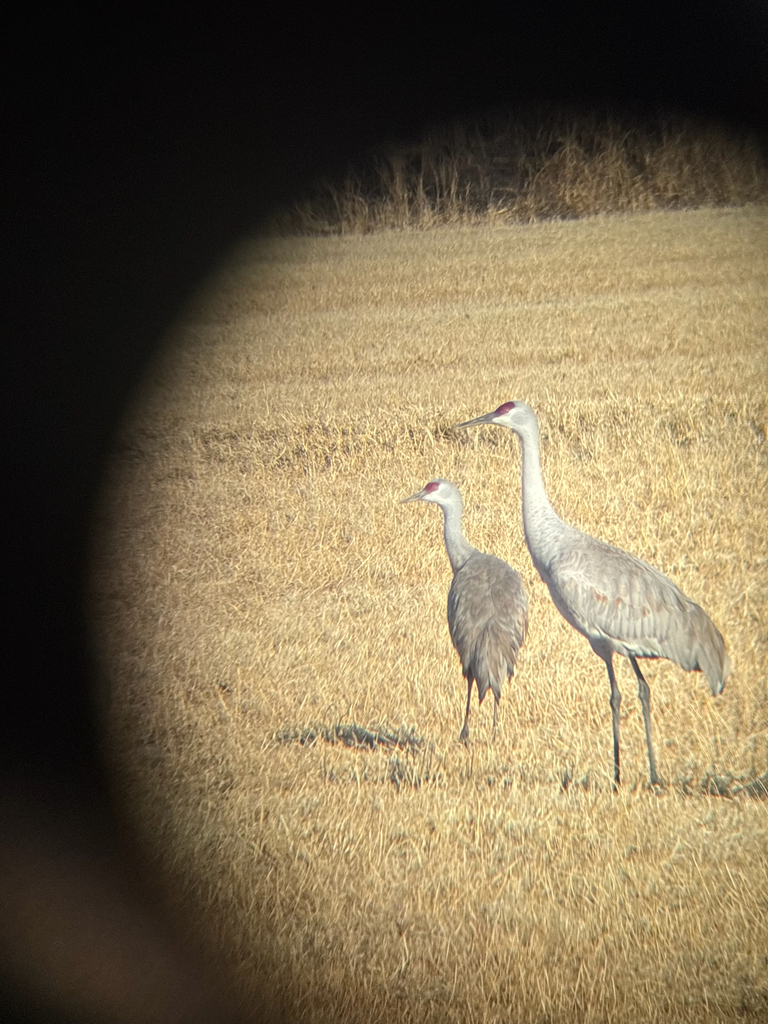
(c) Chris Stahl, some rights reserved (CC BY) · licence
Family: Gruidae · Class: Aves · Order: Gruiformes
Conservation status: G5T4 S4
Antigone canadensis canadensis (Lesser Sandhill Crane) is a California animal in the Gruidae family.
The Lesser Sandhill Crane is a medium-sized crane measuring approximately 1.04 meters (3.4 feet) in length and weighing an average of 5.8 kilograms (12.8 pounds). Adults display gray plumage with a distinctive red crown patch and white cheeks. The subspecies canadensis is smaller than the Greater Sandhill Crane (A. c. tabida), with a more slender build and proportionally shorter bill. During flight, the neck extends forward and legs trail behind, creating the characteristic crane silhouette. The Lesser Sandhill Crane breeds across a vast range in northern Canada and Alaska, extending from the Arctic tundra south through the boreal forest regions. The subspecies occurs in Alberta, British Columbia, Manitoba, Northwest Territories, Nunavut, Ontario, Quebec, Saskatchewan, and Yukon. During migration and winter, these cranes travel along the Pacific and Central Flyways, with significant populations wintering in California's Central Valley. According to the U.S. Fish and Wildlife Service, Merced National Wildlife Refuge hosts the largest wintering concentrations of Lesser Sandhill Cranes along the Pacific Flyway, with up to 20,000 individuals recorded annually. Breeding habitat consists primarily of wetland complexes within boreal forests, sedge meadows, and Arctic tundra. Nesting occurs in shallow marshes, bogs, and wet prairies with emergent vegetation. During migration, the subspecies utilizes agricultural fields, shallow wetlands, and managed impoundments for roosting and foraging. Winter habitat in California includes flooded rice fields, managed wetlands, and grasslands. Home ranges average approximately 2,100 hectares during the breeding season, though this can vary considerably based on habitat quality and food availability. Lesser Sandhill Cranes are omnivorous, feeding on plant tubers, seeds, berries, small mammals, reptiles, amphibians, and invertebrates. During winter in California, they frequently forage in agricultural areas, consuming waste grain and other crops. Breeding pairs typically lay two eggs in late May through early June, with incubation lasting 29-30 days. Young cranes, called colts, remain with parents through their first migration and winter. The subspecies exhibits strong site fidelity to both breeding and wintering areas. NatureServe ranks the Lesser Sandhill Crane as G5T4 (globally secure, subspecies apparently secure) with a California state rank of S4 (apparently secure). The subspecies benefits from large population size and extensive range, though it faces localized threats from habitat loss and degradation. Agricultural conversion of wetlands in wintering areas and climate change impacts on Arctic breeding grounds represent ongoing concerns. According to Modoc National Wildlife Refuge, both Greater and Lesser Sandhill Cranes are observed during spring and fall migration periods, with peak numbers occurring in March-April and August-September. The subspecies has shown stable to increasing population trends across most of its range, contrasting with the endangered status of other Sandhill Crane subspecies such as the Mississippi Sandhill Crane (A. c. pulla).
Classification
Class: Aves · Order: Gruiformes · Family: Gruidae
Conservation status
G5T4 S4
Frequently asked questions
How is Antigone canadensis canadensis classified?
Antigone canadensis canadensis belongs to class Aves, order Gruiformes, family Gruidae.
What family does Antigone canadensis canadensis belong to?
Antigone canadensis canadensis is in the Gruidae family.
Is Antigone canadensis canadensis protected or of conservation concern?
Antigone canadensis canadensis carries the following status: G5T4 S4.
What is Antigone canadensis canadensis?
The Lesser Sandhill Crane is a medium-sized crane measuring approximately 1.04 meters (3.4 feet) in length and weighing an average of 5.8 kilograms (12.8 pounds).
Is Antigone canadensis canadensis found in California?
Yes. Antigone canadensis canadensis is recorded in California in The California Species Project's catalogue.
Related species
Other California species in the same genus, family, or bioregion.
Data from The California Species Project — 14,000+ California species with verified data from CNPS, CDFW, USFWS, and more.