Antilocapra americana peninsularis
Peninsular pronghorn
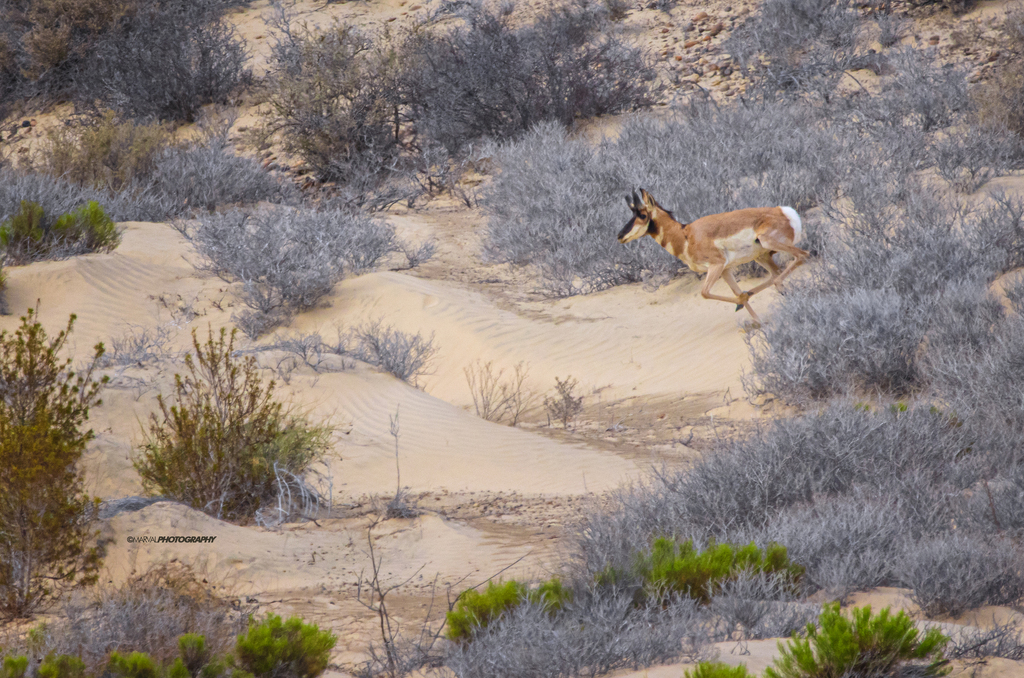
(c) MarvalPhotography19, some rights reserved (CC BY) · licence
Family: Antilocapridae · Class: Mammalia · Order: Artiodactyla
Conservation status: Endangered
Antilocapra americana peninsularis (Peninsular pronghorn) is a California animal in the Antilocapridae family.
The Peninsular pronghorn is a subspecies of pronghorn antelope endemic to the Baja California Peninsula of Mexico. Adults typically measure 81-105 cm (32-41 inches) in shoulder height and weigh 36-70 kg (79-154 pounds), making them the smallest and lightest colored of all pronghorn subspecies. Males are slightly larger than females and possess distinctive black, curved horns that are shed and regrown annually. Both sexes display the characteristic tan to reddish-brown coat with white markings on the rump, sides, and underparts. The species is distinguished from other pronghorn subspecies by its smaller stature and lighter coloration, adaptations to the desert environment. Historically, the Peninsular pronghorn ranged throughout the Baja California Peninsula from the United States-Mexico border south to the southern tip of the peninsula. Currently, the subspecies is restricted to Mexico in Baja California, with populations concentrated in the central and southern portions of the peninsula. The species has been extirpated from its former range in southern California, where it once occurred in desert regions near the current international border. Peninsular pronghorn inhabit arid desert and semi-desert environments characteristic of the Sonoran Desert ecosystem. They prefer open flats, gentle slopes, and valleys with scattered desert scrub vegetation. The species occurs from sea level to approximately 1,500 meters (4,921 feet) elevation. Suitable habitat includes areas dominated by desert shrubs, cacti, grasses, and seasonal annual plants that provide both forage and cover. Access to water sources becomes critical during dry periods, though the subspecies has adapted to extract moisture from vegetation when free water is scarce. Peninsular pronghorn are primarily browsers, feeding on a variety of desert shrubs, cacti, grasses, and seasonal annuals. Their diet varies seasonally based on plant availability, with greater reliance on succulent plants during dry periods. The species exhibits typical pronghorn social behavior, forming small herds outside the breeding season. Mating occurs in late summer and early fall, with females giving birth to one or two young after a gestation period of approximately seven months. Young are born in late spring when food resources are most abundant. The U.S. Fish and Wildlife Service lists the Peninsular pronghorn as endangered under the Endangered Species Act. The subspecies faces significant conservation challenges including habitat loss and fragmentation from human development, livestock grazing, and infrastructure projects. Historical hunting pressure contributed to population declines, though legal protection now exists in Mexico. Current threats include competition with livestock for forage, disruption of migration routes, vehicle strikes, and prolonged drought periods that reduce food and water availability. The species' restricted range makes it particularly vulnerable to environmental changes and human disturbances. Conservation efforts focus on habitat protection, population monitoring, and reducing human-wildlife conflicts in remaining suitable habitat areas.
Classification
Class: Mammalia · Order: Artiodactyla · Family: Antilocapridae
Conservation status
Endangered
Frequently asked questions
How is Antilocapra americana peninsularis classified?
Antilocapra americana peninsularis belongs to class Mammalia, order Artiodactyla, family Antilocapridae.
What family does Antilocapra americana peninsularis belong to?
Antilocapra americana peninsularis is in the Antilocapridae family.
Is Antilocapra americana peninsularis protected or of conservation concern?
Antilocapra americana peninsularis carries the following status: Endangered.
What is Antilocapra americana peninsularis?
The Peninsular pronghorn is a subspecies of pronghorn antelope endemic to the Baja California Peninsula of Mexico.
Is Antilocapra americana peninsularis found in California?
Yes. Antilocapra americana peninsularis is recorded in California in The California Species Project's catalogue.
Related species
Other California species in the same genus, family, or bioregion.
Data from The California Species Project — 14,000+ California species with verified data from CNPS, CDFW, USFWS, and more.