Antilocapra americana sonoriensis
Sonoran pronghorn
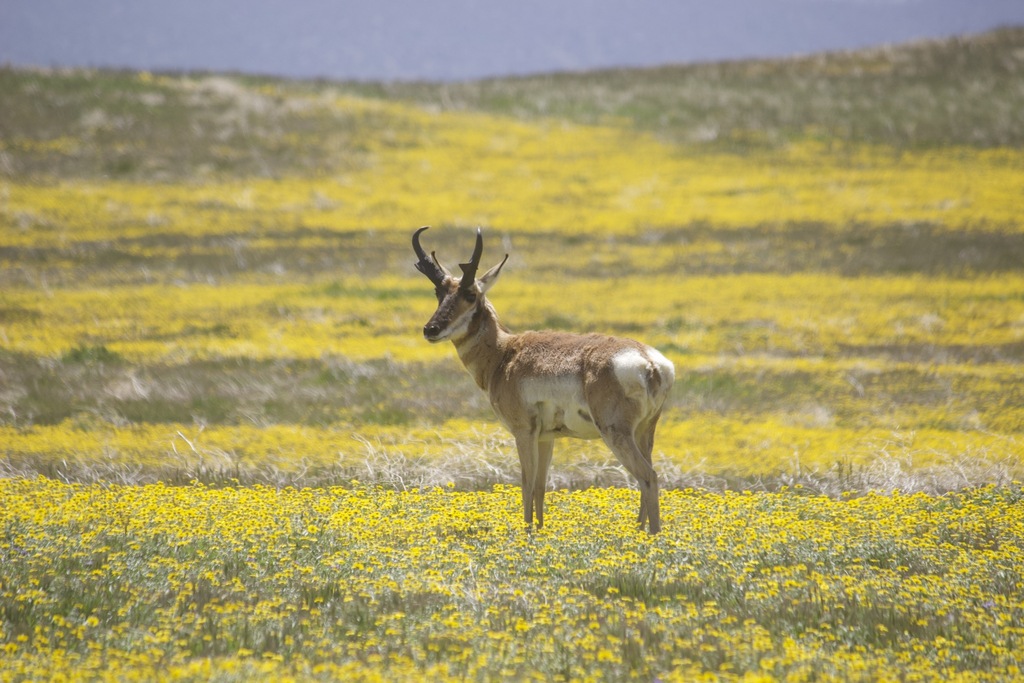
no rights reserved · CC0
Family: Antilocapridae · Class: Mammalia · Order: Artiodactyla
Conservation status: Endangered
Antilocapra americana sonoriensis (Sonoran pronghorn) is a California animal in the Antilocapridae family.
The Sonoran pronghorn is a subspecies of pronghorn antelope distinguished by its smaller size and lighter coloration compared to other pronghorn subspecies. Adults typically measure 1.2 to 1.5 meters (4 to 5 feet) in body length and stand 81 to 104 centimeters (32 to 41 inches) at the shoulder. Males weigh 36 to 70 kilograms (80 to 154 pounds), while females are smaller at 34 to 50 kilograms (75 to 110 pounds). Both sexes display tan to reddish-brown dorsal coloration with white underparts, throat patches, and rump bands. Males possess black, pronged horns that curve backward and measure 25 to 43 centimeters (10 to 17 inches) in length. Females have smaller, unbranched horns or may lack horns entirely. Historically, the Sonoran pronghorn ranged across southwestern Arizona, southeastern California, and northwestern Sonora, Mexico. According to the U.S. Fish and Wildlife Service ECOS database, the species' historical range included Arizona and California. Currently, the subspecies is restricted to small populations in southwestern Arizona and northwestern Sonora, Mexico. The Arizona population occurs primarily in the Sonoran Desert regions of Yuma, Pima, and Maricopa counties, while Mexican populations persist in areas adjacent to the international border. Sonoran pronghorn inhabit open desert flats, bajadas, and broad valleys in the Sonoran Desert ecosystem. They occupy areas with sparse desert vegetation dominated by creosote bush, palo verde, and various cacti species. The subspecies requires access to reliable water sources and typically remains within 3 to 5 kilometers of available water during summer months. Elevation ranges from sea level to approximately 610 meters (2,000 feet). Open terrain with good visibility is essential for predator detection and escape. Sonoran pronghorn are primarily browsers, feeding on desert shrubs, forbs, and cacti. Their diet includes jojoba, fairy duster, desert broom, and palo verde when available. During drought periods, they may travel considerable distances to locate food and water resources. Breeding occurs from February through April, with females producing one to two fawns after a gestation period of approximately 252 days. Fawns are born from late July through September and remain hidden in vegetation for their first few weeks of life. The Sonoran pronghorn was listed as endangered under the Endangered Species Act in 1967. According to the 2016 Recovery Plan, the Arizona population was nearly extirpated during severe drought conditions in 2002, dropping to fewer than 25 individuals. Recovery efforts include captive breeding programs, habitat management, water development projects, and population monitoring. The U.S. Fish and Wildlife Service has established captive breeding facilities and implemented supplemental feeding programs during drought periods. Current population estimates indicate approximately 200 individuals in Arizona and 150 to 200 individuals in Mexico as of recent surveys, though numbers fluctuate significantly based on precipitation and resource availability.
Classification
Class: Mammalia · Order: Artiodactyla · Family: Antilocapridae
Conservation status
Endangered
Frequently asked questions
How is Antilocapra americana sonoriensis classified?
Antilocapra americana sonoriensis belongs to class Mammalia, order Artiodactyla, family Antilocapridae.
What family does Antilocapra americana sonoriensis belong to?
Antilocapra americana sonoriensis is in the Antilocapridae family.
Is Antilocapra americana sonoriensis protected or of conservation concern?
Antilocapra americana sonoriensis carries the following status: Endangered.
What is Antilocapra americana sonoriensis?
The Sonoran pronghorn is a subspecies of pronghorn antelope distinguished by its smaller size and lighter coloration compared to other pronghorn subspecies.
Is Antilocapra americana sonoriensis found in California?
Yes. Antilocapra americana sonoriensis is recorded in California in The California Species Project's catalogue.
Related species
Other California species in the same genus, family, or bioregion.
Data from The California Species Project — 14,000+ California species with verified data from CNPS, CDFW, USFWS, and more.