Antiopella barbarensis
Cockscomb nudibranch
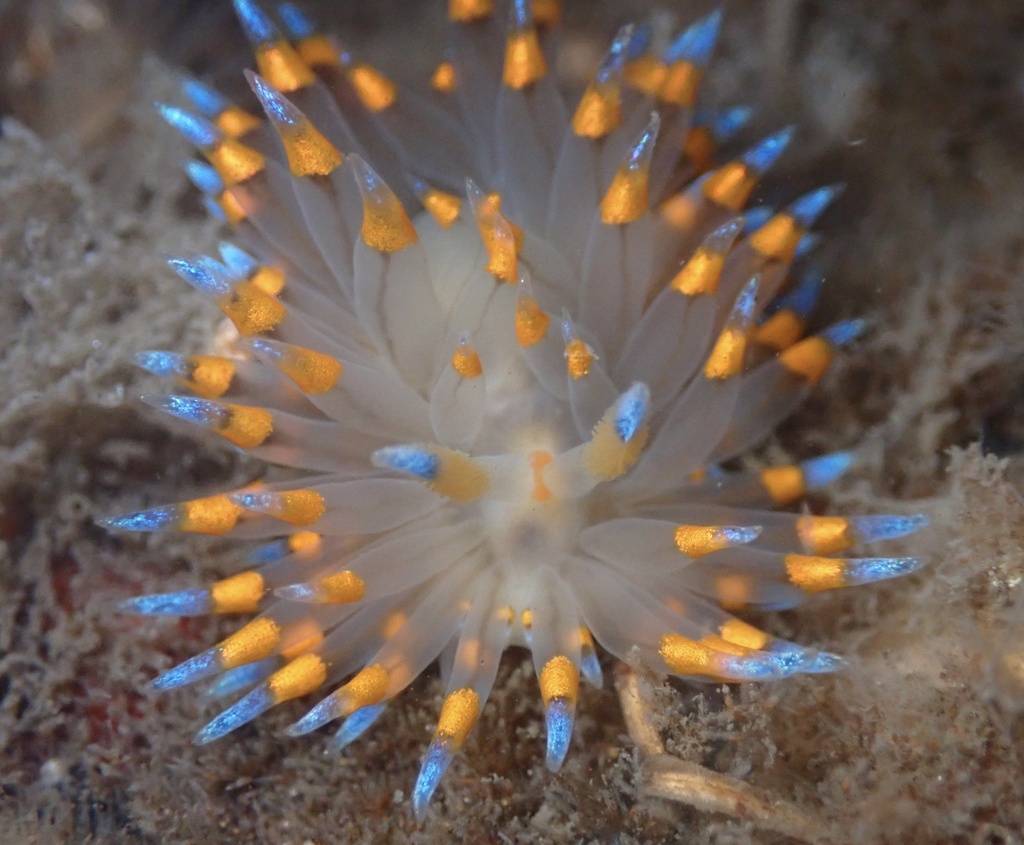
(c) Cricket Raspet, some rights reserved (CC BY) · licence
Family: Janolidae · Class: Gastropoda · Order: Nudibranchia
Antiopella barbarensis (Cockscomb nudibranch) is a California animal in the Janolidae family.
Antiopella barbarensis, commonly known as the cockscomb nudibranch, is a marine gastropod mollusk belonging to the family Janolidae within the order Nudibranchia. This species represents one of the numerous nudibranch species found along the Pacific coast, though detailed scientific documentation remains extremely limited in the available literature. As a member of the genus Antiopella, this nudibranch likely exhibits the characteristic features of its taxonomic group, including a soft-bodied form with external gills (cerata) and rhinophores for sensory detection. The common name 'cockscomb' suggests distinctive morphological features, possibly referring to the arrangement or appearance of its cerata, though specific morphological descriptions have not been well documented in accessible scientific literature. The species' range and distribution patterns have not been comprehensively studied or reported in the available sources. Based on the specific epithet 'barbarensis,' the species may have associations with the Santa Barbara region of California, though this requires verification through additional taxonomic and biogeographic research. Habitat preferences and ecological requirements for A. barbarensis remain largely undocumented. Like other nudibranch species, it likely inhabits marine environments, potentially in intertidal or subtidal zones along rocky coastlines. Many nudibranchs are specialized feeders, often consuming specific prey items such as hydroids, sponges, or other cnidarians, but the dietary preferences of this species have not been established. Reproductive biology, seasonal activity patterns, and life cycle characteristics have not been documented in the available scientific literature. Most nudibranchs are hermaphroditic and deposit egg masses, but species-specific breeding behaviors and timing remain unknown for A. barbarensis. The conservation status of A. barbarensis has not been assessed by state or federal agencies. The species does not appear to have federal or state listing status, nor does it have established global or IUCN rankings based on the available data. This absence of conservation assessment likely reflects the limited research attention this species has received rather than its actual conservation security. The lack of comprehensive scientific documentation for this species represents a significant knowledge gap in our understanding of California's marine biodiversity. Research priorities should include taxonomic verification, morphological description, distribution mapping, ecological characterization, and population assessment to establish baseline information for this nudibranch species. Until such research is conducted, management and conservation planning cannot be adequately informed.
Classification
Class: Gastropoda · Order: Nudibranchia · Family: Janolidae
Frequently asked questions
How is Antiopella barbarensis classified?
Antiopella barbarensis belongs to class Gastropoda, order Nudibranchia, family Janolidae.
What family does Antiopella barbarensis belong to?
Antiopella barbarensis is in the Janolidae family.
What is Antiopella barbarensis?
Antiopella barbarensis, commonly known as the cockscomb nudibranch, is a marine gastropod mollusk belonging to the family Janolidae within the order Nudibranchia.
Is Antiopella barbarensis found in California?
Yes. Antiopella barbarensis is recorded in California in The California Species Project's catalogue.
More California species
This species has no close relatives in our California data — here are other species to explore.
Data from The California Species Project — 14,000+ California species with verified data from CNPS, CDFW, USFWS, and more.