Antrostomus vociferus
Eastern Whip-poor-will
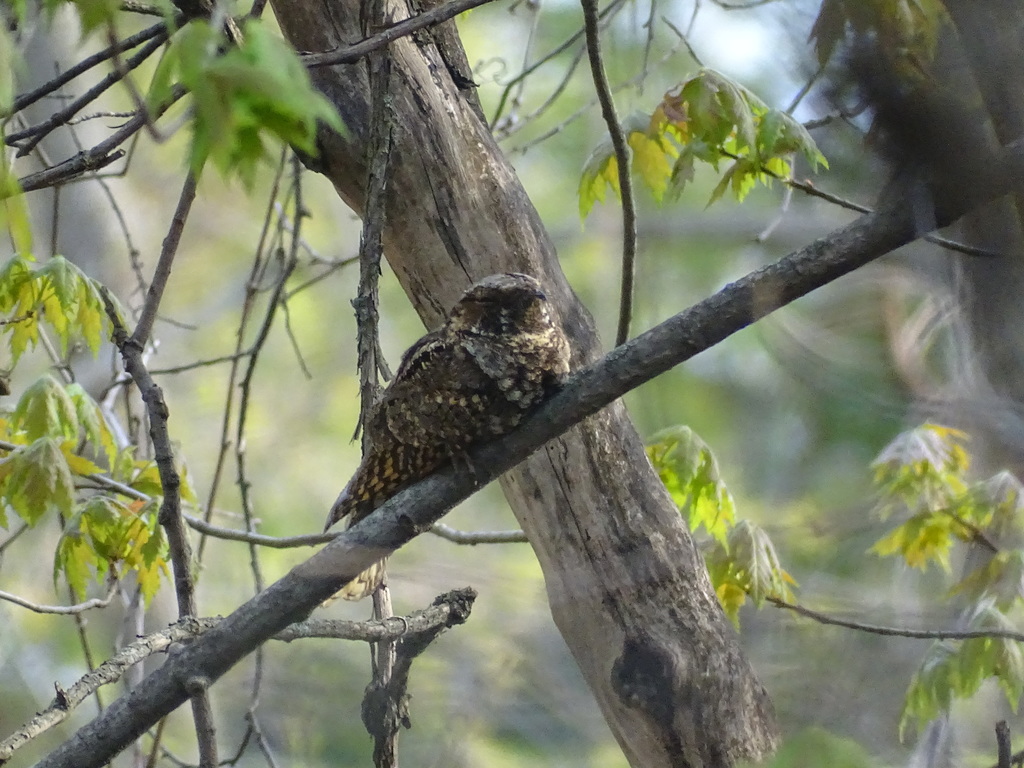
no rights reserved · CC0
Family: Caprimulgidae · Class: Aves · Order: Caprimulgiformes
Antrostomus vociferus (Eastern Whip-poor-will) is a California animal in the Caprimulgidae family.
The Eastern Whip-poor-will is a medium-sized nocturnal bird in the nightjar family, measuring 22 to 27 cm (8.7 to 10.6 inches) in length with a wingspan of 45 to 50 cm (17.7 to 19.7 inches). Adults weigh 42 to 69 grams (1.5 to 2.4 ounces). The species exhibits cryptic plumage with mottled brown, gray, and black coloration that provides effective camouflage against tree bark and leaf litter. Males display white outer tail feathers and a white throat patch, while females show buffy-colored outer tail feathers and throat patches. The bill is small and triangular, surrounded by prominent rictal bristles that aid in capturing flying insects. Large, dark eyes are adapted for low-light conditions, enabling effective nocturnal hunting. Historically, Eastern Whip-poor-wills occurred across eastern North America from southern Canada to Central America. The breeding range extends from southeastern Canada through the eastern United States, reaching west to the Great Plains. In California, the species is considered extremely rare or absent as a breeding resident, though vagrant individuals have been documented during migration periods. The species primarily inhabits regions east of the Rocky Mountains, with California occurrences representing the western edge of their range. Eastern Whip-poor-wills prefer mature deciduous and mixed forests with open understory structure. They require areas with scattered clearings or forest edges for foraging, combined with dense canopy cover for roosting and nesting. Elevation preferences range from sea level to approximately 1,500 meters (4,900 feet). The species selects nest sites on the ground among leaf litter, typically near the base of trees or shrubs in areas with dappled sunlight filtering through the canopy. These birds are strictly nocturnal, becoming active at dusk to hunt flying insects including moths, beetles, mosquitoes, and flying ants. Their wide gape and aerial maneuverability allow them to capture prey during flight through swift, agile movements. The species is renowned for its repetitive "whip-poor-will" call, delivered continuously during breeding season from April through July. Males may repeat this call hundreds of times without pause, particularly on moonlit nights when acoustic conditions are optimal. Breeding occurs from May to August, with females laying two cream-colored eggs with brown markings directly on the ground without constructing a nest. Incubation lasts 19 to 21 days, and young fledge after 17 to 20 days. Eastern Whip-poor-wills are not federally listed but have experienced significant population declines across their range. According to the North American Breeding Bird Survey, populations declined by approximately 1.8% annually between 1966 and 2019, representing a cumulative decline of over 65%. Primary threats include habitat loss from forest fragmentation, pesticide use reducing insect prey availability, light pollution disrupting nocturnal behavior, and climate change altering insect emergence patterns. Forest management practices that maintain mature forests with open understory and preserve forest-field interfaces benefit this species.
Classification
Class: Aves · Order: Caprimulgiformes · Family: Caprimulgidae
Frequently asked questions
How is Antrostomus vociferus classified?
Antrostomus vociferus belongs to class Aves, order Caprimulgiformes, family Caprimulgidae.
What family does Antrostomus vociferus belong to?
Antrostomus vociferus is in the Caprimulgidae family.
What is Antrostomus vociferus?
The Eastern Whip-poor-will is a medium-sized nocturnal bird in the nightjar family, measuring 22 to 27 cm (8.7 to 10.6 inches) in length with a wingspan of 45 to 50 cm (17.7 to 19.7 inches).
Is Antrostomus vociferus found in California?
Yes. Antrostomus vociferus is recorded in California in The California Species Project's catalogue.
Related species
Other California species in the same genus, family, or bioregion.
Data from The California Species Project — 14,000+ California species with verified data from CNPS, CDFW, USFWS, and more.