Antrozous pallidus
Pallid Bat
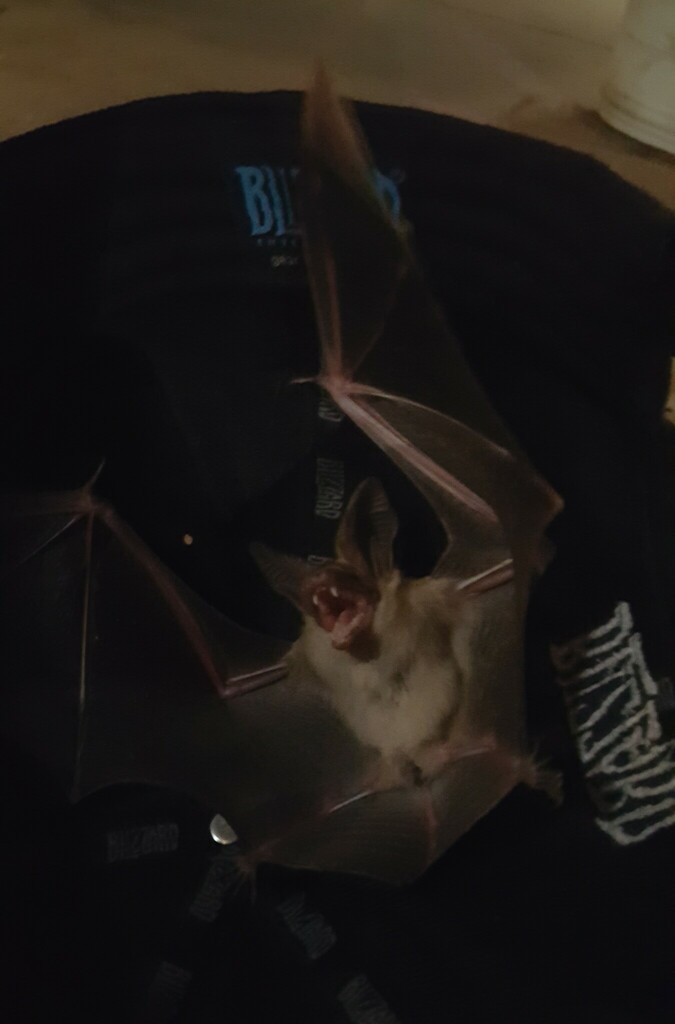
(c) Nicole, some rights reserved (CC BY) · licence
Family: Vespertilionidae · Class: Mammalia · Order: Chiroptera
Conservation status: G4 S3
Antrozous pallidus (Pallid Bat) is a California animal in the Vespertilionidae family.
The pallid bat is a medium-sized bat distinguished by its distinctive pale coloration and large ears. Adults measure 92 to 135 mm (3.6 to 5.3 inches) in total length with a wingspan of 360 to 390 mm (14.2 to 15.4 inches). Body mass ranges from 20 to 35 grams. The dorsal fur is pale yellow to cream-colored, while the ventral surface is nearly white. The species has exceptionally large ears, measuring 25 to 35 mm in length, which extend beyond the nose when laid forward. The ears are pale and translucent with prominent horizontal ridges. A distinctive horseshoe-shaped ridge connects the nostrils, and the eyes are relatively large compared to other North American bats. Pallid bats occur throughout western North America from British Columbia south to central Mexico. In California, the species is found from sea level to approximately 2,100 meters (6,900 feet) elevation, inhabiting diverse regions including the Central Valley, coastal areas, desert regions, and montane forests. Populations occur throughout most of California except for the northwestern coastal forests and high Sierra Nevada peaks. The species occupies a variety of habitats including oak woodlands, chaparral, desert scrub, pine forests, and agricultural areas. Pallid bats roost in rock crevices, tree cavities, buildings, bridges, and caves. Day roosts are typically in warm, dry locations with multiple exit points. Night roosts, used between foraging periods, are often more exposed sites such as porches or open buildings. The species shows high fidelity to roost sites and may use the same locations for decades. Pallid bats are unique among North American bats as ground-gleaning specialists, capturing prey primarily from surfaces rather than in flight. Their diet consists largely of arthropods including crickets, beetles, moths, scorpions, and occasionally small lizards. Hunting occurs close to the ground in open areas between vegetation. The large ears enable detection of prey-generated sounds, while the robust skull and teeth allow consumption of heavily armored arthropods. Mating occurs in fall and winter, with females storing sperm until spring ovulation. Gestation lasts 9 to 10 weeks, and females typically give birth to twins in late May through July. Young are capable of flight at 5 to 6 weeks of age. The pallid bat is not federally listed but is designated as a Species of Special Concern by the California Department of Fish and Wildlife due to declining populations and habitat threats. Primary conservation concerns include roost site disturbance, habitat loss from urban development, pesticide use reducing prey availability, and white-nose syndrome, though this fungal disease has had limited impact on western bat species to date. Wind energy development poses an emerging threat through direct mortality and habitat fragmentation. Conservation efforts focus on protecting known roost sites and maintaining habitat connectivity in agricultural and urban landscapes.
Classification
Class: Mammalia · Order: Chiroptera · Family: Vespertilionidae
Conservation status
G4 S3
Frequently asked questions
How is Antrozous pallidus classified?
Antrozous pallidus belongs to class Mammalia, order Chiroptera, family Vespertilionidae.
What family does Antrozous pallidus belong to?
Antrozous pallidus is in the Vespertilionidae family.
Is Antrozous pallidus protected or of conservation concern?
Antrozous pallidus carries the following status: G4 S3.
What is Antrozous pallidus?
The pallid bat is a medium-sized bat distinguished by its distinctive pale coloration and large ears.
Is Antrozous pallidus found in California?
Yes. Antrozous pallidus is recorded in California in The California Species Project's catalogue.
Related species
Other California species in the same genus, family, or bioregion.
Data from The California Species Project — 14,000+ California species with verified data from CNPS, CDFW, USFWS, and more.