Anuroctonus pococki
California Swollenstinger Scorpion
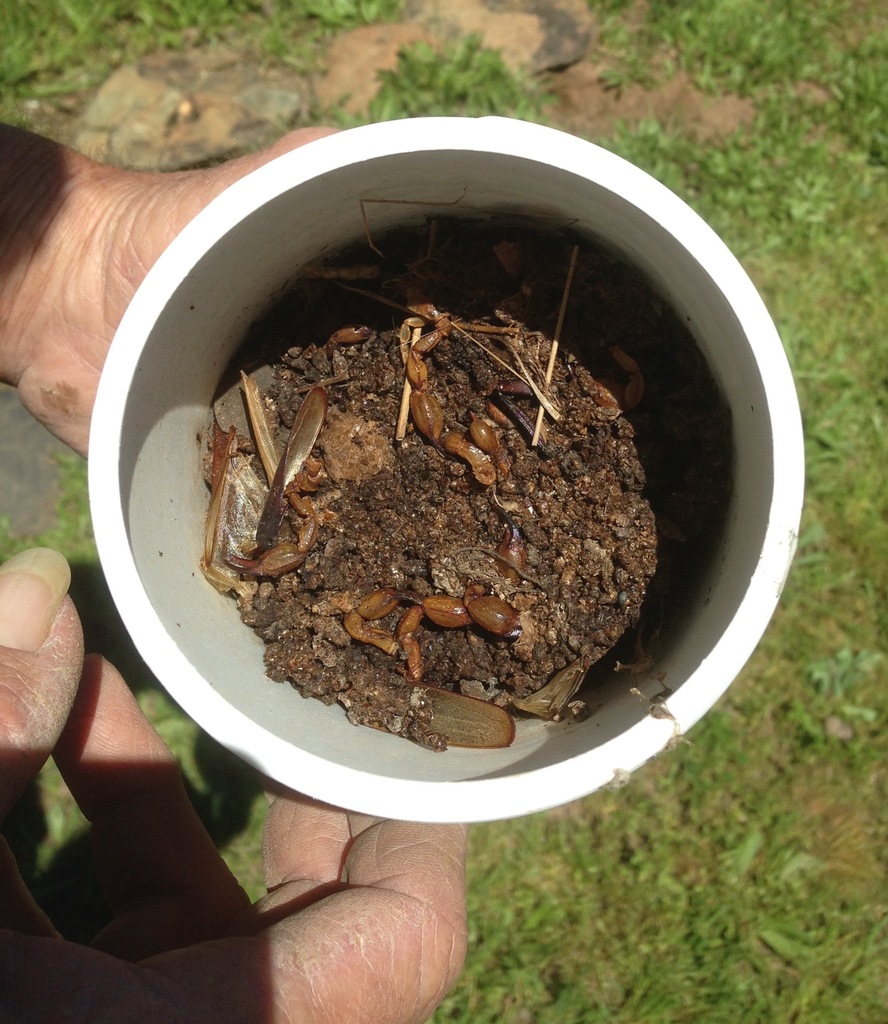
(c) Adam J. Searcy, some rights reserved (CC BY) · licence
Family: Iuridae · Class: Arachnida · Order: Scorpiones
Anuroctonus pococki (California Swollenstinger Scorpion) is a California animal in the Iuridae family.
The California swollenstinger scorpion is a medium-sized arachnid that measures approximately 75-115 mm (3-4.5 inches) in total length including the tail. The species exhibits the characteristic swollen terminal segment of the metasoma (tail) that gives it its common name. The body coloration is typically yellowish-brown to dark brown, with darker patterns on the carapace and tergites. Males and females are similar in appearance, though males may have slightly more elongated pedipalps. This species is endemic to southwestern California and extends into Baja California, Mexico. Within California, Anuroctonus pococki occurs in the Coast Ranges and associated foothills from Los Angeles County south through Orange, Riverside, San Bernardino, and San Diego counties (BugGuide observations). The species is found from near sea level up to approximately 1,800 meters (6,000 feet) elevation, with documented occurrences at Mount Laguna in San Diego County at 6,000 feet (BugGuide 2010). The California swollenstinger scorpion inhabits a variety of Mediterranean climate ecosystems, including coastal sage scrub, chaparral, oak woodlands, and mixed coniferous forests at higher elevations. The species shows particular association with rocky areas, canyon bottoms, and hillsides where it can construct burrows or find shelter under rocks, logs, and debris (BugGuide observations). In urban areas, individuals have been documented under construction materials and in disturbed habitats adjacent to native vegetation. This nocturnal predator feeds primarily on insects, spiders, and other small arthropods. Like other scorpions, it uses its pedipalps to capture prey and its venomous stinger to subdue victims. The species exhibits typical scorpion reproductive behavior, with males performing elaborate courtship dances before mating. Females give birth to live young after a gestation period, carrying the offspring on their backs until the first molt. Activity patterns are seasonal, with peak activity occurring during warmer months from late spring through early fall. The California swollenstinger scorpion faces habitat pressures from urban development throughout much of its range in southern California. Coastal sage scrub and chaparral habitats have experienced significant fragmentation due to residential and commercial development, particularly in Orange, Los Angeles, and San Diego counties. However, the species appears to maintain stable populations in protected areas such as state parks and national forests. The species has been designated as a Species of Greatest Conservation Need in some regional conservation assessments, though it lacks formal state or federal protection status. Climate change may pose future challenges by altering precipitation patterns and increasing fire frequency in the Mediterranean ecosystems where this species occurs. Conservation efforts focus on habitat preservation and maintaining connectivity between fragmented populations in the rapidly developing coastal regions of southern California.
Classification
Class: Arachnida · Order: Scorpiones · Family: Iuridae
Frequently asked questions
How is Anuroctonus pococki classified?
Anuroctonus pococki belongs to class Arachnida, order Scorpiones, family Iuridae.
What family does Anuroctonus pococki belong to?
Anuroctonus pococki is in the Iuridae family.
What is Anuroctonus pococki?
The California swollenstinger scorpion is a medium-sized arachnid that measures approximately 75-115 mm (3-4.5 inches) in total length including the tail.
Is Anuroctonus pococki found in California?
Yes. Anuroctonus pococki is recorded in California in The California Species Project's catalogue.
Related species
Other California species in the same genus, family, or bioregion.
Data from The California Species Project — 14,000+ California species with verified data from CNPS, CDFW, USFWS, and more.