Apamea albina
White Apamea
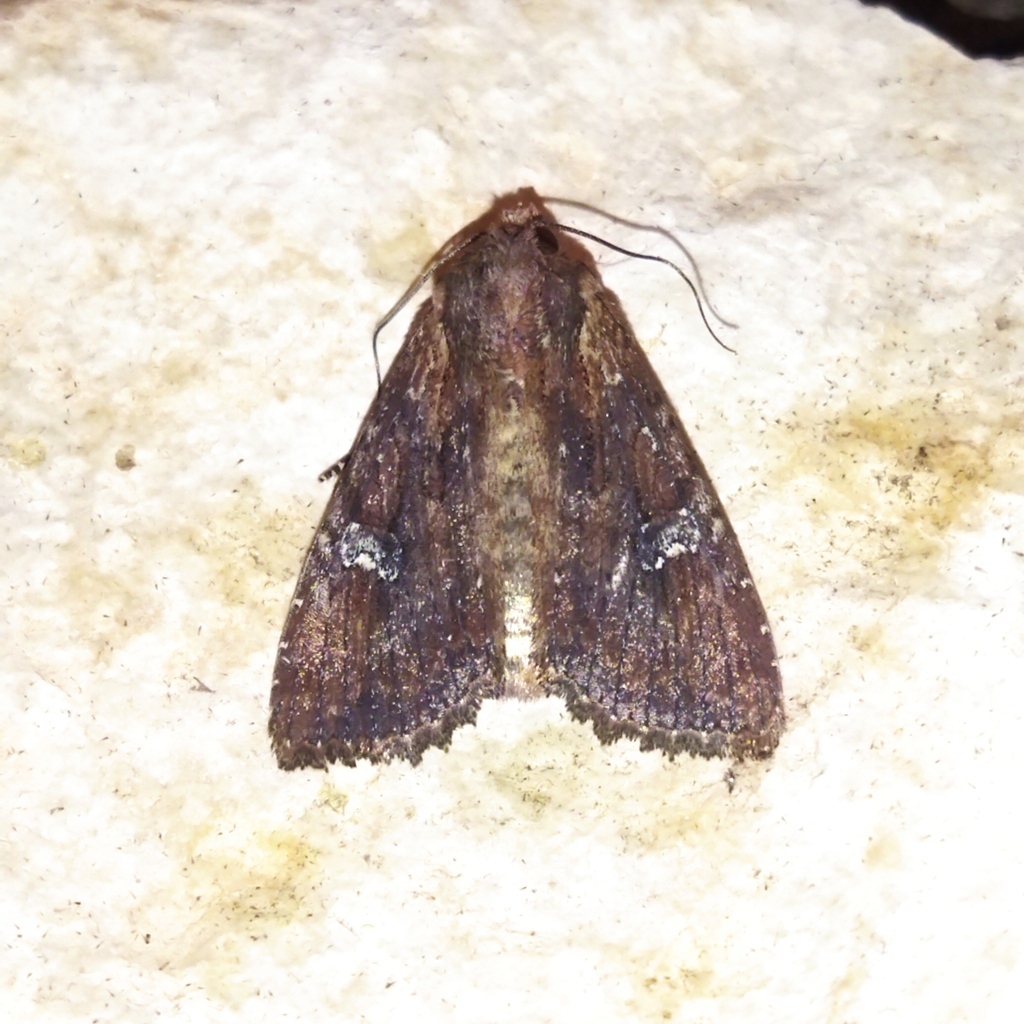
(c) SteveM4560, some rights reserved (CC BY) · licence
Family: Noctuidae · Class: Insecta · Order: Lepidoptera
Apamea albina (White Apamea) is a California animal in the Noctuidae family.
The White Apamea (Apamea albina) is a moth in the family Noctuidae, subfamily Noctuinae, tribe Apameini. This species represents one of several North American Apamea moths, a genus known for its nocturnal habits and association with graminoid host plants. Adult White Apamea moths display the characteristic wing patterns typical of the genus Apamea, with forewings bearing the distinctive reniform and orbicular spots common to noctuid moths. The species name 'albina' suggests pale or whitish coloration, distinguishing it from darker-colored congeners in the genus. Like other Apamea species, adults are likely medium-sized moths with wingspan measurements typical of the genus, though specific morphometric data for this species has not been well documented. The range and distribution of Apamea albina in North America requires further documentation. The species appears in taxonomic databases maintained by the U.S. Fish and Wildlife Service, indicating its presence within the United States (USFWS Taxonomic Tree). However, detailed range maps and state-by-state occurrence records have not been comprehensively compiled. The genus Apamea is widely distributed across North America, with various species occupying diverse habitats from coast to coast. Habitat preferences for Apamea albina have not been specifically documented, though other members of the genus Apamea typically inhabit areas with abundant graminoid vegetation. Related species in the genus are associated with wetlands, meadows, and grassland environments where their larval host plants occur. Many Apamea species show preferences for areas with sedges (Cyperaceae) and grasses (Poaceae), suggesting similar habitat requirements may apply to A. albina. The life cycle and behavioral ecology of Apamea albina remain poorly studied. Most Apamea species are univoltine, producing one generation annually. Adults are nocturnal and attracted to artificial lights, a behavior common throughout the Noctuidae. Larvae likely feed on graminoid plants, following the pattern observed in related species where caterpillars bore into stems and roots of sedges and grasses. Pupation probably occurs in soil or plant debris, with adults emerging during summer months, though specific flight period data for A. albina is lacking. Apamea albina currently holds no federal or state conservation listing status. The species lacks formal conservation assessment, and population trends remain undocumented. This data deficiency is common among many noctuid moth species, where limited research attention has resulted in incomplete knowledge of distribution, abundance, and ecological requirements. The absence of conservation concern may reflect either actual population stability or simply insufficient survey effort to detect potential declines. Scientific documentation for this species remains limited. The information presented here synthesizes available taxonomic and database records. Detailed ecological studies, including host plant associations, phenology, and distribution mapping, are needed to fully understand this species' biology and conservation needs. We welcome contributions of verified scientific data, photographs, or field observations to enhance this species account.
Classification
Class: Insecta · Order: Lepidoptera · Family: Noctuidae
Frequently asked questions
How is Apamea albina classified?
Apamea albina belongs to class Insecta, order Lepidoptera, family Noctuidae.
What family does Apamea albina belong to?
Apamea albina is in the Noctuidae family.
What is Apamea albina?
The White Apamea (Apamea albina) is a moth in the family Noctuidae, subfamily Noctuinae, tribe Apameini.
Is Apamea albina found in California?
Yes. Apamea albina is recorded in California in The California Species Project's catalogue.
Related species
Other California species in the same genus, family, or bioregion.
Data from The California Species Project — 14,000+ California species with verified data from CNPS, CDFW, USFWS, and more.