Apamea centralis
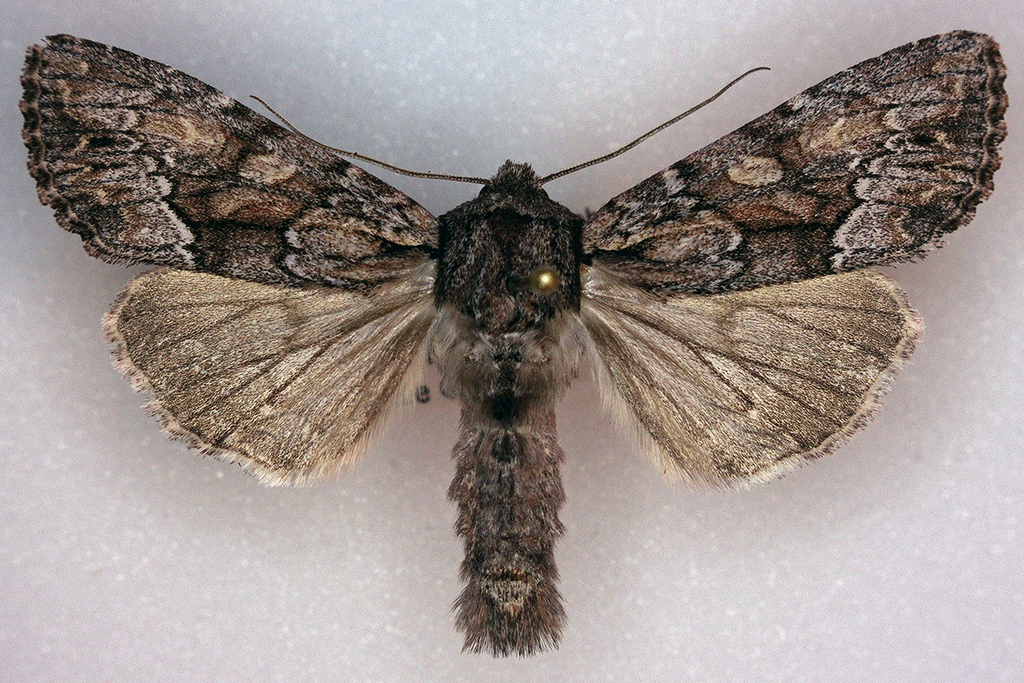
(c) Dave, some rights reserved (CC BY) · licence
Family: Noctuidae · Class: Insecta · Order: Lepidoptera
Apamea centralis is a California animal in the Noctuidae family.
Apamea centralis is a moth in the family Noctuidae, commonly known as cutworm moths or owlet moths. This species belongs to a genus of medium-sized nocturnal moths characterized by cryptic wing patterns that provide camouflage during daylight hours. Adults typically measure 35 to 45 millimeters (1.4 to 1.8 inches) in wingspan, with forewings displaying mottled brown and gray coloration. The hindwings are generally paler, ranging from light brown to whitish-gray. Like other Apamea species, A. centralis exhibits sexual dimorphism, with males possessing more bipectinate (feathery) antennae compared to females. The distribution of Apamea centralis in North America includes portions of the western United States, though specific range data for California populations requires further documentation. The genus Apamea is widely distributed across temperate regions of North America, with various species occupying diverse ecological niches from coastal areas to montane environments. Current records suggest this species may occur in northern California, though comprehensive surveys are needed to establish precise county-level distributions. Habitat preferences for A. centralis likely align with other members of the genus, which typically inhabit grasslands, meadows, and open woodlands. Many Apamea species are associated with graminoid plants and herbaceous vegetation. The larvae, known as cutworms, develop in soil and leaf litter, feeding on roots and lower stems of host plants. Elevation ranges and specific microhabitat requirements for this species in California remain poorly documented. Adult moths are nocturnal and are attracted to artificial lights. Flight periods typically occur during spring and early summer months, though specific timing may vary with elevation and local climate conditions. Females deposit eggs in soil or at the base of host plants. Larvae undergo multiple instars before pupating in earthen cells. Like other cutworm species, A. centralis larvae likely feed on grasses and forbs, cutting through stems at or near soil level. The species appears to have a single generation per year, overwintering as pupae in the soil. The conservation status of Apamea centralis remains undetermined due to limited survey data and taxonomic uncertainty within the genus. No federal or state listing status has been assigned to this species. Population trends are unknown, and specific threats have not been identified. The species may face habitat loss from urban development, agricultural conversion, and altered fire regimes that affect grassland ecosystems. Climate change could potentially impact the species through shifts in temperature and precipitation patterns that affect host plant communities and larval development timing. Comprehensive surveys are needed to assess population status, distribution, and habitat requirements. Molecular analysis may be required to confirm species boundaries and relationships within the Apamea centralis complex, as morphological variation can complicate field identification of closely related noctuids.
Classification
Class: Insecta · Order: Lepidoptera · Family: Noctuidae
Frequently asked questions
How is Apamea centralis classified?
Apamea centralis belongs to class Insecta, order Lepidoptera, family Noctuidae.
What family does Apamea centralis belong to?
Apamea centralis is in the Noctuidae family.
What is Apamea centralis?
Apamea centralis is a moth in the family Noctuidae, commonly known as cutworm moths or owlet moths.
Is Apamea centralis found in California?
Yes. Apamea centralis is recorded in California in The California Species Project's catalogue.
Related species
Other California species in the same genus, family, or bioregion.
Data from The California Species Project — 14,000+ California species with verified data from CNPS, CDFW, USFWS, and more.