Apamea cinefacta
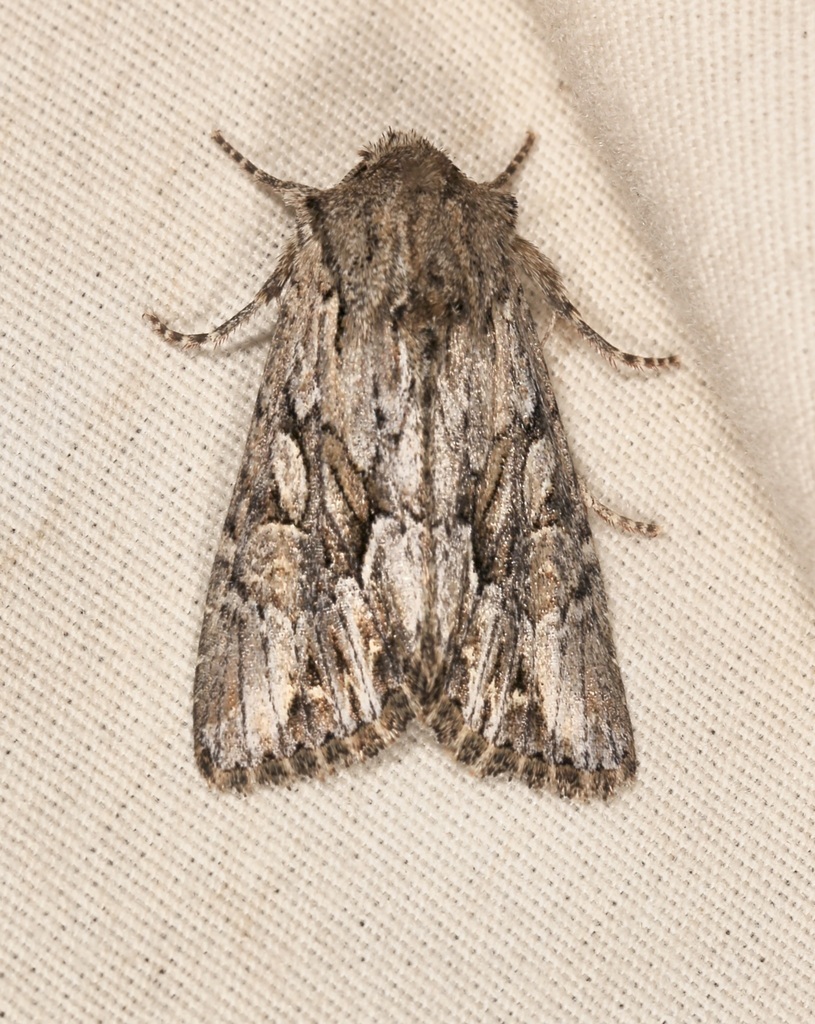
(c) Laura Gaudette, some rights reserved (CC BY) · licence
Family: Noctuidae · Class: Insecta · Order: Lepidoptera
Apamea cinefacta is a California animal in the Noctuidae family.
Apamea cinefacta is a nocturnal moth in the family Noctuidae, commonly known as owlet moths or cutworm moths. This species belongs to the genus Apamea, which comprises medium-sized moths typically associated with grassland and wetland habitats. The adult moths exhibit the characteristic robust build of noctuids, with forewings typically measuring 15-20 mm in length. The forewings display muted coloration patterns typical of the genus, with variations of brown, gray, and buff tones that provide effective camouflage against bark and dried vegetation. The hindwings are generally paler than the forewings, often appearing whitish or pale gray. Like other Apamea species, the moth likely possesses feathered or thread-like antennae, with males typically having more pronounced antennal structures than females. The distribution and range of Apamea cinefacta remain poorly documented in available literature, reflecting the limited research attention given to many members of this diverse moth family. The species appears to have a restricted range, though specific locality records and geographic boundaries require further investigation through systematic surveys and taxonomic studies. Habitat requirements for Apamea cinefacta likely follow patterns observed in related species within the genus, which typically inhabit grasslands, meadows, marsh edges, and areas with abundant graminoid vegetation. Many Apamea species show preferences for moist or seasonally wet habitats, suggesting this species may occupy similar ecological niches. The larvae likely develop in association with grass species or sedges, feeding on roots, stems, or other plant tissues below ground or at the soil surface. The life cycle of Apamea cinefacta presumably follows the typical noctuid pattern, with adults active during warmer months and larvae developing in soil or plant material. Adult flight periods for most Apamea species occur from late spring through early fall, with peak activity often coinciding with favorable weather conditions. Females likely deposit eggs on or near host plants, with larvae developing through multiple instars before pupating in soil or plant debris. The larvae may exhibit the characteristic cutworm behavior of many noctuids, feeding on plant material at night and remaining concealed during daylight hours. The conservation status of Apamea cinefacta cannot be accurately assessed due to insufficient data regarding population size, distribution, and ecological requirements. Like many lesser-known moth species, it may face threats from habitat loss, particularly if associated with specialized grassland or wetland environments that have experienced degradation or conversion. Agricultural practices, urban development, and altered hydrology in wetland systems could potentially impact populations if the species has narrow habitat requirements. The lack of comprehensive surveys and taxonomic clarity for many noctuid species highlights the need for increased research attention to understand the conservation needs of this and related taxa. Climate change may pose additional risks through altered precipitation patterns and temperature regimes that could affect both adult activity periods and larval development conditions.
Classification
Class: Insecta · Order: Lepidoptera · Family: Noctuidae
Frequently asked questions
How is Apamea cinefacta classified?
Apamea cinefacta belongs to class Insecta, order Lepidoptera, family Noctuidae.
What family does Apamea cinefacta belong to?
Apamea cinefacta is in the Noctuidae family.
What is Apamea cinefacta?
Apamea cinefacta is a nocturnal moth in the family Noctuidae, commonly known as owlet moths or cutworm moths.
Is Apamea cinefacta found in California?
Yes. Apamea cinefacta is recorded in California in The California Species Project's catalogue.
Related species
Other California species in the same genus, family, or bioregion.
Data from The California Species Project — 14,000+ California species with verified data from CNPS, CDFW, USFWS, and more.