Apamea cogitata
Thoughtful Apamea
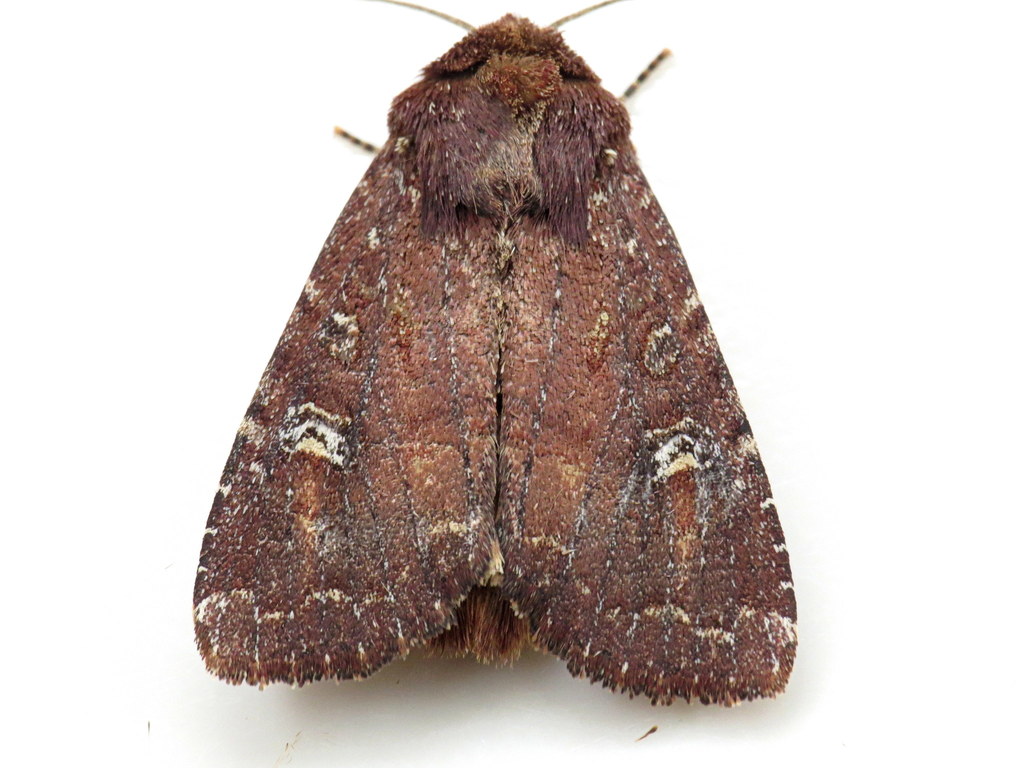
no rights reserved · CC0
Family: Noctuidae · Class: Insecta · Order: Lepidoptera
Apamea cogitata (Thoughtful Apamea) is a California animal in the Noctuidae family.
The Thoughtful Apamea (Apamea cogitata) is a medium-sized noctuid moth in the family Noctuidae. Adults typically measure 14-18 mm in forewing length, with a wingspan ranging from 28-36 mm. The forewings display a mottled brown and gray coloration with darker brown reniform and orbicular spots characteristic of the genus Apamea. The hindwings are pale gray to white with darker gray margins. The thorax and head are covered in brownish-gray scales, and the antennae are simple in both sexes. The species can be distinguished from related Apamea species by specific wing pattern details and genitalic characteristics that require microscopic examination for definitive identification. Apamea cogitata occurs in western North America, with records from California, Oregon, Washington, and British Columbia. In California, the species has been documented in the northern counties, particularly in montane and subalpine regions. The exact distribution within California remains incompletely documented, as many Apamea species are understudied and records are scattered across museum collections and research publications. The species inhabits montane meadows, forest clearings, and alpine areas typically above 1,500 meters elevation. Adults are associated with areas supporting native grasses and sedges, which serve as larval host plants. The habitat preference includes moist meadows, riparian zones, and forest edges where suitable herbaceous vegetation occurs. The species appears to favor cooler, higher elevation environments characteristic of mountain ecosystems. Adults are nocturnal and attracted to artificial lights, making them occasionally encountered at moth sheets and light traps used by researchers. The flight period typically occurs during summer months, generally from June through August, depending on elevation and local climate conditions. Larvae are grass feeders, boring into stems and roots of various graminoid plants including sedges (Carex species) and grasses. The larval stage likely overwinters, with pupation occurring in spring. Like many noctuid moths, the species probably has a single generation per year in most locations. The conservation status of Apamea cogitata has not been formally assessed at federal or state levels. The species is not currently listed under the Endangered Species Act or California Endangered Species Act. Population trends are unknown due to limited systematic surveys of noctuid moths in California's mountain regions. Potential threats may include habitat alteration from climate change affecting high-elevation ecosystems, recreational development in mountain areas, and invasive plant species that could displace native host plants. The species' apparent restriction to higher elevation habitats may make it particularly vulnerable to climate-induced habitat shifts. Further research is needed to establish baseline population data and assess conservation needs for this and other poorly known montane Lepidoptera species in California.
Classification
Class: Insecta · Order: Lepidoptera · Family: Noctuidae
Frequently asked questions
How is Apamea cogitata classified?
Apamea cogitata belongs to class Insecta, order Lepidoptera, family Noctuidae.
What family does Apamea cogitata belong to?
Apamea cogitata is in the Noctuidae family.
What is Apamea cogitata?
The Thoughtful Apamea (Apamea cogitata) is a medium-sized noctuid moth in the family Noctuidae.
Is Apamea cogitata found in California?
Yes. Apamea cogitata is recorded in California in The California Species Project's catalogue.
Related species
Other California species in the same genus, family, or bioregion.
Data from The California Species Project — 14,000+ California species with verified data from CNPS, CDFW, USFWS, and more.