Apamea cuculliformis
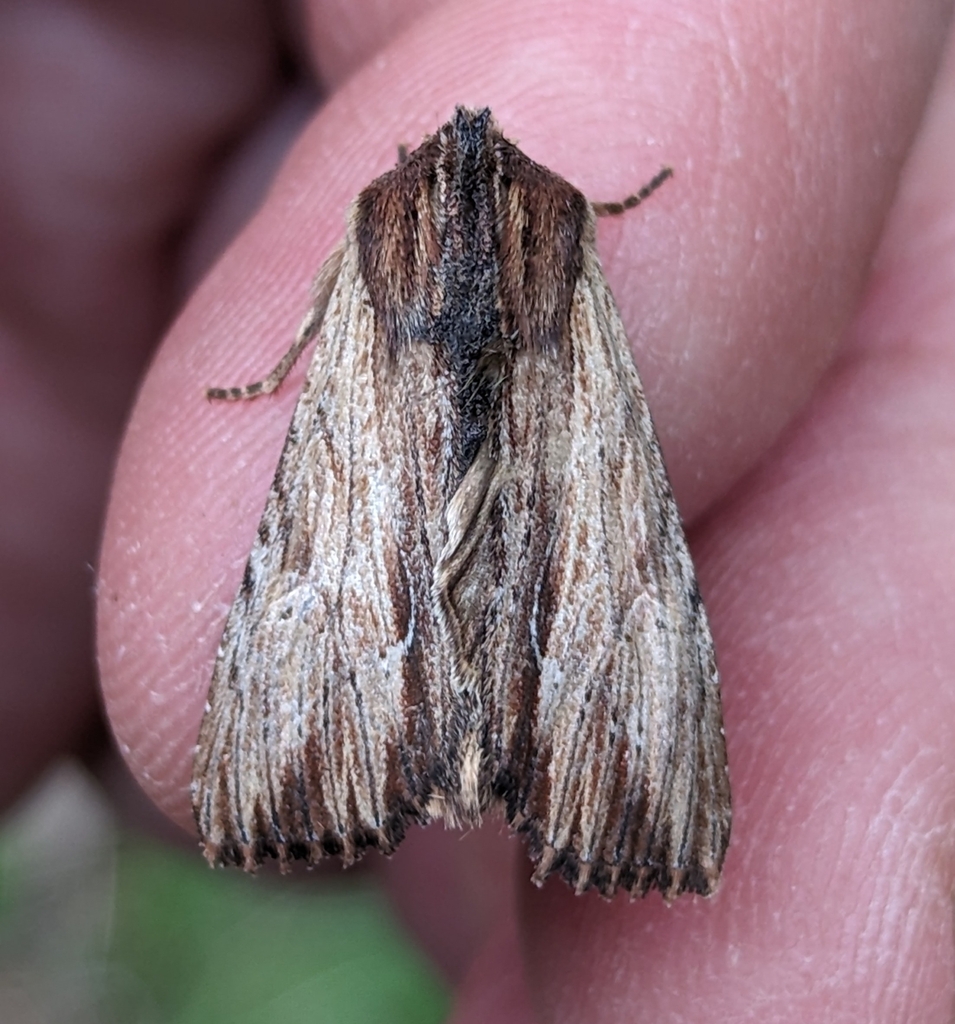
no rights reserved · CC0
Family: Noctuidae · Class: Insecta · Order: Lepidoptera
Apamea cuculliformis is a California animal in the Noctuidae family.
Apamea cuculliformis is a moth species in the family Noctuidae, commonly known as owlet moths or cutworm moths. This species belongs to a genus of moderate-sized moths characterized by cryptic coloration and nocturnal habits. Adult moths typically measure 35 to 45 mm in wingspan, displaying the muted earth tones typical of many Apamea species. The forewings are generally brownish-gray with subtle darker markings and pale reniform and orbicular spots. The hindwings are lighter, often pale gray to whitish. Like other members of the genus, A. cuculliformis exhibits sexual dimorphism, with males having more feathery antennae compared to the thread-like antennae of females. The distribution and range of Apamea cuculliformis remain poorly documented in the scientific literature. Limited records suggest the species may occur in western North America, potentially including California, though comprehensive distributional data are lacking. The species' presence in California has not been definitively confirmed through recent surveys or collection records accessible in major databases. Habitat requirements for A. cuculliformis are not well-established in published sources. Based on ecological patterns observed in related Apamea species, this moth likely inhabits grasslands, meadows, or open woodland areas where suitable host plants occur. Many Apamea species are associated with graminoid plants and herbaceous vegetation, suggesting A. cuculliformis may occupy similar niches. Elevation preferences and specific microhabitat requirements remain undocumented. The life history and ecological behavior of A. cuculliformis are poorly known. Adult moths are presumably nocturnal, as is typical for the family Noctuidae. Flight periods and seasonal activity patterns have not been documented in available literature. Larval host plants remain unidentified, though many Apamea species utilize grasses (Poaceae) and sedges (Cyperaceae) as larval food sources. The larvae likely feed on roots or lower stems of host plants, a feeding strategy common among related species. Reproductive biology, including egg-laying behavior, larval development time, and number of generations per year, requires further research. The conservation status of Apamea cuculliformis is uncertain due to limited distributional and population data. The species lacks federal or state conservation designations and does not appear on IUCN Red List assessments. This absence from conservation frameworks may reflect either stable populations or insufficient data rather than actual conservation security. The taxonomic validity and distinctness of A. cuculliformis from closely related species may require molecular analysis for confirmation. Many moths in the genus Apamea are difficult to distinguish morphologically, leading to potential identification uncertainties in historical records. Without comprehensive surveys and taxonomic revision, the true conservation needs of this species cannot be adequately assessed. Further research is needed to establish basic biological and ecological information, confirm the species' presence in California, and evaluate any potential conservation concerns.
Classification
Class: Insecta · Order: Lepidoptera · Family: Noctuidae
Frequently asked questions
How is Apamea cuculliformis classified?
Apamea cuculliformis belongs to class Insecta, order Lepidoptera, family Noctuidae.
What family does Apamea cuculliformis belong to?
Apamea cuculliformis is in the Noctuidae family.
What is Apamea cuculliformis?
Apamea cuculliformis is a moth species in the family Noctuidae, commonly known as owlet moths or cutworm moths.
Is Apamea cuculliformis found in California?
Yes. Apamea cuculliformis is recorded in California in The California Species Project's catalogue.
Related species
Other California species in the same genus, family, or bioregion.
Data from The California Species Project — 14,000+ California species with verified data from CNPS, CDFW, USFWS, and more.