Apamea digitula
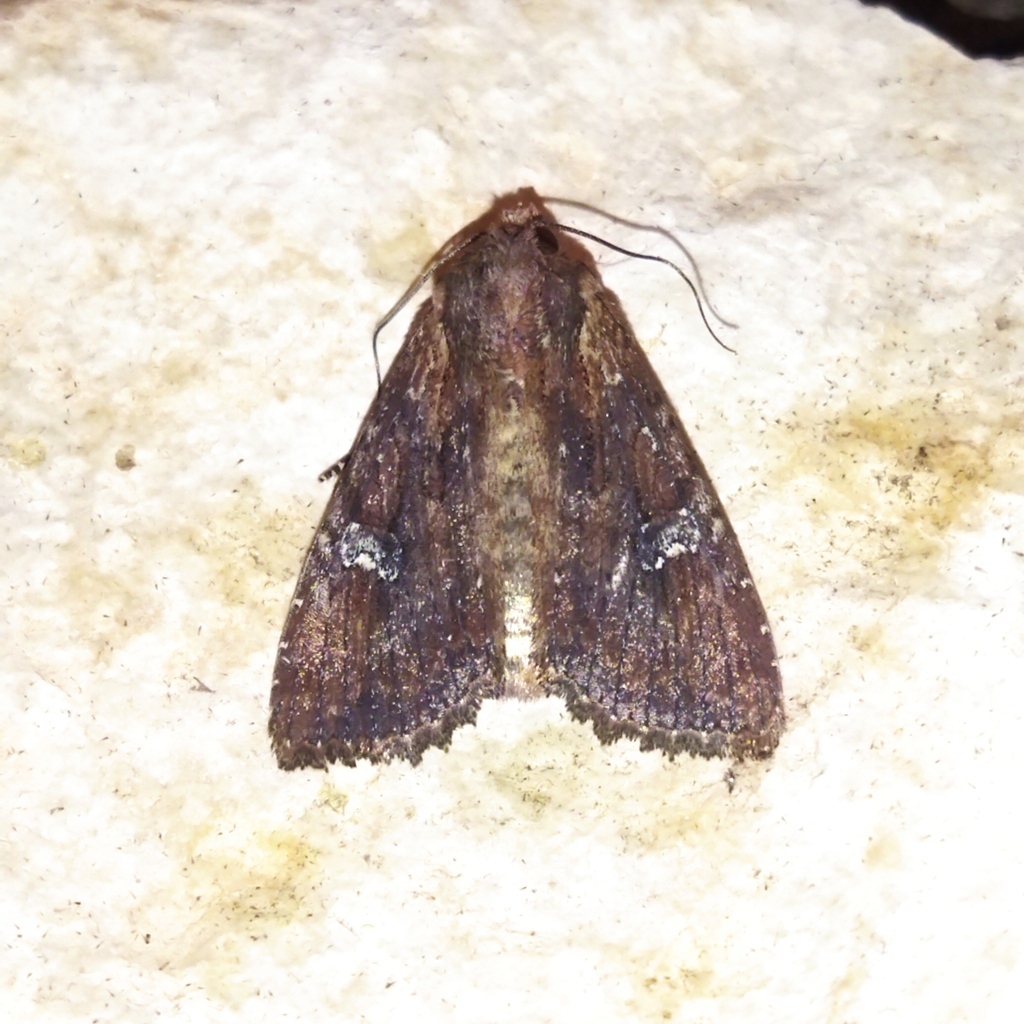
(c) SteveM4560, some rights reserved (CC BY) · licence
Family: Noctuidae · Class: Insecta · Order: Lepidoptera
Apamea digitula is a California animal in the Noctuidae family.
Apamea digitula is a nocturnal moth in the family Noctuidae, commonly known as cutworm moths or owlet moths. This species belongs to a genus characterized by medium-sized moths with relatively cryptic coloration patterns that provide camouflage during daylight hours when they rest on bark or among vegetation. The physical characteristics of A. digitula follow typical Apamea morphology, with forewings that display earth-toned coloration patterns including browns and grays. The forewings typically measure 15 to 20 mm in length, giving the species a moderate wingspan of approximately 30 to 40 mm. Like other members of the genus, the hindwings are generally paler than the forewings, often whitish or light gray with darker marginal borders. The antennae are filiform in both sexes, though males may show slightly more pronounced segments. The distribution and range of Apamea digitula in North America requires verification from current taxonomic databases, as many Apamea species have limited and sometimes disjunct distributions. The genus Apamea includes species found across temperate regions of North America, with several taxa endemic to specific geographic areas or elevation zones. Without verified occurrence records, the specific range of A. digitula within California or other western states cannot be definitively stated. Habitat preferences for Apamea species typically include areas supporting their larval host plants, which are commonly grasses and sedges in the families Poaceae and Cyperaceae. Many species in this genus occupy grassland, meadow, and open woodland habitats where these monocotyledonous plants are abundant. Elevation ranges vary considerably among Apamea species, with some occurring in montane environments while others inhabit coastal or valley floors. The life cycle follows the standard lepidopteran pattern of complete metamorphosis. Adults are nocturnal and attracted to artificial lights, with flight periods typically occurring during warmer months. Females deposit eggs on or near larval host plants, and the resulting caterpillars feed on grass roots, stems, or leaves depending on the species. Larvae of many Apamea species are subterranean or semi-subterranean during part of their development, feeding on root systems or the base of grass stems. Pupation typically occurs in the soil, with adults emerging after several weeks to months depending on temperature and species-specific development times. The conservation status of Apamea digitula is not well-documented in available databases, and the species lacks formal state or federal protection status. Many noctuoid moths face population pressures from habitat conversion, light pollution, and pesticide applications that affect both adult moths and their larval food sources. Grassland habitats, which support many Apamea species, have experienced significant conversion throughout California and other western states. However, without specific population data or trend information for A. digitula, assessment of conservation needs remains incomplete. Further taxonomic verification and field surveys would be necessary to establish current distribution, abundance, and habitat requirements for this species.
Classification
Class: Insecta · Order: Lepidoptera · Family: Noctuidae
Frequently asked questions
How is Apamea digitula classified?
Apamea digitula belongs to class Insecta, order Lepidoptera, family Noctuidae.
What family does Apamea digitula belong to?
Apamea digitula is in the Noctuidae family.
What is Apamea digitula?
Apamea digitula is a nocturnal moth in the family Noctuidae, commonly known as cutworm moths or owlet moths.
Is Apamea digitula found in California?
Yes. Apamea digitula is recorded in California in The California Species Project's catalogue.
Related species
Other California species in the same genus, family, or bioregion.
Data from The California Species Project — 14,000+ California species with verified data from CNPS, CDFW, USFWS, and more.