Apamea occidens
Western Apamea
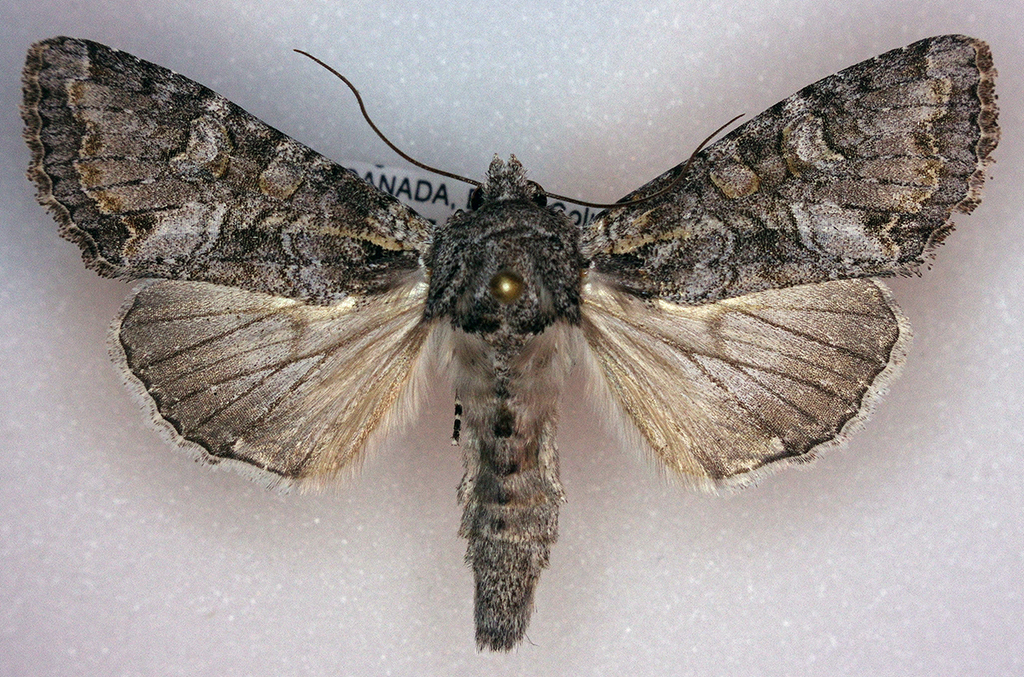
(c) Dave, some rights reserved (CC BY) · licence
Family: Noctuidae · Class: Insecta · Order: Lepidoptera
Apamea occidens (Western Apamea) is a California animal in the Noctuidae family.
Apamea occidens is a nocturnal moth in the family Noctuidae, endemic to western North America. Adults have a forewing length of approximately 15 to 18 millimeters (0.6 to 0.7 inches), with forewings displaying a mottled pattern of brown, gray, and buff coloration. The hindwings are typically lighter, ranging from pale gray to whitish. Males can be distinguished from females by their more feathery antennae and slightly smaller size. The species exhibits the characteristic robust body structure typical of cutworm moths, with a wingspan reaching 30 to 36 millimeters (1.2 to 1.4 inches). The Western Apamea occurs across the western United States and southwestern Canada, with documented populations from British Columbia south to California and east to Montana and Colorado. In California, the species has been recorded from scattered localities in the northern and central portions of the state, including montane and foothill regions. The distribution appears fragmented, with populations often separated by significant distances, suggesting specialized habitat requirements or limited dispersal capability. This moth inhabits grasslands, oak woodlands, and open forest clearings at elevations ranging from approximately 300 to 2,000 meters (1,000 to 6,600 feet). Adults are typically found in areas with native bunch grasses and forb communities. The species appears to prefer habitats with moderate moisture levels and partial shade, often occurring in transitional zones between different plant communities. Larvae likely develop in soil or leaf litter near the base of host plants. Adult Western Apamea moths are active during late spring and early summer, typically flying from May through July. Like other Apamea species, larvae are presumed to be root feeders, developing on grass species and possibly other herbaceous plants. The species is univoltine, producing one generation per year. Adults are attracted to light and are most active during the first few hours after sunset. Mating likely occurs shortly after emergence, with females depositing eggs in soil crevices or at the base of host plants. The conservation status of Apamea occidens remains poorly documented, with no formal federal or state listing designations as of December 2025. Limited survey data and taxonomic uncertainty have hindered comprehensive population assessments. The species faces potential threats from habitat conversion, urban development, and altered fire regimes that affect native grassland communities. Invasive plant species may also impact larval host plant availability. Climate change could affect the species' montane habitats through altered precipitation patterns and temperature regimes. Additional research is needed to clarify the species' taxonomy, distribution, life history, and conservation needs. Standardized monitoring protocols would help determine population trends and identify priority areas for habitat protection.
Classification
Class: Insecta · Order: Lepidoptera · Family: Noctuidae
Frequently asked questions
How is Apamea occidens classified?
Apamea occidens belongs to class Insecta, order Lepidoptera, family Noctuidae.
What family does Apamea occidens belong to?
Apamea occidens is in the Noctuidae family.
What is Apamea occidens?
Apamea occidens is a nocturnal moth in the family Noctuidae, endemic to western North America.
Is Apamea occidens found in California?
Yes. Apamea occidens is recorded in California in The California Species Project's catalogue.
Related species
Other California species in the same genus, family, or bioregion.
Data from The California Species Project — 14,000+ California species with verified data from CNPS, CDFW, USFWS, and more.