Apantesis proxima
Mexican Tiger Moth
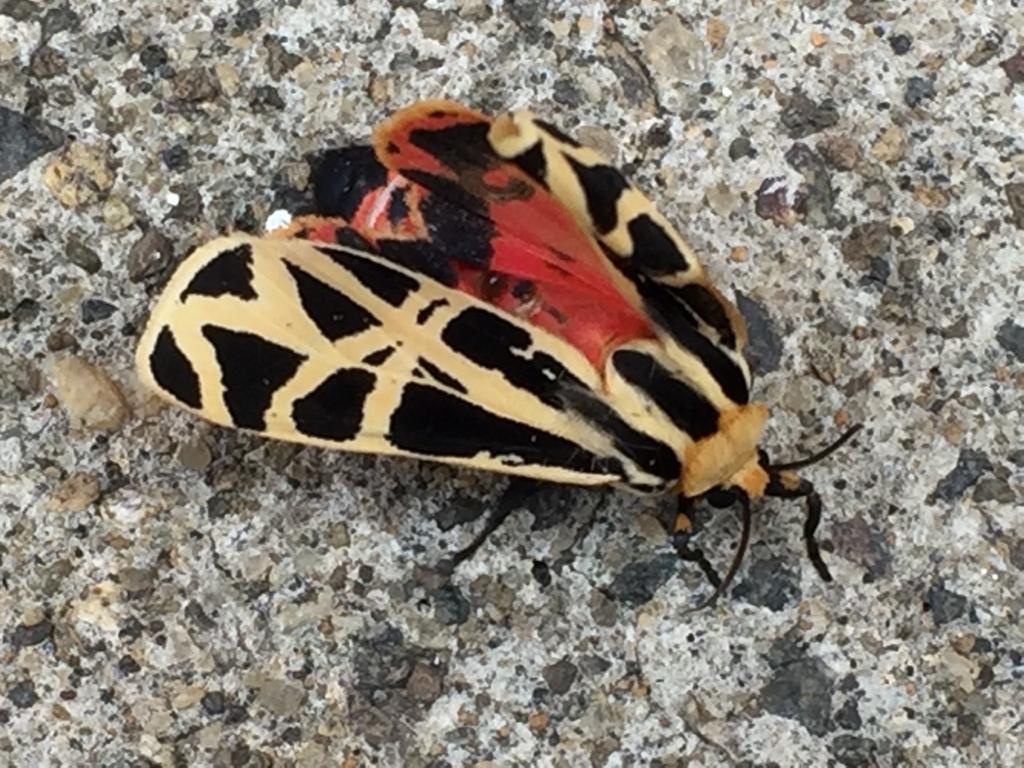
(c) Juanito Escamilla, some rights reserved (CC BY) · licence
Family: Erebidae · Class: Insecta · Order: Lepidoptera
Apantesis proxima (Mexican Tiger Moth) is a California animal in the Erebidae family.
The Mexican Tiger Moth (Apantesis proxima) is a member of the family Erebidae, originally described by Felix Guérin-Méneville in 1844. This species is also known by the synonym Notarctia proxima. The moth exhibits the typical tiger moth morphology with forewings displaying distinctive patterns, though specific morphological details for this species remain poorly documented in available literature. According to Powell & Opler (2009), the Mexican Tiger Moth ranges from southeastern Oregon and southern Idaho south to Nevada, western Utah, and throughout California. The species extends into Baja California, Mexico, reflecting its common name's geographic reference. Within California, distribution records exist across multiple counties, indicating a relatively widespread presence throughout suitable habitat. BugGuide records document occurrences in California, Nevada, New Mexico, and Utah, with California showing the highest concentration of documented specimens. Habitat preferences for Apantesis proxima have not been thoroughly documented in available scientific literature. Like other Apantesis species, this moth likely inhabits areas supporting its larval host plants, though specific host plant associations remain unclear from current documentation. The species presumably occurs in habitats ranging from desert scrub to montane environments, given its broad geographic distribution across varied elevation zones in the western United States. Behavioral and ecological information for the Mexican Tiger Moth is limited in published sources. As with other tiger moths in the genus Apantesis, adults are likely nocturnal and attracted to artificial lights. The species presumably follows a typical arctiine life cycle, with larvae feeding on herbaceous plants and pupating in soil or leaf litter. Specific details regarding flight periods, reproductive behavior, larval development, and adult feeding ecology have not been well documented for this species. The Mexican Tiger Moth currently holds no federal or state conservation listing status. Population trends and conservation needs remain largely unknown due to limited systematic survey data. The species' apparently broad distribution across multiple states suggests stable populations, though habitat-specific threats have not been assessed. Like many lepidopteran species in arid western regions, potential threats may include habitat fragmentation, invasive plant species altering native plant communities, and climate change effects on precipitation patterns and temperature regimes. Scientific documentation for this species remains limited despite its original description over 175 years ago. The information presented here is based on available sources including BugGuide, Powell & Opler (2009), and iNaturalist records. Research priorities should include detailed morphological descriptions, host plant documentation, life history studies, and habitat requirements assessment to better understand this species' ecology and conservation needs.
Classification
Class: Insecta · Order: Lepidoptera · Family: Erebidae
Frequently asked questions
How is Apantesis proxima classified?
Apantesis proxima belongs to class Insecta, order Lepidoptera, family Erebidae.
What family does Apantesis proxima belong to?
Apantesis proxima is in the Erebidae family.
What is Apantesis proxima?
The Mexican Tiger Moth (Apantesis proxima) is a member of the family Erebidae, originally described by Felix Guérin-Méneville in 1844.
Is Apantesis proxima found in California?
Yes. Apantesis proxima is recorded in California in The California Species Project's catalogue.
Related species
Other California species in the same genus, family, or bioregion.
Data from The California Species Project — 14,000+ California species with verified data from CNPS, CDFW, USFWS, and more.