Aphelocoma californica cana
Eagle Mountain Scrub-jay
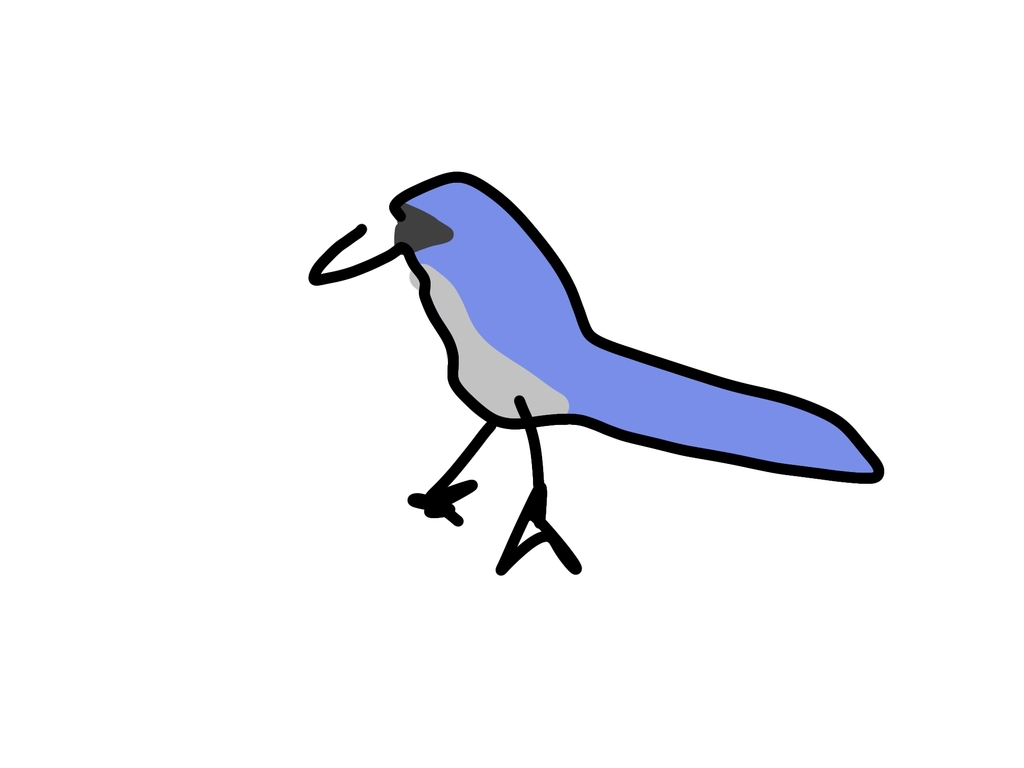
no rights reserved · CC0
Family: Corvidae · Class: Aves · Order: Passeriformes
Conservation status: G5T3 S3
Aphelocoma californica cana (Eagle Mountain Scrub-jay) is a California animal in the Corvidae family.
The Eagle Mountain Scrub-jay is a subspecies of the California Scrub-jay endemic to the Eagle Mountain area of Riverside County, California. This medium-sized corvid measures approximately 28-30 cm (11-12 inches) in length with a wingspan of 39 cm (15 inches). The subspecies displays the characteristic features of California Scrub-jays, including bright blue upperparts, wings, and tail, contrasting with grayish-white underparts and a prominent white throat patch. The head shows a distinctive blue cap with a slight crest, while the back exhibits a brownish-gray saddle pattern. The bill is dark and relatively stout, adapted for its varied omnivorous diet. The Eagle Mountain Scrub-jay has an extremely restricted range, occurring only in the Eagle Mountain area within Joshua Tree National Park in Riverside County, California. This represents one of the most geographically limited populations of California Scrub-jays, isolated from other subspecies by expanses of desert habitat unsuitable for the species. The subspecies is resident year-round in this area, with some seasonal movement into adjacent lowland areas during the nonbreeding season (Birds of the World). This subspecies inhabits dry scrub and oak woodland communities within the Eagle Mountain region, typically at elevations between 1,200-1,800 meters (4,000-6,000 feet). The habitat consists of pinyon-juniper woodland interspersed with chaparral shrubland and oak groves. Unlike coastal populations that frequent residential areas, the Eagle Mountain population remains restricted to natural habitats due to the remote desert location. The species shows strong preference for areas with scattered oak trees that provide essential acorn resources. Eagle Mountain Scrub-jays are omnivorous, feeding on acorns, pinyon nuts, insects including wasps, bees, caterpillars, and grasshoppers, as well as eggs and nestlings of other birds (NatureServe). They play a crucial ecological role as seed dispersers, particularly for pinyon pines and oak species. Breeding typically occurs from March through July, with pairs constructing stick nests in dense shrubs or low trees. Clutches contain 3-5 eggs, with both parents participating in nest defense and chick rearing. The species exhibits complex social behaviors including cooperative breeding systems and sophisticated communication through varied vocalizations. The Eagle Mountain Scrub-jay receives recognition through its Global/State Rank of G5T3 S3, indicating the subspecies is vulnerable to extirpation within California despite the overall species being secure globally. The extremely limited range makes this population particularly susceptible to habitat loss, climate change impacts, and stochastic events. The subspecies benefits from protection within Joshua Tree National Park, which helps preserve its specialized habitat. However, the small population size and geographic isolation present ongoing conservation challenges. Climate change poses additional threats through potential shifts in pinyon-juniper woodland distribution and increased frequency of extreme weather events that could impact this desert-adapted population.
Classification
Class: Aves · Order: Passeriformes · Family: Corvidae
Conservation status
G5T3 S3
Frequently asked questions
How is Aphelocoma californica cana classified?
Aphelocoma californica cana belongs to class Aves, order Passeriformes, family Corvidae.
What family does Aphelocoma californica cana belong to?
Aphelocoma californica cana is in the Corvidae family.
Is Aphelocoma californica cana protected or of conservation concern?
Aphelocoma californica cana carries the following status: G5T3 S3.
What is Aphelocoma californica cana?
The Eagle Mountain Scrub-jay is a subspecies of the California Scrub-jay endemic to the Eagle Mountain area of Riverside County, California.
Is Aphelocoma californica cana found in California?
Yes. Aphelocoma californica cana is recorded in California in The California Species Project's catalogue.
Related species
Other California species in the same genus, family, or bioregion.
Data from The California Species Project — 14,000+ California species with verified data from CNPS, CDFW, USFWS, and more.