Aphis craccivora
Cowpea Aphid
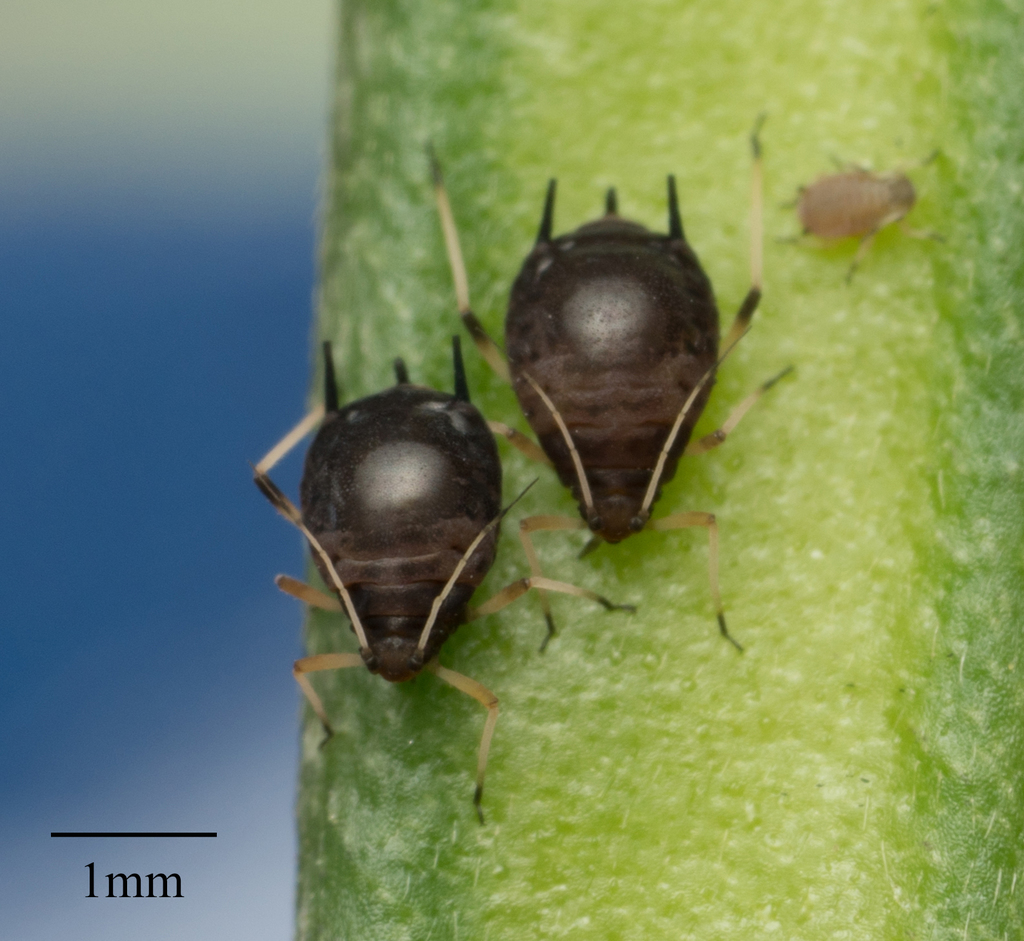
no rights reserved · CC0
Family: Aphididae · Class: Insecta · Order: Hemiptera
Aphis craccivora (Cowpea Aphid) is a California animal in the Aphididae family.
The cowpea aphid is a small, soft-bodied insect in the family Aphididae. Adults measure approximately 1.5-2.5 mm in length and are typically dark green to black in coloration, though color can vary depending on host plant and environmental conditions. Like other aphids, this species has piercing-sucking mouthparts, long antennae, and distinctive cornicles (paired tubular structures) projecting from the posterior abdomen. Winged forms develop when populations become crowded or environmental conditions deteriorate. This species has a cosmopolitan distribution and occurs throughout much of North America, including California. Originally native to the Old World, the cowpea aphid has become established in agricultural and natural areas where suitable host plants are present. In California, it can be found from coastal regions to inland valleys wherever leguminous plants grow. The cowpea aphid inhabits a wide range of environments but is most commonly found on leguminous plants in agricultural fields, gardens, and disturbed areas. Host plants include cowpea, black-eyed pea, common bean, soybean, alfalfa, clover, and various wild legumes. The species shows particular affinity for plants in the Fabaceae family, though it occasionally feeds on other plant families when preferred hosts are unavailable. This aphid exhibits typical aphid biology with complex life cycles involving both sexual and asexual reproduction. During favorable conditions, females reproduce parthenogenetically, giving birth to live young without mating. A single female can produce 50-100 offspring during her 20-30 day lifespan. Reproduction is rapid, with multiple generations occurring per year in suitable climates. The species feeds by inserting its stylet into plant phloem tissue and extracting nutrient-rich sap. Heavy infestations can cause plant stunting, yellowing, and reduced yields. The aphids also excrete honeydew, a sticky substance that can promote sooty mold growth on plant surfaces. As an introduced agricultural pest, the cowpea aphid is not protected under federal or state endangered species legislation. According to NatureServe, the global conservation status is listed as GX (Presumed Extinct), though this designation appears inconsistent with the species' continued presence and agricultural significance. The species poses ongoing challenges for agriculture through direct feeding damage and its role as a vector for plant viruses affecting leguminous crops. Management typically involves integrated pest management strategies including biological control agents such as parasitoid wasps, predatory insects, and resistant crop varieties. The species' impact on native plant communities has been documented, including observations of feeding damage on the endangered Hawaiian endemic Sesbania tomentosa (USFWS documentation). Climate change and expanding agricultural practices may influence future distribution patterns of this adaptable species.
Classification
Class: Insecta · Order: Hemiptera · Family: Aphididae
Frequently asked questions
How is Aphis craccivora classified?
Aphis craccivora belongs to class Insecta, order Hemiptera, family Aphididae.
What family does Aphis craccivora belong to?
Aphis craccivora is in the Aphididae family.
What is Aphis craccivora?
The cowpea aphid is a small, soft-bodied insect in the family Aphididae.
Is Aphis craccivora found in California?
Yes. Aphis craccivora is recorded in California in The California Species Project's catalogue.
Related species
Other California species in the same genus, family, or bioregion.
Data from The California Species Project — 14,000+ California species with verified data from CNPS, CDFW, USFWS, and more.