Aphis gossypii
Melon Aphid
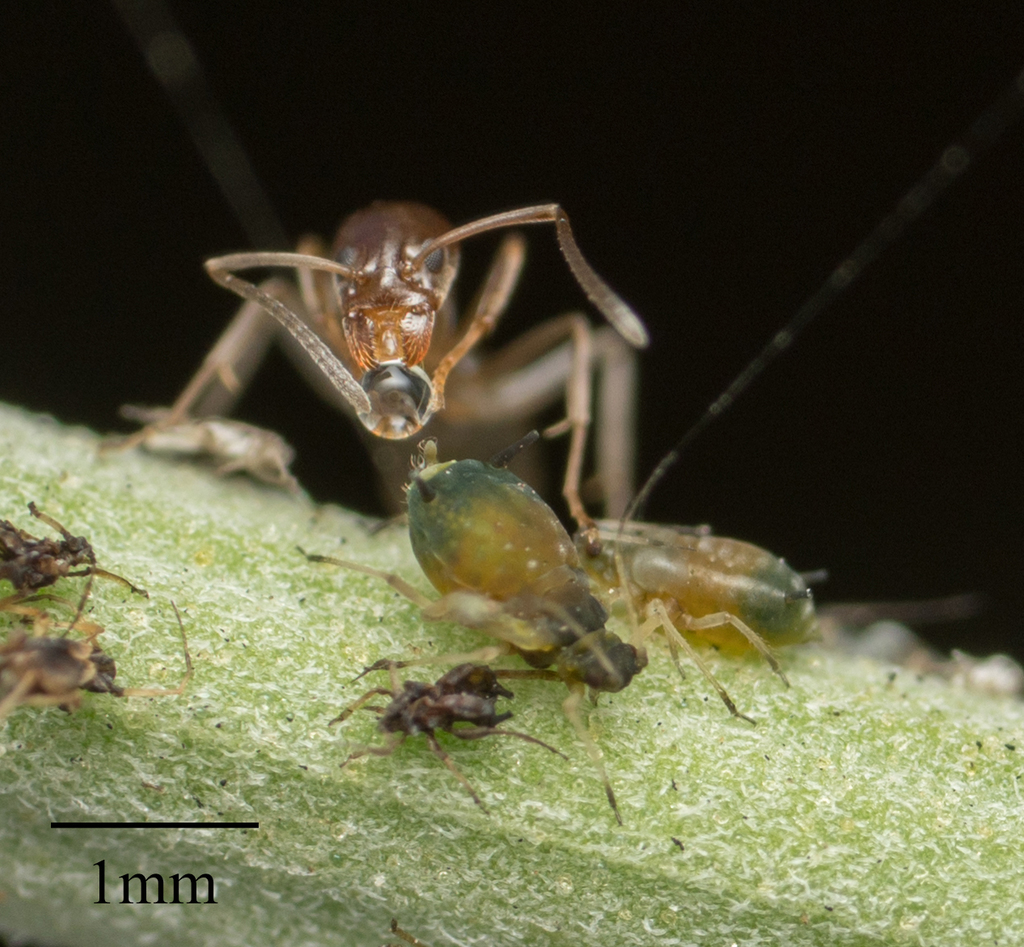
no rights reserved · CC0
Family: Aphididae · Class: Insecta · Order: Hemiptera
Aphis gossypii (Melon Aphid) is a California animal in the Aphididae family.
The melon aphid (Aphis gossypii) is a small, soft-bodied insect measuring 1-2 millimeters (0.04-0.08 inches) in length. Adults display variable coloration ranging from pale green to dark green, yellow, or nearly black, with relatively short cornicles (tubular structures on the abdomen) and antennae shorter than the body length. Winged forms develop when populations become crowded or environmental conditions deteriorate. The species lacks the waxy coating characteristic of some other aphid species. Aphis gossypii occurs throughout California and across most temperate and subtropical regions worldwide. This cosmopolitan species has established populations from sea level to moderate elevations, with records from the Central Valley, coastal regions, and inland agricultural areas. The species' broad distribution reflects its exceptional host plant adaptability and tolerance for diverse climatic conditions. The melon aphid inhabits agricultural crops, gardens, and wild plant communities where suitable host plants occur. This polyphagous species feeds on over 900 plant species across numerous plant families, including Cucurbitaceae (melons, cucumbers, squash), Malvaceae (cotton, hibiscus), Solanaceae (peppers, eggplant), and many ornamental plants. According to research documented by the Xerces Society, A. gossypii also feeds on milkweeds (Asclepias species), though it is not a specialist on these plants like some other aphid species. The species tolerates a wide range of environmental conditions, from arid agricultural fields to humid greenhouse environments. Melon aphids reproduce primarily through parthenogenesis during favorable conditions, with females giving birth to live young without mating. A single female can produce 50-100 offspring over her 20-30 day lifespan. Development from birth to reproductive maturity requires 7-10 days at optimal temperatures of 21-27°C (70-80°F). Populations can increase rapidly under favorable conditions, with multiple overlapping generations per year in California's climate. The species feeds by inserting needle-like mouthparts into plant phloem tissue, extracting nutrient-rich sap. Heavy infestations can cause leaf yellowing, stunting, and honeydew production that supports sooty mold growth. Aphis gossypii serves as an important vector for numerous plant viruses, including cucumber mosaic virus, watermelon mosaic virus, and zucchini yellow mosaic virus, making it a significant agricultural pest. The species' ability to rapidly develop resistance to insecticides has complicated management efforts. Natural enemies include lady beetles, lacewings, parasitic wasps, and fungal pathogens that help regulate populations. As documented in studies of neonicotinoid impacts by the Xerces Society, chemical control measures can inadvertently harm beneficial insects that provide natural pest suppression services. The melon aphid is not protected under state or federal conservation legislation, as it is considered a widespread agricultural pest rather than a conservation concern. Current management focuses on integrated pest management approaches that balance chemical controls with conservation of natural enemies and resistant crop varieties.
Classification
Class: Insecta · Order: Hemiptera · Family: Aphididae
Frequently asked questions
How is Aphis gossypii classified?
Aphis gossypii belongs to class Insecta, order Hemiptera, family Aphididae.
What family does Aphis gossypii belong to?
Aphis gossypii is in the Aphididae family.
What is Aphis gossypii?
The melon aphid (Aphis gossypii) is a small, soft-bodied insect measuring 1-2 millimeters (0.04-0.08 inches) in length.
Is Aphis gossypii found in California?
Yes. Aphis gossypii is recorded in California in The California Species Project's catalogue.
Related species
Other California species in the same genus, family, or bioregion.
Data from The California Species Project — 14,000+ California species with verified data from CNPS, CDFW, USFWS, and more.