Aphis nerii
Oleander Aphid
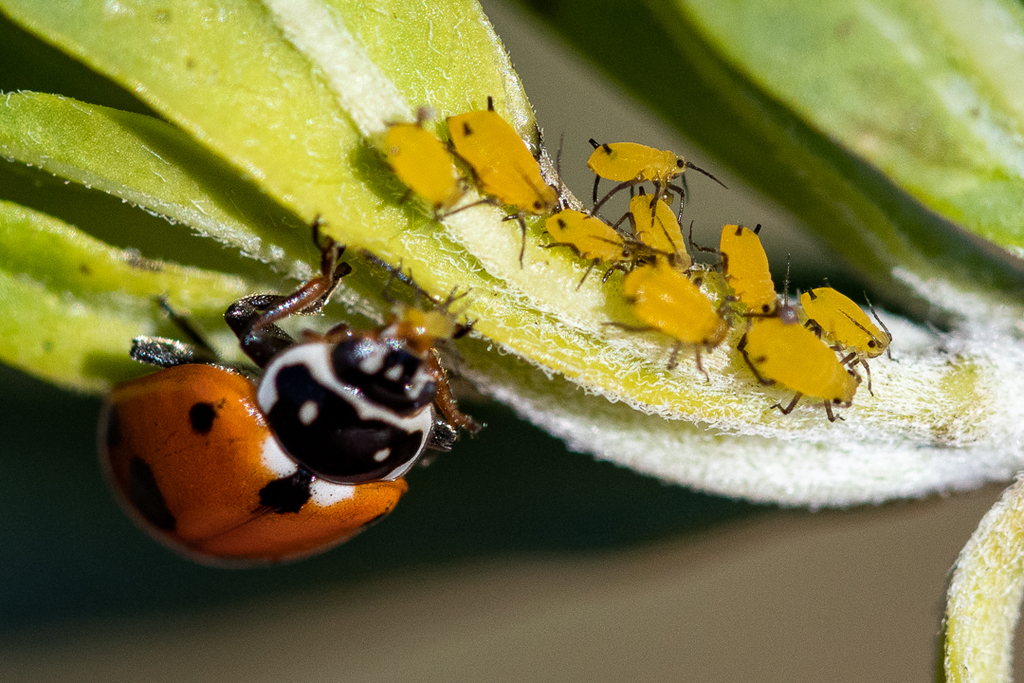
(c) magriet b, some rights reserved (CC BY-SA) · licence
Family: Aphididae · Class: Insecta · Order: Hemiptera
Aphis nerii (Oleander Aphid) is a California animal in the Aphididae family.
The oleander aphid is a small, soft-bodied insect measuring 1.5 to 2.6 millimeters in length. Adults are bright yellow to yellow-orange in coloration with distinctive black cornicles (rear abdominal tubes), legs, and antennae (Xerces Society). The species exhibits both winged and wingless forms, with winged morphs developing when populations become crowded or environmental conditions change. The bright coloration serves as aposematic warning to predators, advertising the toxic cardenolides the aphids sequester from their host plants. Aphis nerii has a nearly cosmopolitan distribution in warm temperate and tropical regions worldwide. The species is believed to be native to the Mediterranean region but is now established throughout the entire United States (Xerces Society). In California, oleander aphids occur from sea level to approximately 3,000 feet elevation, with populations found throughout both coastal and inland areas where suitable host plants are present. The species demonstrates strong host plant specificity, feeding exclusively on plants in the Apocynaceae family. Primary host plants include various milkweed species (Asclepias spp.), dogbane (Apocynum spp.), oleander (Nerium oleander), periwinkle (Vinca spp.), and wax plant (Hoya carnosa) (Xerces Society). Oleander aphids utilize their piercing-sucking mouthparts to extract sugary phloem from stems, foliage, flowers, and seed pods. They are commonly found in gardens, natural areas, roadsides, and disturbed habitats where these host plants occur. Oleander aphids reproduce through parthenogenesis, giving birth to live young rather than laying eggs. This reproductive strategy allows for rapid population growth under favorable conditions. The species exhibits notable genetic uniformity, with research revealing extremely low genetic diversity in southern United States populations, suggesting the presence of an invasive "superclone" (Harrison & Mondor 2011). Adults and nymphs feed gregariously, often forming dense colonies on host plants. The aphids sequester toxic cardenolides from their host plants, making them unpalatable to most predators, though specialized natural enemies including lady beetles, hoverflies, and parasitoid wasps readily consume them. As a non-native species, oleander aphids are considered an invasive pest in many regions, including California. Their feeding activity can weaken host plants, reduce seed production, and impact native milkweed populations that support monarch butterflies and other specialized insects. While their feeding rarely kills mature plants, heavy infestations can significantly stress vegetation. The species poses particular concern in conservation contexts where native milkweed restoration efforts support declining monarch butterfly populations. Management typically relies on biological control through natural predators rather than pesticide applications, which can harm beneficial insects. The aphids' widespread distribution and reproductive efficiency make them a persistent challenge for milkweed cultivation and native plant restoration projects throughout their introduced range.
Classification
Class: Insecta · Order: Hemiptera · Family: Aphididae
Frequently asked questions
How is Aphis nerii classified?
Aphis nerii belongs to class Insecta, order Hemiptera, family Aphididae.
What family does Aphis nerii belong to?
Aphis nerii is in the Aphididae family.
What is Aphis nerii?
The oleander aphid is a small, soft-bodied insect measuring 1.5 to 2.6 millimeters in length.
Is Aphis nerii found in California?
Yes. Aphis nerii is recorded in California in The California Species Project's catalogue.
Related species
Other California species in the same genus, family, or bioregion.
Data from The California Species Project — 14,000+ California species with verified data from CNPS, CDFW, USFWS, and more.