Apiocera warneri
Glamis Sand Fly
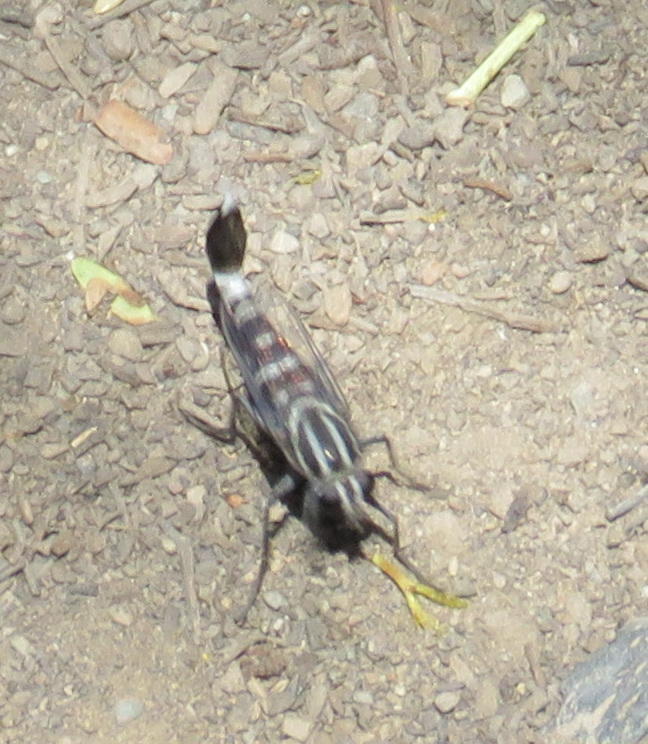
(c) Nicola van Berkel, some rights reserved (CC BY-SA) · licence
Family: Apioceridae · Class: Insecta · Order: Diptera
Conservation status: G1G2 S1
Apiocera warneri (Glamis Sand Fly) is a California animal in the Apioceridae family.
The Glamis sand fly (Apiocera warneri) is a dipteran species in the family Apioceridae, known commonly as flower flies or thick-headed flies. This species represents one of the more poorly documented insects endemic to the desert regions of southeastern California. Members of the genus Apiocera are typically medium-sized flies characterized by their robust build and distinctive head structure, though specific morphological details for A. warneri remain largely undocumented in published literature. Apiocera warneri is endemic to Imperial County, California, where it occurs in association with the Glamis Dunes system, also known as the Imperial Sand Hills. This region represents one of the most extensive active sand dune systems in California, located near the town of Glamis in the Colorado Desert portion of the Sonoran Desert. The species' range appears to be extremely restricted, coinciding with the specialized habitat requirements typical of sand dune-adapted insects. The species inhabits active sand dune environments characterized by shifting sands, sparse vegetation, and extreme temperature fluctuations. The Glamis Dunes system features unvegetated sand areas interspersed with desert shrub communities. Elevation in this region ranges from approximately 50 to 200 meters above sea level. The harsh desert conditions include summer temperatures exceeding 45°C (113°F) and minimal annual precipitation, typically less than 75 millimeters. Limited ecological information exists for A. warneri specifically. Members of the family Apioceridae are generally predaceous as larvae, developing in sandy or loose soil substrates where they feed on other arthropods (Yeates & Irwin 1996). Adults are typically active during warmer months and are often observed visiting flowers for nectar, which may explain their common name of flower flies (McAlpine et al. 1987). The timing of adult emergence and specific host relationships for A. warneri have not been documented in available scientific literature. The conservation status of A. warneri reflects significant concern for its persistence. According to NatureServe, the species holds a global rank of G1G2, indicating it is critically imperiled to imperiled globally, and a state rank of S1, meaning it is critically imperiled in California. This ranking suggests extremely limited distribution, very few populations or occurrences, and high vulnerability to extinction. The Glamis Dunes region faces ongoing pressures from off-highway vehicle recreation, which represents a primary management challenge for the Bureau of Land Management (BLM 2019). The Imperial Sand Dunes Recreation Area, which encompasses much of the species' habitat, receives intensive recreational use that can alter sand dune dynamics and destroy microhabitats essential for specialized dune-adapted species. The lack of comprehensive biological studies for A. warneri represents a significant knowledge gap. Current conservation priorities should include basic life history research, population surveys, and habitat requirement documentation. The species' apparent restriction to a single dune system makes it particularly vulnerable to habitat modification or loss. Climate change may pose additional threats through altered precipitation patterns and increased temperature extremes in an already harsh environment. Detailed ecological studies of this species are lacking. The above information synthesizes available data from taxonomic databases and regional habitat descriptions. We welcome contributions of verified scientific data, photographs, or field observations to enhance this species account. Please contact Species List Pro to share additional information about the Glamis sand fly's biology, distribution, or ecology.
Classification
Class: Insecta · Order: Diptera · Family: Apioceridae
Conservation status
G1G2 S1
Frequently asked questions
How is Apiocera warneri classified?
Apiocera warneri belongs to class Insecta, order Diptera, family Apioceridae.
What family does Apiocera warneri belong to?
Apiocera warneri is in the Apioceridae family.
Is Apiocera warneri protected or of conservation concern?
Apiocera warneri carries the following status: G1G2 S1.
What is Apiocera warneri?
The Glamis sand fly (Apiocera warneri) is a dipteran species in the family Apioceridae, known commonly as flower flies or thick-headed flies.
Is Apiocera warneri found in California?
Yes. Apiocera warneri is recorded in California in The California Species Project's catalogue.
More California species
This species has no close relatives in our California data — here are other species to explore.
Data from The California Species Project — 14,000+ California species with verified data from CNPS, CDFW, USFWS, and more.