Apiomerus californicus
California Bee Assassin
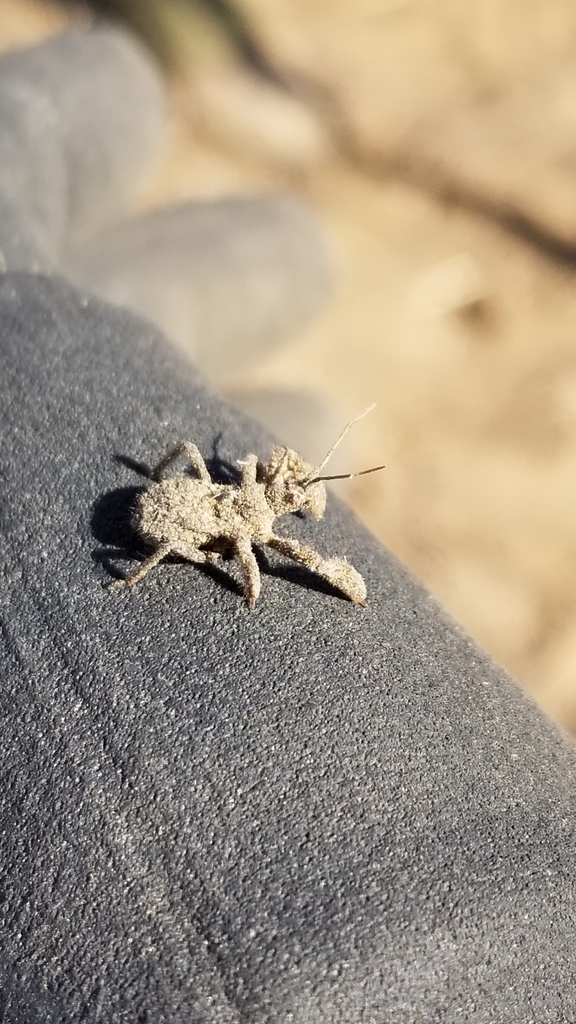
(c) Nicole, some rights reserved (CC BY) · licence
Family: Reduviidae · Class: Insecta · Order: Hemiptera
Apiomerus californicus (California Bee Assassin) is a California animal in the Reduviidae family.
The California bee assassin (Apiomerus californicus) is a predatory insect belonging to the assassin bug family Reduviidae. Like other members of the genus Apiomerus, this species exhibits the characteristic robust body plan of assassin bugs, with a prominent curved proboscis used for piercing prey and strong raptorial forelegs for grasping victims. The California bee assassin displays less color variation than other North American Apiomerus species, though specific morphometric data for this species remains limited in the scientific literature (BugGuide). The species occurs in California and Baja California, Mexico, with its range concentrated in coastal regions and coastal mountain ranges. An indeterminate locality in Oregon has been mentioned, though the northern extent of the range requires further verification (Berniker et al.). The California bee assassin inhabits elevations from sea level to 1,997 meters (6,552 feet), demonstrating considerable altitudinal tolerance within its coastal distribution (Berniker et al.). This assassin bug occupies coastal habitats and associated mountain ranges throughout California. The species appears adapted to the Mediterranean climate zones characteristic of California's coastal regions, where it likely benefits from the diverse arthropod prey communities found in these ecosystems. The elevation range from sea level to nearly 2,000 meters suggests the species can utilize various coastal habitat types, from maritime chaparral to montane forests. As a member of the assassin bug family, Apiomerus californicus functions as an ambush predator, using its strong forelegs to capture arthropod prey and its piercing-sucking mouthparts to extract body fluids. The genus name "Apiomerus" translates to "bee thigh," likely referencing either the robust appearance of the hind legs or the species' propensity for capturing bee prey. Like other assassin bugs, this species likely exhibits sit-and-wait predatory behavior, positioning itself on vegetation or flowers where potential prey might visit. Reproduction in reduviids typically involves direct development without metamorphosis, with eggs deposited in protected locations. The conservation status of the California bee assassin has not been formally assessed by state or federal agencies. The species does not appear on California Department of Fish and Wildlife listings or federal endangered species lists as of December 2025. However, like many arthropod species endemic to California's coastal regions, Apiomerus californicus may face habitat pressures from urban development and agricultural conversion of natural areas. The species' apparent restriction to coastal and near-coastal environments could make it vulnerable to climate change impacts, particularly sea-level rise and altered precipitation patterns affecting California's Mediterranean climate ecosystems. The limited taxonomic and ecological research on this species highlights the need for additional biological studies to better understand its distribution, abundance, and ecological requirements. Enhanced knowledge of North American Apiomerus species would benefit from systematic surveys and taxonomic revision work building on foundational studies by researchers like Szerlip (1980).
Classification
Class: Insecta · Order: Hemiptera · Family: Reduviidae
Frequently asked questions
How is Apiomerus californicus classified?
Apiomerus californicus belongs to class Insecta, order Hemiptera, family Reduviidae.
What family does Apiomerus californicus belong to?
Apiomerus californicus is in the Reduviidae family.
What is Apiomerus californicus?
The California bee assassin (Apiomerus californicus) is a predatory insect belonging to the assassin bug family Reduviidae.
Is Apiomerus californicus found in California?
Yes. Apiomerus californicus is recorded in California in The California Species Project's catalogue.
Related species
Other California species in the same genus, family, or bioregion.
Data from The California Species Project — 14,000+ California species with verified data from CNPS, CDFW, USFWS, and more.