Apis mellifera
Western Honey Bee
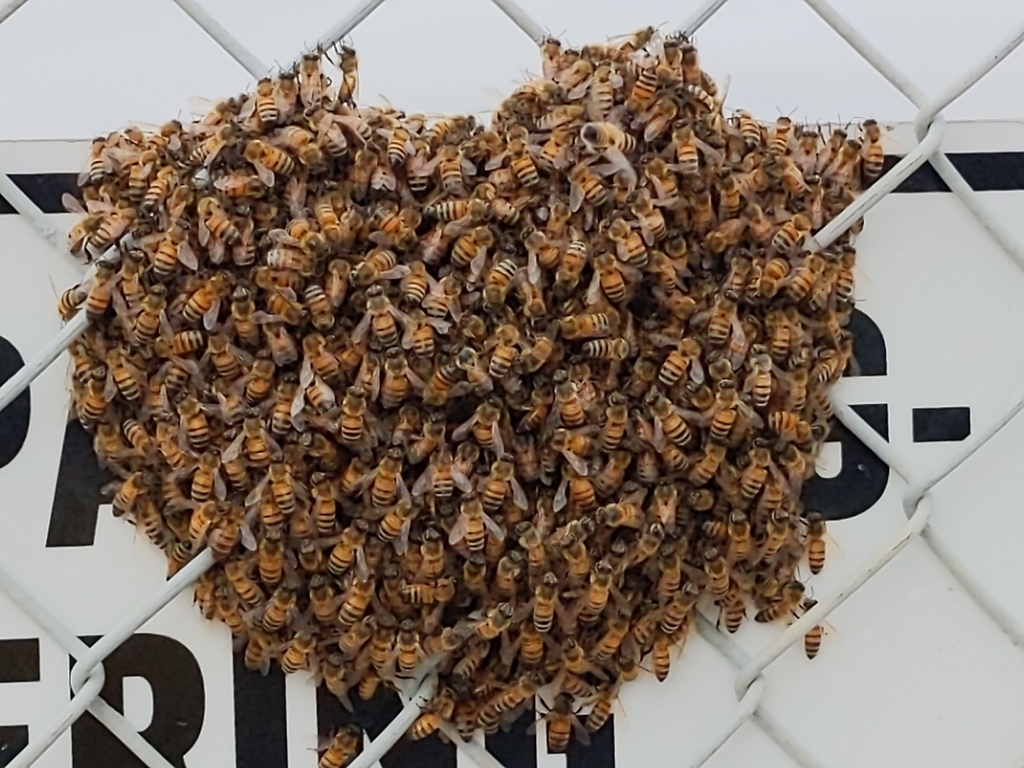
no rights reserved · CC0
Family: Apidae · Class: Insecta · Order: Hymenoptera
Apis mellifera (Western Honey Bee) is a California animal in the Apidae family.
The western honey bee is a medium-sized social insect measuring 12-15 mm (0.47-0.59 inches) in length. Workers display golden-brown coloration with darker brown bands across the abdomen, while queens are larger at 15-20 mm and darker in appearance. The species has a hairy thorax, four wings, and distinctive branched body hairs that aid in pollen collection. Drones are stouter and lack stinging apparatus. Native to Europe, Africa, and western Asia, Apis mellifera was introduced to North America by European colonists in the early 1600s. The species now occurs throughout California and across the continental United States, with managed colonies distributed from sea level to elevations exceeding 2,400 meters (8,000 feet). Feral populations have established in various habitats including oak woodlands, chaparral, and urban environments. Western honey bees adapt to diverse habitats but require access to nectar and pollen sources throughout their active season. Colonies prefer protected nest sites such as tree cavities, wall voids, or managed hive boxes. The species demonstrates extensive habitat flexibility, thriving in agricultural areas, suburban gardens, and natural ecosystems. Optimal foraging occurs within a 3-kilometer (1.9-mile) radius of the colony (Seeley 1985), though workers can travel up to 8 kilometers when necessary (von Frisch 1967). Honey bees are eusocial insects living in perennial colonies of 20,000-80,000 individuals (Winston 1987). A single queen produces all offspring, while sterile female workers perform foraging, nest maintenance, and brood care. The colony cycle includes spring buildup, summer peak activity, and winter cluster formation. Workers communicate through complex dances to convey distance and direction of food sources. Queens can live 2-3 years, while workers survive 6 weeks during active season or several months when overwintering. Reproduction involves swarming, typically occurring in late spring when the original queen departs with half the workers to establish a new colony. The remaining colony raises a new queen from specially fed larvae. Foraging workers collect nectar from flowers, converting it to honey through enzymatic processes and evaporation. A single colony may harvest 30-60 kilograms (66-132 pounds) of honey annually (Crane 1999). While not listed under endangered species legislation, honey bee populations face significant conservation challenges. Colony Collapse Disorder, first documented in 2006, has caused widespread colony losses. Primary threats include varroa mites (Varroa destructor), viral diseases, pesticide exposure, and habitat degradation. According to the USDA, annual colony losses in the United States average 30-40 percent (USDA 2023). The species' role as the primary managed pollinator makes population health critical for agricultural systems, with honey bees contributing an estimated $15 billion annually to U.S. crop production through pollination services (Calderone 2012). Conservation efforts focus on integrated pest management, reduced pesticide use, and habitat enhancement to support both managed and feral populations.
Classification
Class: Insecta · Order: Hymenoptera · Family: Apidae
Frequently asked questions
How is Apis mellifera classified?
Apis mellifera belongs to class Insecta, order Hymenoptera, family Apidae.
What family does Apis mellifera belong to?
Apis mellifera is in the Apidae family.
What is Apis mellifera?
The western honey bee is a medium-sized social insect measuring 12-15 mm (0.47-0.59 inches) in length.
Is Apis mellifera found in California?
Yes. Apis mellifera is recorded in California in The California Species Project's catalogue.
Related species
Other California species in the same genus, family, or bioregion.
Data from The California Species Project — 14,000+ California species with verified data from CNPS, CDFW, USFWS, and more.