Aplodontia rufa
Mountain Beaver
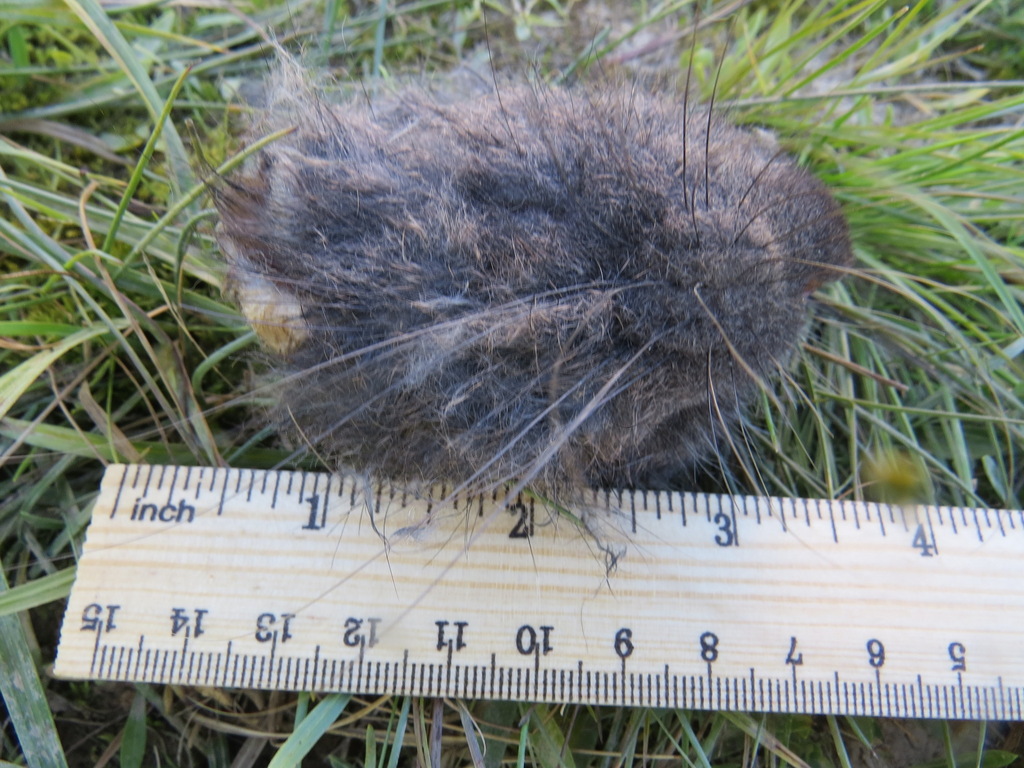
(c) Garth Harwood, some rights reserved (CC BY) · licence
Family: Aplodontiidae · Class: Mammalia · Order: Rodentia
Aplodontia rufa (Mountain Beaver) is a California animal in the Aplodontiidae family.
The mountain beaver is a primitive, fossorial rodent endemic to the Pacific Northwest. Despite its common name, this species is not closely related to true beavers and does not build dams. Adults measure 300 to 470 millimeters (11.8 to 18.5 inches) in total length, including a short tail of 20 to 40 millimeters. Body weight ranges from 800 to 1,500 grams (1.8 to 3.3 pounds). The dense, dark brown to grayish-brown pelage appears uniform across the dorsal and ventral surfaces. Small eyes, short rounded ears, and strong claws adapted for digging distinguish this species from other rodents. The mountain beaver occurs along the Pacific Coast from southwestern British Columbia through western Washington and Oregon to northwestern California. In California, the species is restricted to the humid coastal forests of Del Norte and northern Humboldt counties, representing the southernmost extent of its range. Historical records indicate the species once occurred further south in Humboldt County, but current populations appear limited to areas north of the Mad River. This species inhabits dense, humid forests dominated by Douglas-fir, western hemlock, and redwood. Mountain beavers require areas with high moisture content, typically along stream corridors, seeps, or areas with dense understory vegetation. They construct extensive burrow systems in well-drained soils, often on slopes with thick layers of organic matter. Burrows can extend 60 to 90 meters in length and include multiple entrances, nesting chambers, and food storage areas. The species occurs from sea level to approximately 1,500 meters elevation. Mountain beavers are herbivorous, consuming a variety of woody and herbaceous vegetation including ferns, grasses, forbs, and young tree shoots. They are particularly fond of bracken fern, salmonberry, and vine maple. The species exhibits unusual behavior of cutting vegetation and allowing it to dry near burrow entrances before storing it underground. Breeding occurs from February through April, with females producing one litter annually of two to four young after a gestation period of approximately 30 days. Young remain with the mother for several months before dispersing. The mountain beaver is not federally or state listed as threatened or endangered, though California populations represent a small fraction of the species' total range. The species faces habitat loss from timber harvesting, urban development, and conversion of forest lands. Climate change may pose additional threats through altered precipitation patterns and forest composition changes. In California, populations are likely stable but geographically restricted. The species' specialized habitat requirements and limited dispersal ability make local populations vulnerable to disturbance. Current management focuses on maintaining suitable forest conditions and minimizing habitat fragmentation in occupied areas.
Classification
Class: Mammalia · Order: Rodentia · Family: Aplodontiidae
Frequently asked questions
How is Aplodontia rufa classified?
Aplodontia rufa belongs to class Mammalia, order Rodentia, family Aplodontiidae.
What family does Aplodontia rufa belong to?
Aplodontia rufa is in the Aplodontiidae family.
What is Aplodontia rufa?
The mountain beaver is a primitive, fossorial rodent endemic to the Pacific Northwest.
Is Aplodontia rufa found in California?
Yes. Aplodontia rufa is recorded in California in The California Species Project's catalogue.
Related species
Other California species in the same genus, family, or bioregion.
Data from The California Species Project — 14,000+ California species with verified data from CNPS, CDFW, USFWS, and more.