Aplodontia rufa californica
Sierra Nevada Mountain Beaver
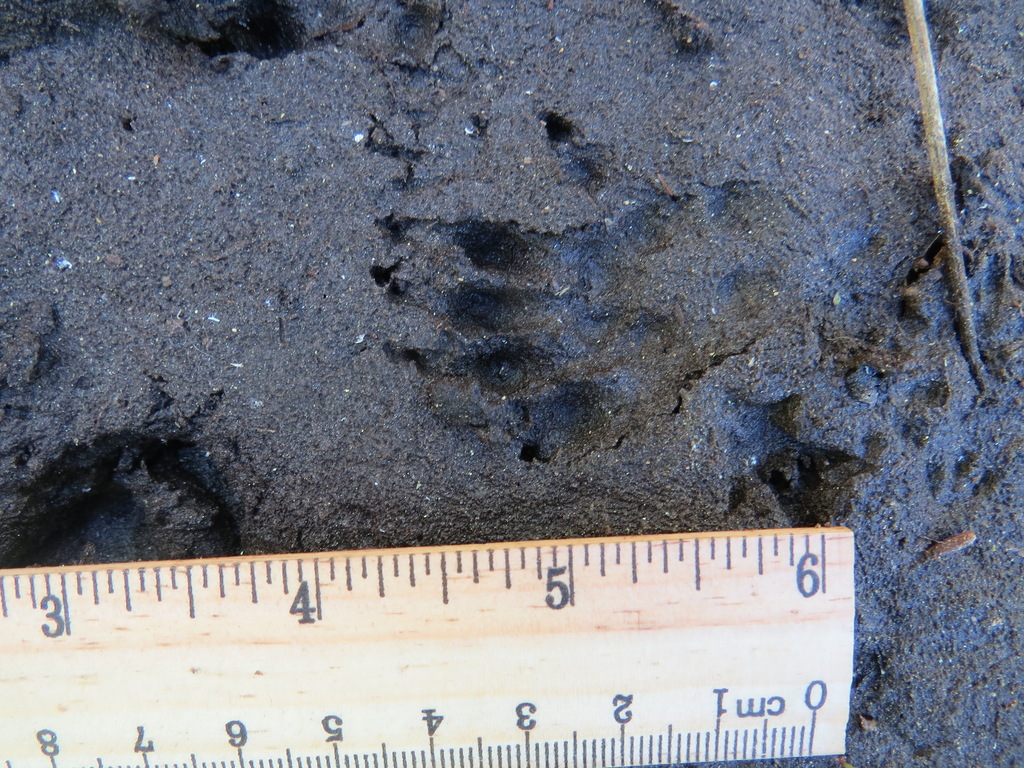
(c) Garth Harwood, some rights reserved (CC BY) · licence
Family: Aplodontiidae · Class: Mammalia · Order: Rodentia
Conservation status: G5T3T4 S2S3
Aplodontia rufa californica (Sierra Nevada Mountain Beaver) is a California animal in the Aplodontiidae family.
The Sierra Nevada mountain beaver (Aplodontia rufa californica) is a medium-sized rodent subspecies endemic to the Sierra Nevada mountain range of California and a small area of west-central Nevada. Adults typically measure 300-460 mm (12-18 inches) in total length and weigh 1-3 kg (2.2-6.6 pounds). The species has dense, dark brown to grayish-brown fur, small eyes and ears, and a short, nearly hairless tail. Mountain beavers are distinguished by their robust build, strong claws adapted for digging, and lack of external cheek pouches. Historically, Sierra Nevada mountain beaver populations were distributed in scattered locations throughout the northern, central, and southern Sierra Nevada of California, with additional populations in west-central Nevada near Lake Tahoe (NatureServe 2025). Current distribution remains patchy, with populations often separated by large areas of unsuitable habitat. According to museum records from 1912-1935, at least 29 sites were documented in the Sierra Nevada, though the current number of occupied sites is likely reduced (Beier 1989). This subspecies inhabits cool, moist environments typically on north-facing slopes in steep terrain near water sources. Suitable habitat is characterized by dense vegetation including willow (Salix spp.), alder (Alnus spp.), white fir (Abies concolor), and red fir (A. magnifica). Mountain beavers require areas with adequate soil drainage and abundant food supply, often establishing burrow systems near small streams. Elevation ranges vary throughout their distribution, with populations documented from moderate to high elevations in mountainous terrain. Sierra Nevada mountain beavers are fossorial, spending most of their time in extensive underground burrow systems located just below the surface. They are primarily nocturnal and crepuscular, emerging to forage on a variety of vegetation including ferns, shrubs, and herbaceous plants. The species can consume plants toxic to other mammals, including bracken fern (Pteridium aquilinum). Home ranges are relatively small, typically 0.1-0.3 hectares per individual. Breeding occurs in late winter to early spring, with males beginning reproductive preparation in December or January. The Sierra Nevada mountain beaver is assigned a global rank of G5T3T4, indicating the full species is secure but this subspecies is vulnerable to apparently secure. In California, it receives a state rank of S2S3, reflecting its imperiled to vulnerable status. The subspecies faces threats from habitat alteration due to development, recreational activities, water diversions, and climate change. Populations may be particularly vulnerable in areas with marginally suitable habitat. Management concerns include road construction, livestock grazing, and herbicide applications that alter soil drainage and vegetation composition essential for mountain beaver survival (Beier 1989). The fragmented nature of suitable habitat limits dispersal between populations and increases vulnerability to local extinctions.
Classification
Class: Mammalia · Order: Rodentia · Family: Aplodontiidae
Conservation status
G5T3T4 S2S3
Frequently asked questions
How is Aplodontia rufa californica classified?
Aplodontia rufa californica belongs to class Mammalia, order Rodentia, family Aplodontiidae.
What family does Aplodontia rufa californica belong to?
Aplodontia rufa californica is in the Aplodontiidae family.
Is Aplodontia rufa californica protected or of conservation concern?
Aplodontia rufa californica carries the following status: G5T3T4 S2S3.
What is Aplodontia rufa californica?
The Sierra Nevada mountain beaver (Aplodontia rufa californica) is a medium-sized rodent subspecies endemic to the Sierra Nevada mountain range of California and a small area of west-central Nevada.
Is Aplodontia rufa californica found in California?
Yes. Aplodontia rufa californica is recorded in California in The California Species Project's catalogue.
Related species
Other California species in the same genus, family, or bioregion.
Data from The California Species Project — 14,000+ California species with verified data from CNPS, CDFW, USFWS, and more.