Aplodontia rufa humboldtiana
Humboldt Mountain Beaver
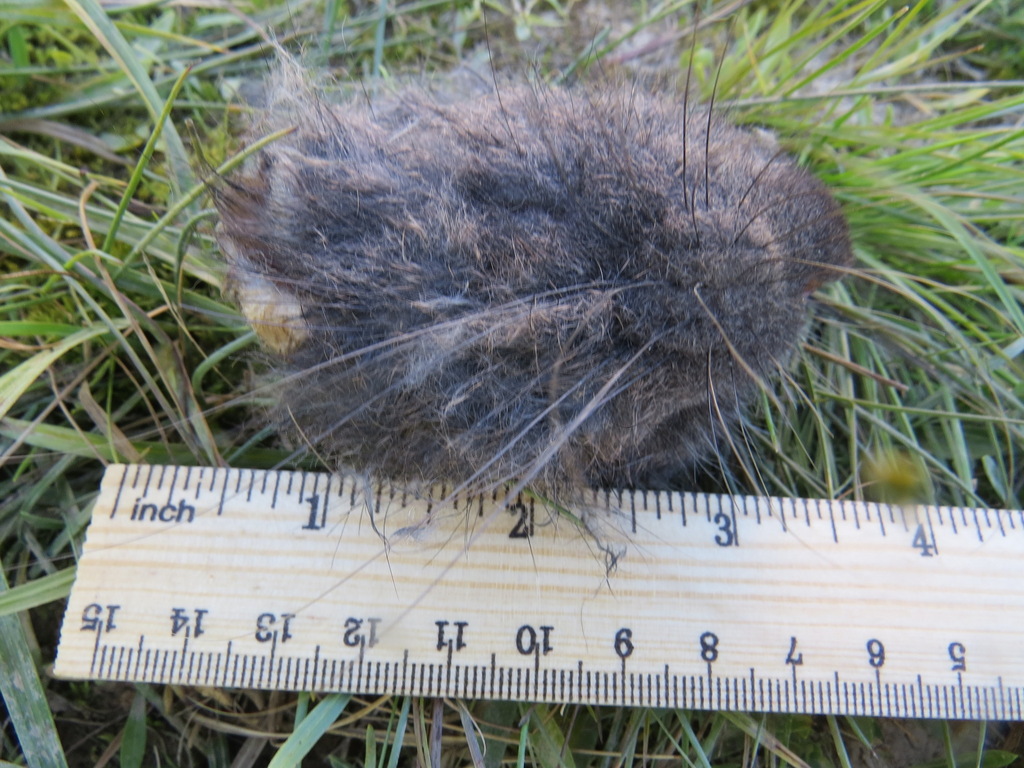
(c) Garth Harwood, some rights reserved (CC BY) · licence
Family: Aplodontiidae · Class: Mammalia · Order: Rodentia
Conservation status: G5TNR SNR
Aplodontia rufa humboldtiana (Humboldt Mountain Beaver) is a California animal in the Aplodontiidae family.
The Humboldt Mountain Beaver (Aplodontia rufa humboldtiana) is a subspecies of mountain beaver, a primitive rodent that represents the sole living member of the family Aplodontiidae. Despite its common name, this species is not closely related to true beavers but is classified within the order Rodentia, suborder Sciuromorpha. Mountain beavers are stocky, compact mammals measuring 254 to 406 mm (10 to 16 inches) in total length, with a vestigial tail of 13 to 51 mm (0.5 to 2 inches). Adults typically weigh 500 to 1,400 grams (1.1 to 3.1 pounds). The pelage is dense and soft, ranging from dark brown to blackish-brown dorsally, with slightly lighter underparts. The species possesses small eyes and ears, reflecting its fossorial lifestyle. The Humboldt Mountain Beaver occurs in northwestern California, specifically in coastal regions of Humboldt County. This subspecies represents one of seven recognized subspecies of Aplodontia rufa distributed along the Pacific Coast from British Columbia to California. The range of A. r. humboldtiana is geographically restricted compared to other mountain beaver subspecies, which collectively span from sea level to elevations of 2,100 meters (6,900 feet) in suitable habitat. This subspecies inhabits dense, moist forests and areas with abundant understory vegetation. Mountain beavers require areas with high soil moisture and dense cover, typically selecting sites near streams, seeps, or other water sources. They construct extensive burrow systems in well-drained soils, often on slopes with dense fern communities, thickets, or young forest regeneration. The burrow networks include nest chambers, food storage areas, and multiple entrance points, with tunnel systems extending up to 150 meters (490 feet) in length. Mountain beavers are primarily herbivorous, feeding on a diverse array of plant materials including ferns, grasses, forbs, and woody vegetation. They consume both fresh vegetation and dried plant material stored in underground chambers. The species exhibits a unique behavior of creating "haypiles" by cutting and curing vegetation near burrow entrances. Reproduction occurs once annually, with females producing litters of 2 to 4 young after a gestation period of approximately 30 days. Young remain in natal burrows for several weeks before dispersing. While the Humboldt Mountain Beaver lacks federal listing status, the related Point Arena Mountain Beaver (A. r. nigra) was listed as federally endangered, appearing in U. This species is included on the California Department of Fish and Wildlife's Special Animals List.S. Fish and Wildlife Service expenditure reports with conservation funding allocated through 2002. The limited range and specialized habitat requirements of the Humboldt subspecies make it potentially vulnerable to habitat loss from logging, development, and climate change. Forest management practices that maintain understory diversity and soil moisture are important for subspecies conservation. Population status and trends for A. r. humboldtiana have not been well documented, indicating a need for systematic surveys and monitoring programs to assess conservation needs.
Classification
Class: Mammalia · Order: Rodentia · Family: Aplodontiidae
Conservation status
G5TNR SNR
Frequently asked questions
How is Aplodontia rufa humboldtiana classified?
Aplodontia rufa humboldtiana belongs to class Mammalia, order Rodentia, family Aplodontiidae.
What family does Aplodontia rufa humboldtiana belong to?
Aplodontia rufa humboldtiana is in the Aplodontiidae family.
Is Aplodontia rufa humboldtiana protected or of conservation concern?
Aplodontia rufa humboldtiana carries the following status: G5TNR SNR.
What is Aplodontia rufa humboldtiana?
The Humboldt Mountain Beaver (Aplodontia rufa humboldtiana) is a subspecies of mountain beaver, a primitive rodent that represents the sole living member of the family Aplodontiidae.
Is Aplodontia rufa humboldtiana found in California?
Yes. Aplodontia rufa humboldtiana is recorded in California in The California Species Project's catalogue.
Related species
Other California species in the same genus, family, or bioregion.
Data from The California Species Project — 14,000+ California species with verified data from CNPS, CDFW, USFWS, and more.