Aplodontia rufa nigra
Point Arena mountain beaver
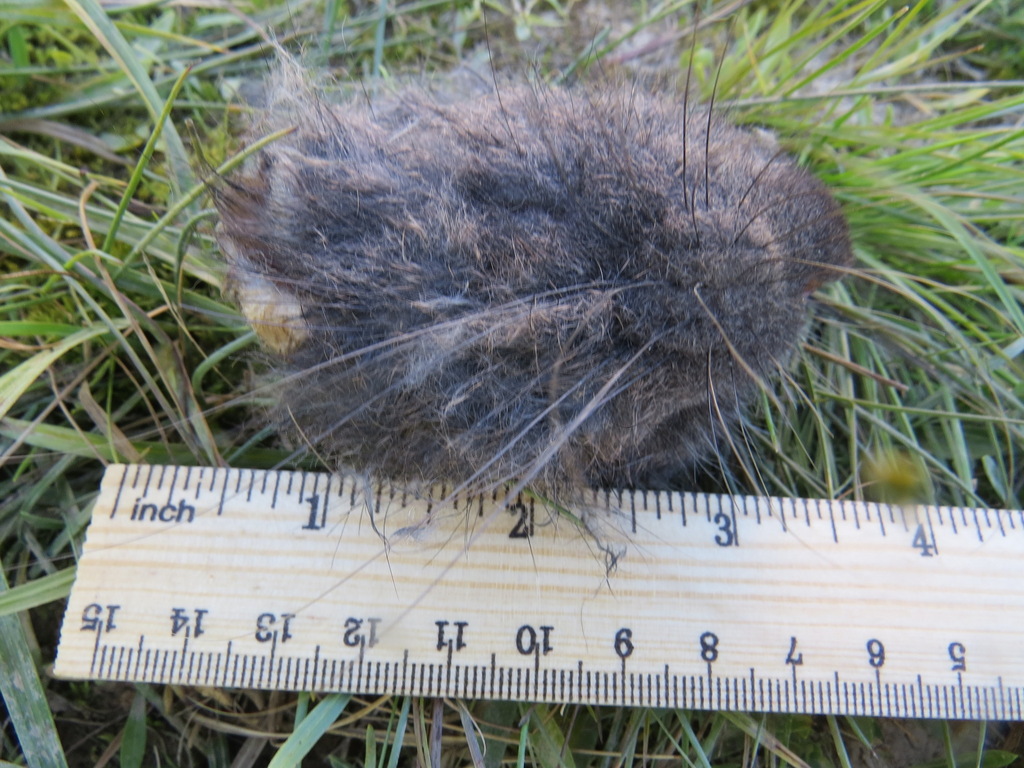
(c) Garth Harwood, some rights reserved (CC BY) · licence
Family: Aplodontiidae · Class: Mammalia · Order: Rodentia
Conservation status: Endangered · G5T1 S1
Aplodontia rufa nigra (Point Arena mountain beaver) is a California animal in the Aplodontiidae family.
The Point Arena mountain beaver is a small, stocky fossorial mammal endemic to a highly restricted area along the northern California coast. Adults measure approximately 300 to 400 mm (12 to 16 inches) in total length and weigh between 1 to 1.5 kg (2.2 to 3.3 pounds). This subspecies of mountain beaver is characterized by dense, dark brown to blackish fur, distinguishing it from other Aplodontia rufa subspecies. The species has small eyes and ears adapted for underground life, powerful forelimbs with strong claws for digging, and continuously growing incisors typical of rodents. The Point Arena mountain beaver occurs only in a narrow coastal strip near Point Arena in Mendocino County, California. Its range is extraordinarily limited, encompassing approximately 300 acres of suitable habitat within a 5-mile radius of Point Arena. This represents one of the most geographically restricted mammal populations in North America. The subspecies is separated from other mountain beaver populations by hundreds of miles, making it evolutionarily distinct. This subspecies inhabits dense riparian and coastal scrub vegetation, typically in areas with high soil moisture and thick understory cover. The species requires well-drained soils suitable for extensive burrow construction, often in association with elderberry, blackberry, and fern communities. Burrow systems can extend several feet underground and include multiple chambers for nesting, food storage, and waste. The animals prefer areas with slopes that provide good drainage while maintaining moisture levels necessary for their semi-aquatic lifestyle. Point Arena mountain beavers are primarily nocturnal and highly fossorial, spending most of their time in underground burrow systems. They are herbivorous, feeding on a variety of vegetation including ferns, grasses, forbs, and woody stems. Unlike true beavers, they do not construct dams but create elaborate tunnel systems with multiple entrances. Breeding occurs once annually, typically in late winter or early spring, with females producing litters of 2 to 3 young after a gestation period of approximately 30 days. Young remain in maternal burrows for several months before establishing their own territories. The U.S. Fish and Wildlife Service listed the Point Arena mountain beaver as endangered in 1991 due to its extremely small population and restricted range. The subspecies faces threats from habitat loss due to residential and commercial development, invasive plant species, and climate change impacts on coastal fog patterns that maintain the moist conditions essential for survival. According to USFWS expenditure reports from 1998-2003, conservation efforts have included habitat protection and monitoring, with federal expenditures ranging from $13,500 to $56,800 annually. The species' G5T1 S1 ranking reflects its extreme rarity as a subspecies, despite the broader species being relatively secure. Recovery efforts focus on habitat preservation, invasive species control, and population monitoring to prevent extinction of this highly endemic mammal.
Classification
Class: Mammalia · Order: Rodentia · Family: Aplodontiidae
Conservation status
Endangered · G5T1 S1
Frequently asked questions
How is Aplodontia rufa nigra classified?
Aplodontia rufa nigra belongs to class Mammalia, order Rodentia, family Aplodontiidae.
What family does Aplodontia rufa nigra belong to?
Aplodontia rufa nigra is in the Aplodontiidae family.
Is Aplodontia rufa nigra protected or of conservation concern?
Aplodontia rufa nigra carries the following status: Endangered · G5T1 S1.
What is Aplodontia rufa nigra?
The Point Arena mountain beaver is a small, stocky fossorial mammal endemic to a highly restricted area along the northern California coast.
Is Aplodontia rufa nigra found in California?
Yes. Aplodontia rufa nigra is recorded in California in The California Species Project's catalogue.
Related species
Other California species in the same genus, family, or bioregion.
Data from The California Species Project — 14,000+ California species with verified data from CNPS, CDFW, USFWS, and more.