Aplodontia rufa phaea
Point Reyes Mountain Beaver
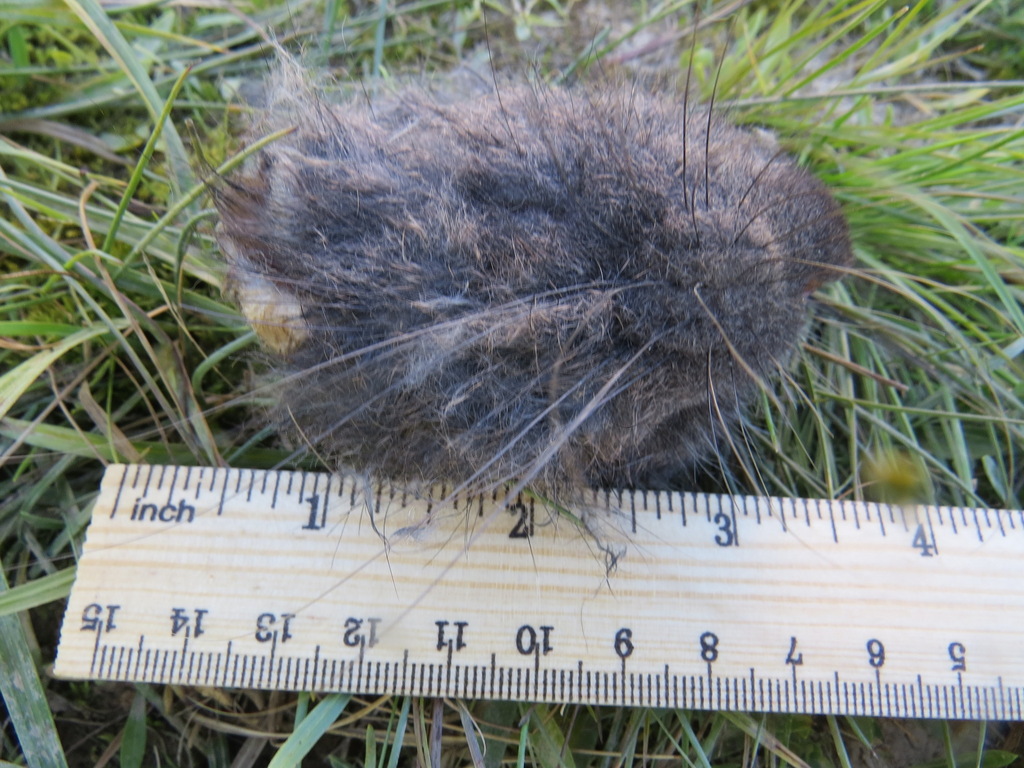
(c) Garth Harwood, some rights reserved (CC BY) · licence
Family: Aplodontiidae · Class: Mammalia · Order: Rodentia
Conservation status: G5T2 S2
Aplodontia rufa phaea (Point Reyes Mountain Beaver) is a California animal in the Aplodontiidae family.
The Point Reyes mountain beaver (Aplodontia rufa phaea) is a subspecies of the mountain beaver, North America's most primitive living rodent. Adults typically measure 300 to 400 mm (12 to 16 inches) in total length, with short, stubby tails of 20 to 40 mm. The species displays dense, dark brown to blackish fur with a slightly grizzled appearance. Distinguished from other mountain beaver subspecies by its smaller size and darker pelage, Point Reyes mountain beavers possess the characteristic robust build, small eyes, and short legs adapted for fossorial life. This subspecies has an extremely restricted range, occurring only in western Marin County, California, almost entirely within Point Reyes National Seashore (NatureServe Explorer). Historical records indicate the subspecies may have once occurred more broadly along the central California coast, but current populations are confined to a small area of approximately 1,645 square kilometers. The Point Reyes mountain beaver represents one of the most geographically restricted mammal subspecies in California. Point Reyes mountain beavers inhabit dense, moist coastal scrub and forest environments characterized by thick understory vegetation. They typically occur in areas with deep, well-drained soils suitable for extensive burrow systems. The species shows a strong association with riparian zones and areas with persistent moisture, often near seasonal streams or seeps. Vegetation communities include coastal scrub dominated by coyote brush, poison oak thickets, and edges of bishop pine and Douglas fir forests. The subspecies constructs elaborate underground tunnel systems that can extend several meters in length and depth. Like other mountain beavers, this subspecies is primarily herbivorous, feeding on a variety of plant materials including ferns, grasses, forbs, and woody browse. They are known to consume sword fern, bracken fern, and various shrubs abundant in their coastal habitat. Point Reyes mountain beavers are largely nocturnal and solitary, spending most daylight hours in their burrow systems. Breeding occurs in late winter to early spring, with females typically producing 2 to 3 young after a gestation period of approximately 30 days. The young remain dependent on the mother for several weeks before establishing their own territories. The Point Reyes mountain beaver carries a Global/State Rank of G5T2 S2, indicating the subspecies is imperiled both globally and within California. The primary threats include habitat loss and fragmentation due to development pressure in Marin County, recreational impacts within Point Reyes National Seashore, and potential climate change effects on coastal fog patterns that maintain the moist conditions essential for the subspecies. The restricted range makes populations particularly vulnerable to catastrophic events such as wildfire or disease outbreaks. Conservation efforts focus on habitat protection within the National Seashore and monitoring of existing populations to track demographic trends.
Classification
Class: Mammalia · Order: Rodentia · Family: Aplodontiidae
Conservation status
G5T2 S2
Frequently asked questions
How is Aplodontia rufa phaea classified?
Aplodontia rufa phaea belongs to class Mammalia, order Rodentia, family Aplodontiidae.
What family does Aplodontia rufa phaea belong to?
Aplodontia rufa phaea is in the Aplodontiidae family.
Is Aplodontia rufa phaea protected or of conservation concern?
Aplodontia rufa phaea carries the following status: G5T2 S2.
What is Aplodontia rufa phaea?
The Point Reyes mountain beaver (Aplodontia rufa phaea) is a subspecies of the mountain beaver, North America's most primitive living rodent.
Is Aplodontia rufa phaea found in California?
Yes. Aplodontia rufa phaea is recorded in California in The California Species Project's catalogue.
Related species
Other California species in the same genus, family, or bioregion.
Data from The California Species Project — 14,000+ California species with verified data from CNPS, CDFW, USFWS, and more.