Aplysia californica
California Seahare
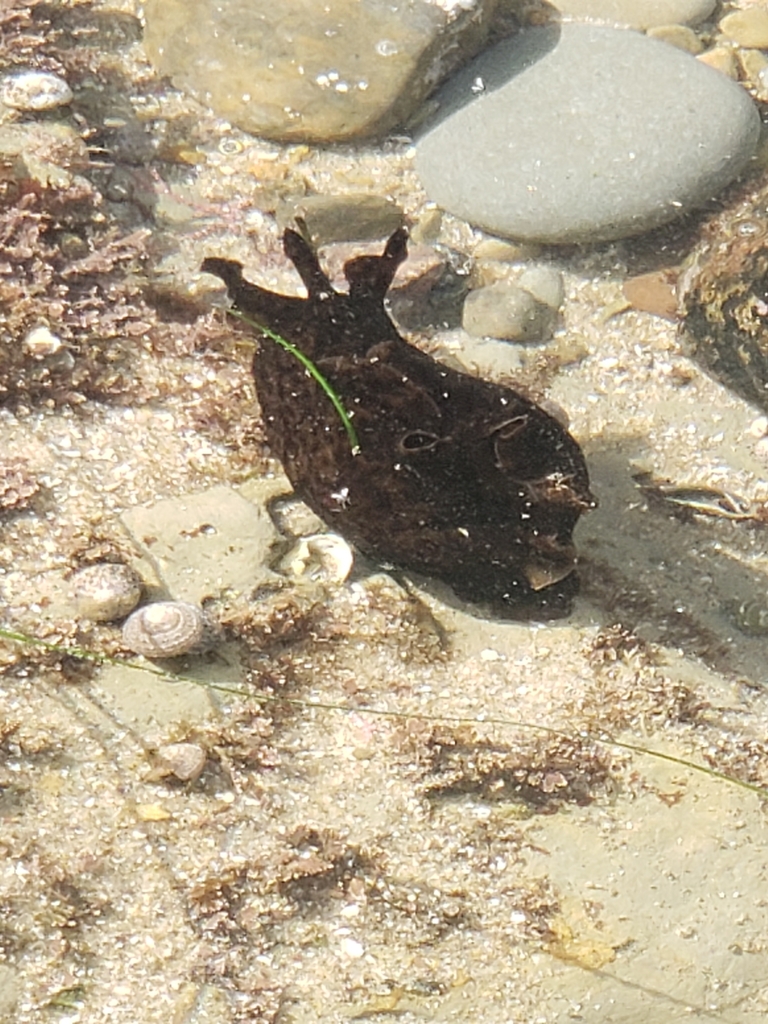
(c) kwalks146, some rights reserved (CC BY) · licence
Family: Aplysiidae · Class: Gastropoda · Order: Aplysiida
Aplysia californica (California Seahare) is a California animal in the Aplysiidae family.
The California sea hare (Aplysia californica) is a large marine gastropod mollusk belonging to the family Aplysiidae. Adults can reach lengths of 40 centimeters (16 inches) and weigh up to 7 kilograms (15 pounds), making it one of the largest opisthobranch mollusks in California waters. The body is soft and gelatinous, typically olive-green to reddish-brown in coloration with darker mottling that provides camouflage among algae. The species lacks an external shell, instead possessing a thin, internal shell plate. Two prominent rhinophores (sensory tentacles) project from the head, while large parapodia (wing-like extensions) fold over the back when at rest. California sea hares occur along the Pacific coast from northern California to Baja California, Mexico. They are commonly found in shallow coastal waters, particularly in kelp forests and rocky intertidal zones. The species inhabits depths from the low intertidal zone to approximately 18 meters (60 feet), with highest abundances typically occurring in subtidal kelp beds and eelgrass meadows. This species prefers rocky substrates with abundant macroalgae, particularly in areas with moderate wave action and good water circulation. California sea hares are commonly associated with kelp forests where they feed extensively on various brown algae species. According to the California Marine Species Portal, they serve as important grazers in kelp forest ecosystems, consuming species such as giant kelp (Macrocystis pyrifera) and other marine algae. The animals often aggregate in shallow, protected bays and harbors during warmer months. California sea hares are herbivorous, feeding primarily on red and brown algae. Their feeding activity significantly impacts algal communities, and they can consume substantial amounts of vegetation daily. The species exhibits seasonal migration patterns, moving to shallow waters for reproduction typically between spring and fall. During mating, individuals form long chains with multiple animals connected, releasing millions of eggs in gelatinous strings attached to rocks or algae. The planktonic larvae develop for several weeks before settling and metamorphosing into juvenile sea hares. Reproduction is hermaphroditic, with each individual capable of functioning as both male and female during mating. Spawning aggregations can be quite large, sometimes involving dozens of individuals in popular breeding areas. The species shows pronounced seasonal abundance fluctuations, with populations typically peaking during warmer months when algal food sources are most abundant. California sea hares are not currently listed under state or federal conservation legislation. They remain relatively common throughout their range and play important ecological roles as herbivores in marine ecosystems. However, like many marine species, they may face challenges from climate change, ocean acidification, and coastal development that affects their kelp forest habitat. The species serves as an important model organism in neuroscience research due to its large, accessible neurons, contributing significantly to understanding of learning and memory processes in marine invertebrates.
Classification
Class: Gastropoda · Order: Aplysiida · Family: Aplysiidae
Frequently asked questions
How is Aplysia californica classified?
Aplysia californica belongs to class Gastropoda, order Aplysiida, family Aplysiidae.
What family does Aplysia californica belong to?
Aplysia californica is in the Aplysiidae family.
What is Aplysia californica?
The California sea hare (Aplysia californica) is a large marine gastropod mollusk belonging to the family Aplysiidae.
Is Aplysia californica found in California?
Yes. Aplysia californica is recorded in California in The California Species Project's catalogue.
More California species
This species has no close relatives in our California data — here are other species to explore.
Data from The California Species Project — 14,000+ California species with verified data from CNPS, CDFW, USFWS, and more.