Apodemia mejicanus
Sonoran Metalmark
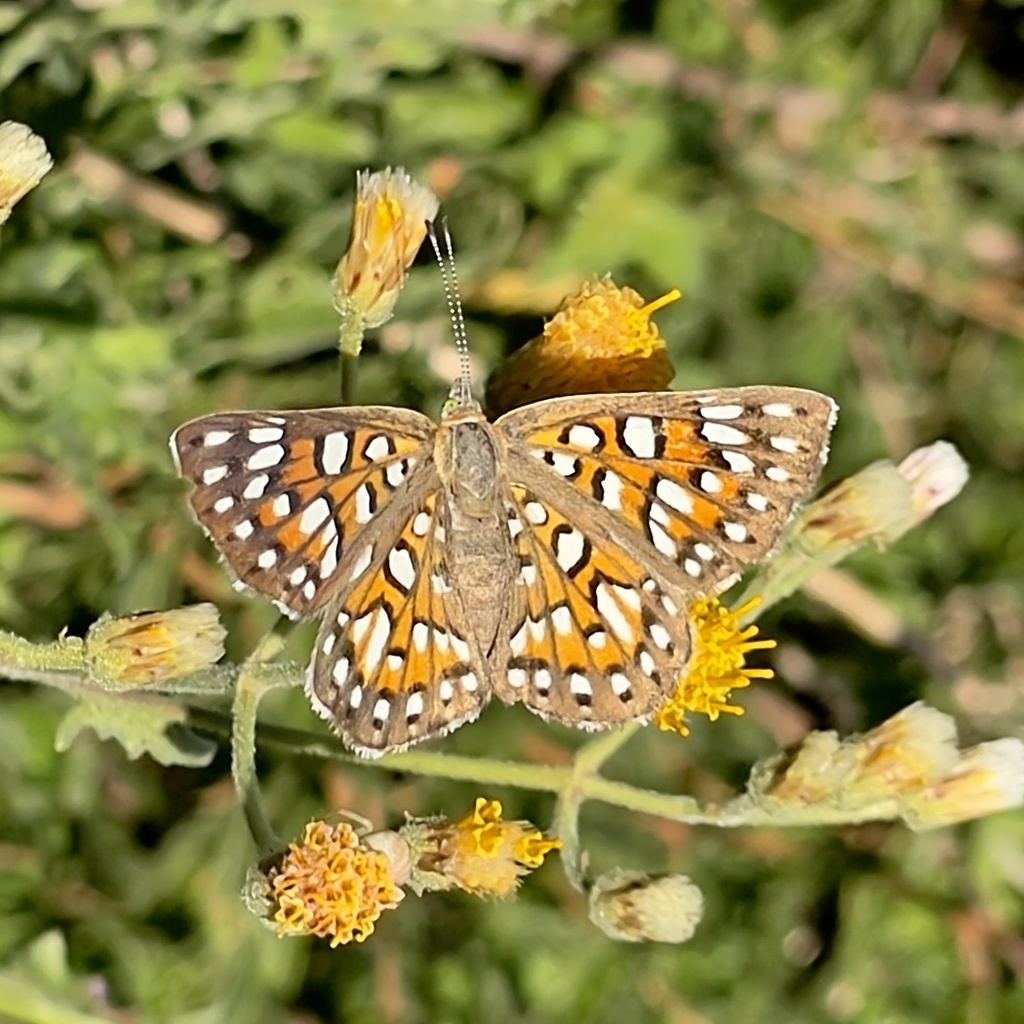
(c) Bill Levine, some rights reserved (CC BY) · licence
Family: Riodinidae · Class: Insecta · Order: Lepidoptera
Apodemia mejicanus (Sonoran Metalmark) is a California animal in the Riodinidae family.
The Sonoran Metalmark is a small butterfly in the family Riodinidae, characterized by metallic markings on its wings that give the species its common name. Adults have a wingspan of approximately 20-25 mm (0.8-1.0 inches). The dorsal wing surfaces are orange-brown with distinctive metallic silver and black markings arranged in bands and spots. The ventral surfaces are lighter, typically pale orange or tan with white and black markings that provide camouflage when the butterfly rests with wings closed. Males and females exhibit similar coloration patterns, though males may have slightly more pronounced metallic markings. The Sonoran Metalmark occurs in southeastern California, southern Nevada, Arizona, and southwestern New Mexico, extending south through Baja California and mainland Mexico. In California, the species is found primarily in the Colorado Desert region of Imperial and eastern Riverside counties. The distribution follows the range of suitable host plants and appropriate desert habitat conditions. Populations are typically localized and associated with washes, canyon bottoms, and areas where host plants are abundant. This species inhabits arid desert environments, typically at elevations ranging from below sea level to approximately 1,500 meters (4,900 feet). The butterfly frequents desert washes, arroyos, rocky slopes, and areas with scattered desert shrubs. Habitat selection is closely tied to the presence of host plants, particularly wild buckwheats in the genus Eriogonum. The species shows preference for areas with some topographic relief that provide shelter from extreme desert conditions and create microhabitats with slightly moderated temperatures. Sonoran Metalmark larvae are specialists that feed exclusively on various wild buckwheats, including Inflated Buckwheat (Eriogonum inflatum) and Wright's Buckwheat (Eriogonum wrightii), among others. Some sources suggest potential use of plants in the genus Krameria, though buckwheats remain the primary confirmed hosts. Adults are active during warm months, typically from March through October, with peak activity often occurring in spring and fall when temperatures are more moderate. The species exhibits multiple broods per year where conditions permit. Adults feed on nectar from various desert wildflowers and may be observed visiting the flowers of their host plants. Females lay eggs singly on host plant leaves or stems. Larvae develop through several instars, feeding on buckwheat foliage before pupating. The species overwinters in either larval or pupal stages, depending on timing of the final brood. Flight behavior is typically low and rapid, with adults often remaining close to host plant patches. The Sonoran Metalmark does not currently hold federal or state listing status in California. However, like many desert specialists, populations may face pressure from habitat modification, urban development, and climate change effects on desert ecosystems. The species' dependence on specific host plants makes it vulnerable to changes in plant community composition. Livestock grazing and off-road vehicle activity in desert areas may impact both adult habitat and host plant populations. Conservation of intact desert wash ecosystems and protection of buckwheat populations are important for maintaining viable Sonoran Metalmark populations throughout its range.
Classification
Class: Insecta · Order: Lepidoptera · Family: Riodinidae
Frequently asked questions
How is Apodemia mejicanus classified?
Apodemia mejicanus belongs to class Insecta, order Lepidoptera, family Riodinidae.
What family does Apodemia mejicanus belong to?
Apodemia mejicanus is in the Riodinidae family.
What is Apodemia mejicanus?
The Sonoran Metalmark is a small butterfly in the family Riodinidae, characterized by metallic markings on its wings that give the species its common name.
Is Apodemia mejicanus found in California?
Yes. Apodemia mejicanus is recorded in California in The California Species Project's catalogue.
Related species
Other California species in the same genus, family, or bioregion.
Data from The California Species Project — 14,000+ California species with verified data from CNPS, CDFW, USFWS, and more.