Apodemia mormo langei
Lange’s metalmark butterfly
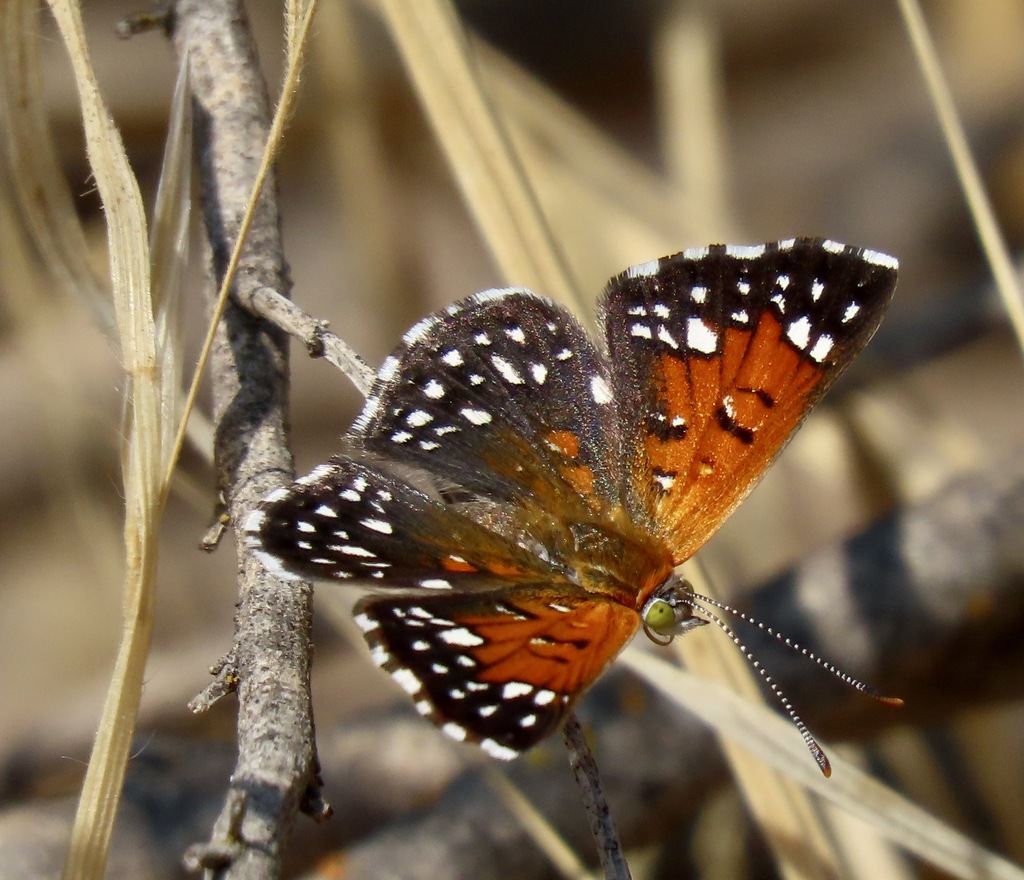
(c) John Hibbard, some rights reserved (CC BY) · licence
Family: Riodinidae · Class: Insecta · Order: Lepidoptera
Conservation status: Endangered · G5T1 S1
Apodemia mormo langei (Lange’s metalmark butterfly) is a California animal in the Riodinidae family.
Lange's metalmark butterfly (Apodemia mormo langei) is a small butterfly endemic to the Antioch Dunes of Contra Costa County, California. Adults measure 25-30 mm (1.0-1.2 inches) in wingspan. The dorsal wing surfaces are orange-brown with distinctive black checkered patterns and metallic silver spots that give the species its common name. Males display brighter orange coloration than females, while the ventral wing surfaces are pale gray with white and black markings. The forewings are rounded, and the hindwings bear small tail-like projections. This subspecies occurs exclusively in the Antioch Dunes National Wildlife Refuge, representing one of the most geographically restricted butterflies in North America. The historical range encompassed approximately 1,600 acres of inland sand dunes along the San Joaquin River, but habitat loss has reduced suitable areas to fewer than 55 acres. The remaining population is confined to three disjunct dune systems within the refuge boundaries. Lange's metalmark inhabits open sandy areas within interior dune scrub habitat. The species requires specific microclimatic conditions, including bare sand patches for thermoregulation and areas with partial shade provided by scattered shrub vegetation. Elevation ranges from 0 to 45 meters (0 to 150 feet) above sea level. The butterfly depends entirely on naked-stemmed buckwheat (Eriogonum nudum var. auriculatum) as its larval host plant, which grows in sandy soils between dune ridges. Adults emerge in late July and August during a brief flight period lasting 4-6 weeks. Males establish territories on hilltops and sandy flats, engaging in aerial courtship displays. Females deposit single white eggs on buckwheat flower heads and stems. Larvae develop through five instars, feeding exclusively on buckwheat flowers and seeds. The species overwinters as mature larvae in silk-lined chambers beneath the host plant. Pupation occurs in spring, with chrysalids forming in sandy depressions or among plant debris. The U.S. Fish and Wildlife Service listed Lange's metalmark butterfly as endangered in 1976, making it one of the first insects to receive federal protection. Population monitoring indicates fewer than 200 individuals in most years, with annual fluctuations ranging from 50 to 500 adults depending on weather conditions and buckwheat abundance. Primary threats include habitat fragmentation, invasive plant species that compete with buckwheat, recreational activities that disturb dune systems, and climate variability affecting host plant reproduction. Sand mining and urban development historically eliminated over 95% of the original dune habitat. Current management focuses on invasive species control, habitat restoration, and captive breeding programs. The Antioch Dunes National Wildlife Refuge, established in 1980, protects the remaining critical habitat, though the small population size and limited range make this subspecies extremely vulnerable to extinction.
Classification
Class: Insecta · Order: Lepidoptera · Family: Riodinidae
Conservation status
Endangered · G5T1 S1
Frequently asked questions
How is Apodemia mormo langei classified?
Apodemia mormo langei belongs to class Insecta, order Lepidoptera, family Riodinidae.
What family does Apodemia mormo langei belong to?
Apodemia mormo langei is in the Riodinidae family.
Is Apodemia mormo langei protected or of conservation concern?
Apodemia mormo langei carries the following status: Endangered · G5T1 S1.
What is Apodemia mormo langei?
Lange's metalmark butterfly (Apodemia mormo langei) is a small butterfly endemic to the Antioch Dunes of Contra Costa County, California.
Is Apodemia mormo langei found in California?
Yes. Apodemia mormo langei is recorded in California in The California Species Project's catalogue.
Related species
Other California species in the same genus, family, or bioregion.
Data from The California Species Project — 14,000+ California species with verified data from CNPS, CDFW, USFWS, and more.