Apostichopus californicus
Giant California sea cucumber
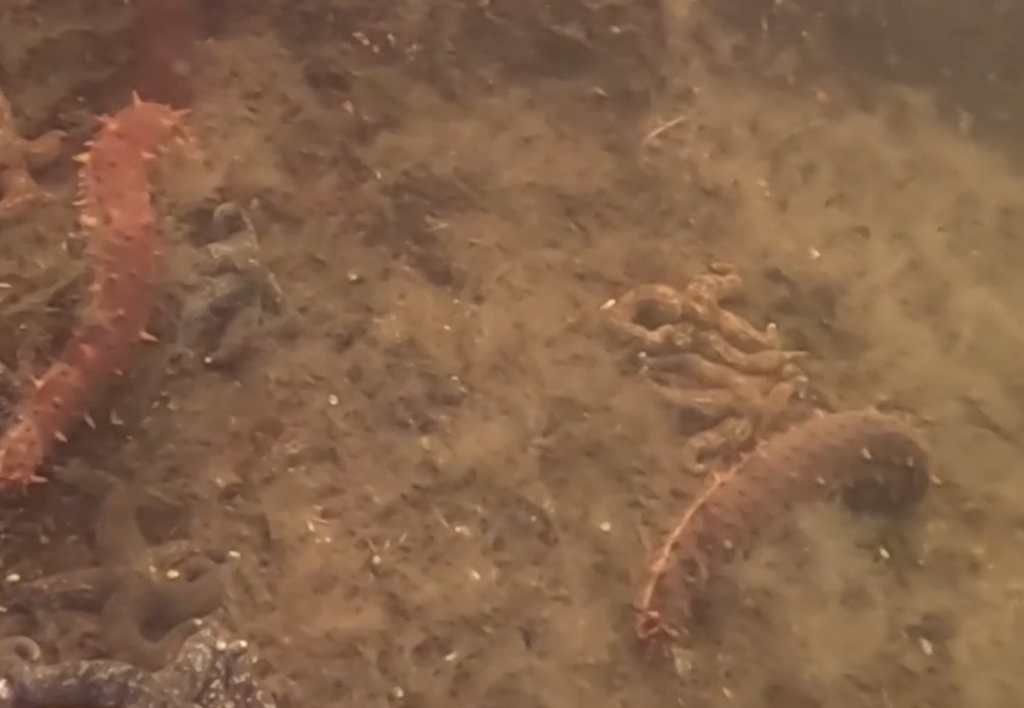
(c) Rachel Crane, some rights reserved (CC BY) · licence
Family: Stichopodidae · Class: Holothuroidea · Order: Aspidochirotida
Apostichopus californicus (Giant California sea cucumber) is a California animal in the Stichopodidae family.
The giant California sea cucumber (Apostichopus californicus) is a large marine echinoderm that inhabits the eastern Pacific Ocean. Adults can reach lengths of up to 50 centimeters (20 inches) and weights exceeding 3 kilograms (6.6 pounds), making it one of the largest sea cucumber species in North American waters. The body is cylindrical and soft, with a muscular body wall covered in small, cone-shaped projections called papillae. Coloration ranges from reddish-brown to dark brown or purple, often with lighter mottling. The mouth is located at one end and is surrounded by branching feeding tentacles, while the anus is positioned at the opposite end. The species ranges from the Bering Sea south to Baja California, Mexico, representing one of the most extensive distributions among North American sea cucumbers. In California, giant red sea cucumbers are found along the entire coast, with populations occurring from the intertidal zone to depths of approximately 250 meters (820 feet). The commercial dive fishery operates primarily in northern California between Bodega Bay and Fort Bragg, while trawl fisheries concentrate in southern California waters, particularly around Santa Barbara. Giant California sea cucumbers inhabit diverse marine environments, from rocky intertidal areas to soft-bottom habitats on the continental shelf. They are commonly found on sand, mud, and rocky substrates, often partially buried in sediment with only their feeding tentacles exposed. The species demonstrates considerable depth tolerance, occurring from shallow subtidal areas to depths exceeding 200 meters. They prefer areas with moderate to strong currents that facilitate feeding and waste removal. As deposit feeders, giant California sea cucumbers consume organic matter and small organisms found in sediment and detritus. They extend their branching oral tentacles to capture food particles from the surrounding water column and seafloor. The species exhibits both sexual and asexual reproduction, with most individuals capable of regenerating lost body parts. Spawning typically occurs during summer months, with females releasing eggs and males releasing sperm into the water column for external fertilization. Larvae undergo a planktonic stage before settling and metamorphosing into juveniles. The giant California sea cucumber supports both commercial and recreational fisheries along the Pacific coast. Commercial harvest occurs through dive and trawl operations, with products primarily exported to Asian markets where sea cucumbers are valued for culinary and medicinal purposes. The species has been considered for inclusion in CITES Appendix II due to international trade concerns, as indicated in federal register notices regarding CITES Conference of the Parties proposals. While not currently listed under federal or state endangered species acts, the species faces potential pressures from harvest, habitat modification, and ocean acidification. California Department of Fish and Wildlife monitors populations through enhanced status reporting to ensure sustainable management of this economically important marine resource.
Classification
Class: Holothuroidea · Order: Aspidochirotida · Family: Stichopodidae
Frequently asked questions
How is Apostichopus californicus classified?
Apostichopus californicus belongs to class Holothuroidea, order Aspidochirotida, family Stichopodidae.
What family does Apostichopus californicus belong to?
Apostichopus californicus is in the Stichopodidae family.
What is Apostichopus californicus?
The giant California sea cucumber (Apostichopus californicus) is a large marine echinoderm that inhabits the eastern Pacific Ocean.
Is Apostichopus californicus found in California?
Yes. Apostichopus californicus is recorded in California in The California Species Project's catalogue.
Related species
Other California species in the same genus, family, or bioregion.
Data from The California Species Project — 14,000+ California species with verified data from CNPS, CDFW, USFWS, and more.