Aquarius remigis
North American Common Water Strider
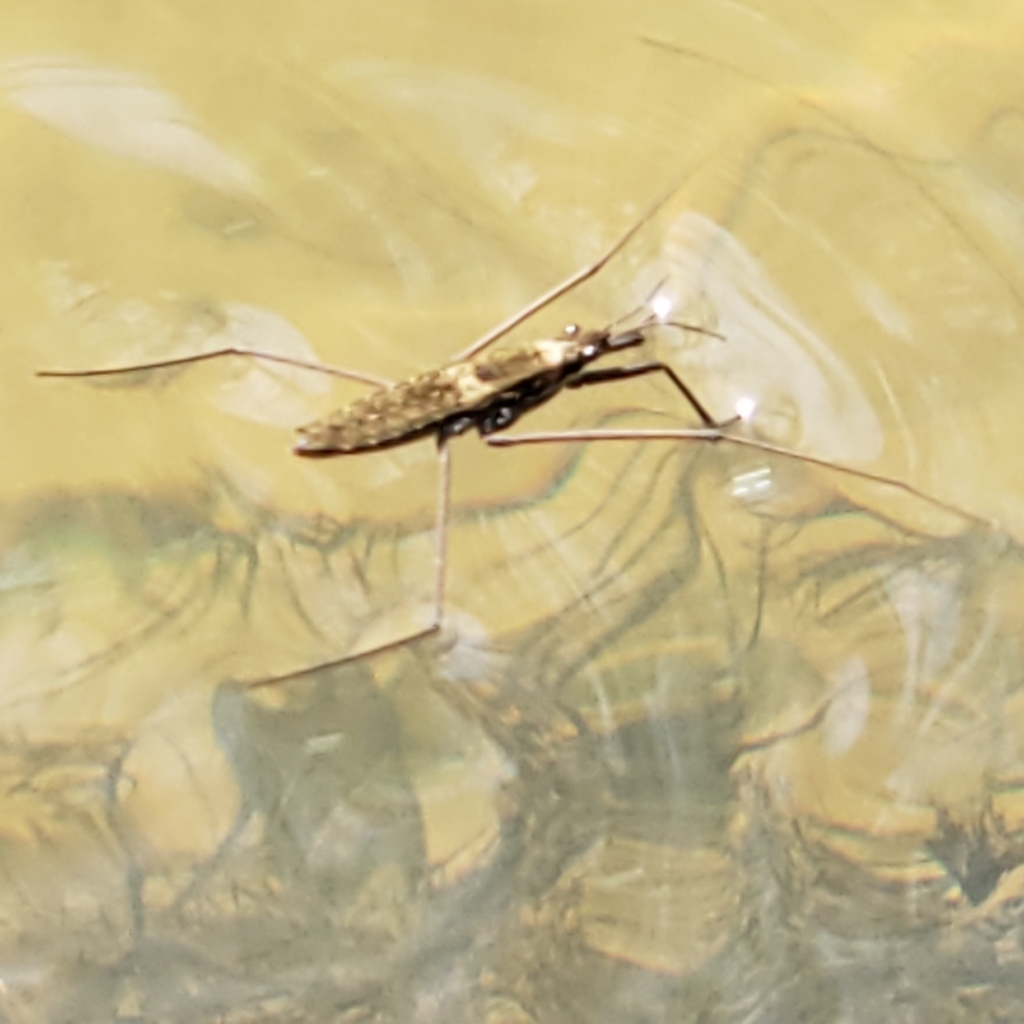
(c) Gavin Slater, some rights reserved (CC BY) · licence
Family: Gerridae · Class: Insecta · Order: Hemiptera
Aquarius remigis (North American Common Water Strider) is a California animal in the Gerridae family.
The North American Common Water Strider (Aquarius remigis) is a semi-aquatic insect measuring 6 to 16 mm in length, with females typically larger than males. The body is elongated and dark brown to black, often with a pale middorsal stripe on the pronotum. The species exhibits distinctive morphological adaptations for surface locomotion, including elongated middle and hind legs with water-repellent hairs on the tarsal segments that enable it to walk on water without breaking the surface tension. The antennae are four-segmented, and adults may display wing polymorphism with both apterous (wingless) and macropterous (winged) forms occurring within populations. Aquarius remigis has a broad distribution across North America, ranging from southern Canada through the continental United States. The species occurs throughout California in suitable aquatic habitats from sea level to moderate elevations. According to the U.S. Fish and Wildlife Service taxonomic database, this water strider is widely distributed across multiple biogeographic regions. This species inhabits the surface of ponds, lakes, slow-moving streams, and quiet backwaters. Water striders prefer areas with minimal water movement where surface tension remains stable. They are commonly found in both temporary and permanent water bodies, including marshes, beaver ponds, and the margins of larger lakes. The species shows seasonal activity patterns, remaining active whenever water surfaces are not frozen. Aquarius remigis is a predatory insect that feeds primarily on other arthropods trapped on the water surface, including flies, mosquitoes, aphids, and other small insects that fall onto the water. The species uses its front legs to capture prey and piercing-sucking mouthparts to extract body fluids. Water striders are also scavengers, feeding on dead insects floating on the surface. They detect prey through vibrations transmitted across the water surface tension. Reproduction occurs during warmer months, with females depositing eggs on submerged vegetation or debris. The species undergoes incomplete metamorphosis through five nymphal instars before reaching adulthood. Currently, Aquarius remigis does not hold any federal or state conservation listing status and appears to maintain stable populations across its range. The species demonstrates adaptability to various aquatic environments and shows resilience to moderate habitat disturbance. However, like many aquatic insects, water striders may be affected by water pollution, habitat modification, and pesticide use in surrounding terrestrial areas. The species serves important ecological functions as both predator of pest insects and prey for fish, amphibians, and other aquatic organisms. Climate change impacts on freshwater ecosystems may potentially affect local population dynamics, though the species' broad distribution and habitat flexibility suggest overall population stability. No specific conservation measures are currently implemented for this species, as it remains common throughout its range as of December 2025.
Classification
Class: Insecta · Order: Hemiptera · Family: Gerridae
Frequently asked questions
How is Aquarius remigis classified?
Aquarius remigis belongs to class Insecta, order Hemiptera, family Gerridae.
What family does Aquarius remigis belong to?
Aquarius remigis is in the Gerridae family.
What is Aquarius remigis?
The North American Common Water Strider (Aquarius remigis) is a semi-aquatic insect measuring 6 to 16 mm in length, with females typically larger than males.
Is Aquarius remigis found in California?
Yes. Aquarius remigis is recorded in California in The California Species Project's catalogue.
More California species
This species has no close relatives in our California data — here are other species to explore.
Data from The California Species Project — 14,000+ California species with verified data from CNPS, CDFW, USFWS, and more.