Arachnis picta
Painted Tiger Moth
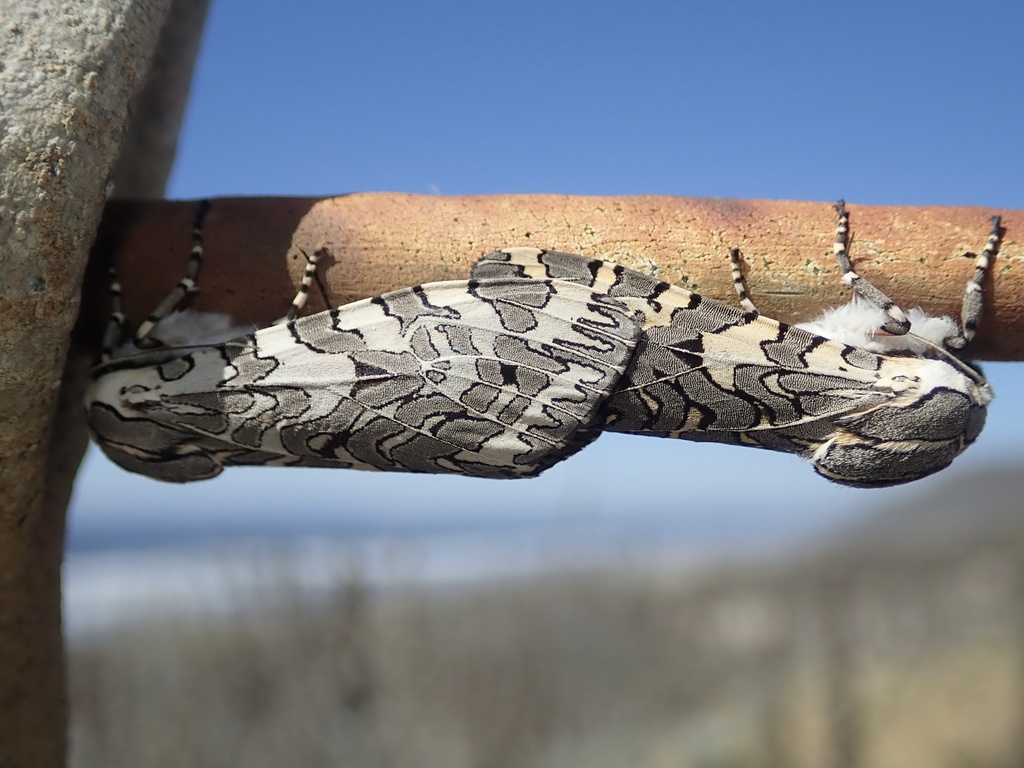
(c) Cricket Raspet, some rights reserved (CC BY) · licence
Family: Erebidae · Class: Insecta · Order: Lepidoptera
Arachnis picta (Painted Tiger Moth) is a California animal in the Erebidae family.
The Painted Tiger Moth (Arachnis picta) is a medium-sized moth in the family Erebidae, formerly classified in Arctiidae. Adults display distinctive wing patterns with variable coloration ranging from cream to orange-brown forewings marked with dark lines and spots, while hindwings are typically lighter with marginal spotting. The species exhibits considerable regional variation across its range, with several recognized subspecies including A. p. meadowsi, A. p. insularis, A. p. perotensis, and A. p. maia. This species occurs throughout the southwestern United States and adjacent parts of Mexico. According to BugGuide, the range extends from central and southern California eastward to Colorado and south through western Texas, New Mexico, and Arizona. In California, the species has been documented from coastal areas including Sonoma County southward through the southern counties. Distribution data shows California has the highest number of recorded observations, with 19 counties reporting the species. Painted Tiger Moths inhabit diverse environments from coastal areas to inland desert and mountain regions. The species has been recorded from sea level to moderate elevations, adapting to various habitat types including chaparral, desert scrub, oak woodlands, and coastal sage scrub communities. Adults are attracted to lights and can be found in both natural areas and suburban environments where suitable host plants occur. Life cycle information indicates females lay hemispherical, shiny pearl-colored eggs. Larvae are polyphagous, feeding on various herbaceous plants and shrubs, though specific host plant relationships require further documentation. Adults are primarily nocturnal and show seasonal flight patterns, though specific timing varies by geographic location and elevation. The species appears to be multivoltine in warmer areas, with extended flight periods recorded in southern California. The Painted Tiger Moth currently holds no special conservation status at federal or state levels. Population trends have not been systematically monitored, though the species appears stable across most of its range based on citizen science observations. Like many moths, this species may face localized pressures from habitat loss due to urban development, particularly in coastal California where human population density is highest. Climate change may also affect distribution patterns, potentially allowing range expansion northward while creating challenges in southern desert regions. Taxonomic studies have revealed multiple subspecies within A. picta, suggesting a complex evolutionary history across the species' range. The recognition of distinct subspecies indicates potential for cryptic diversity that may warrant further genetic investigation. Scientific documentation for specific aspects of this species' ecology remains limited, particularly regarding detailed host plant relationships and population dynamics. Additional research would help clarify subspecies boundaries and inform any future conservation assessments.
Classification
Class: Insecta · Order: Lepidoptera · Family: Erebidae
Frequently asked questions
How is Arachnis picta classified?
Arachnis picta belongs to class Insecta, order Lepidoptera, family Erebidae.
What family does Arachnis picta belong to?
Arachnis picta is in the Erebidae family.
What is Arachnis picta?
The Painted Tiger Moth (Arachnis picta) is a medium-sized moth in the family Erebidae, formerly classified in Arctiidae.
Is Arachnis picta found in California?
Yes. Arachnis picta is recorded in California in The California Species Project's catalogue.
Related species
Other California species in the same genus, family, or bioregion.
Data from The California Species Project — 14,000+ California species with verified data from CNPS, CDFW, USFWS, and more.