Araneus gemma
Gem-shaped Orbweaver
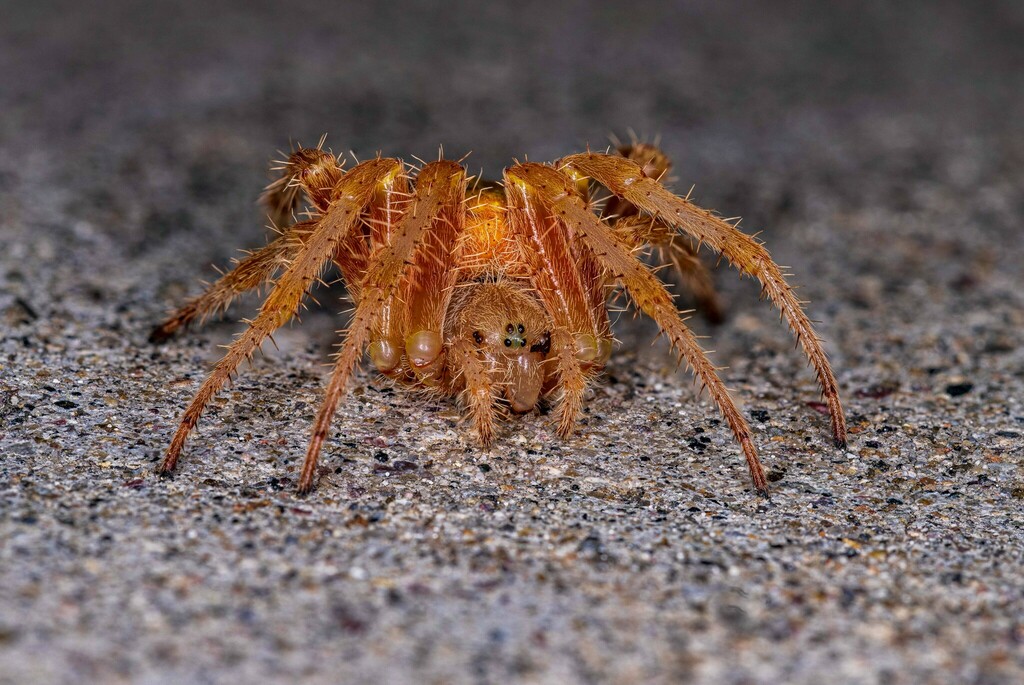
(c) Zack Abbey, some rights reserved (CC BY) · licence
Family: Araneidae · Class: Arachnida · Order: Araneae
Araneus gemma (Gem-shaped Orbweaver) is a California animal in the Araneidae family.
Araneus gemma, commonly known as the gem-shaped orbweaver, is a spider species in the family Araneidae, the orb weaver spiders. This species belongs to the large genus Araneus, which includes many of North America's common garden spiders and orb weavers. Like other members of its family, A. gemma constructs circular, spiral webs to capture flying insects. Orb weaver spiders in the genus Araneus typically measure 6 to 25 millimeters (0.24 to 0.98 inches) in body length, with females generally larger than males (Xerces Society 2018). These spiders have the characteristic arachnid body plan of two main sections: the cephalothorax (combined head and thorax) and the abdomen, connected by four pairs of walking legs. Silk-spinning organs called spinnerets are located at the posterior end of the abdomen. Many Araneus species display dark coloration with bright patterns of yellow, green, or red markings. The specific distribution and range of Araneus gemma within California have not been well documented in available scientific literature. The species is recognized in the U.S. Fish and Wildlife Service taxonomic database with the taxonomic serial number 851446, indicating its formal taxonomic status. However, detailed distributional records and county-specific occurrence data remain limited. Orb weaver spiders typically inhabit areas that provide suitable anchor points for web construction, including forests, grasslands, gardens, and riparian zones. These spiders require vegetation or structures to support their large, vertical spiral webs, which can exceed three feet in diameter in some Araneus species (Xerces Society 2018). The webs are usually suspended between bushes, tall grasses, or other vegetation where flying insects are likely to be encountered. As web-building predators, orb weavers are sit-and-wait hunters that rely on their webs to capture prey. They construct elaborate spiral webs with radial support threads, often rebuilding these structures daily or after damage. The spiders typically position themselves at the center of the web or in a nearby retreat, detecting prey through vibrations transmitted through the silk strands. Their diet consists primarily of flying insects including flies, mosquitoes, moths, and other small arthropods that become entangled in the sticky capture spirals of their webs. Reproduction in orb weavers typically involves complex courtship behaviors, with males approaching females' webs and performing species-specific vibratory signals. Females lay eggs in silk sacs, often hidden in vegetation or other protected locations. Many temperate Araneus species are annual, with adults active during specific seasons. The conservation status of Araneus gemma has not been formally assessed by state or federal agencies. No federal or California listing status has been assigned to this species as of December 2025. Like many arthropod species, detailed population monitoring data are not available, making conservation status evaluation challenging. The species faces general threats common to many spider species, including habitat modification and pesticide use, though specific threat assessments have not been conducted.
Classification
Class: Arachnida · Order: Araneae · Family: Araneidae
Frequently asked questions
How is Araneus gemma classified?
Araneus gemma belongs to class Arachnida, order Araneae, family Araneidae.
What family does Araneus gemma belong to?
Araneus gemma is in the Araneidae family.
What is Araneus gemma?
Araneus gemma, commonly known as the gem-shaped orbweaver, is a spider species in the family Araneidae, the orb weaver spiders.
Is Araneus gemma found in California?
Yes. Araneus gemma is recorded in California in The California Species Project's catalogue.
Related species
Other California species in the same genus, family, or bioregion.
Data from The California Species Project — 14,000+ California species with verified data from CNPS, CDFW, USFWS, and more.