Archilochus alexandri
Black-chinned Hummingbird
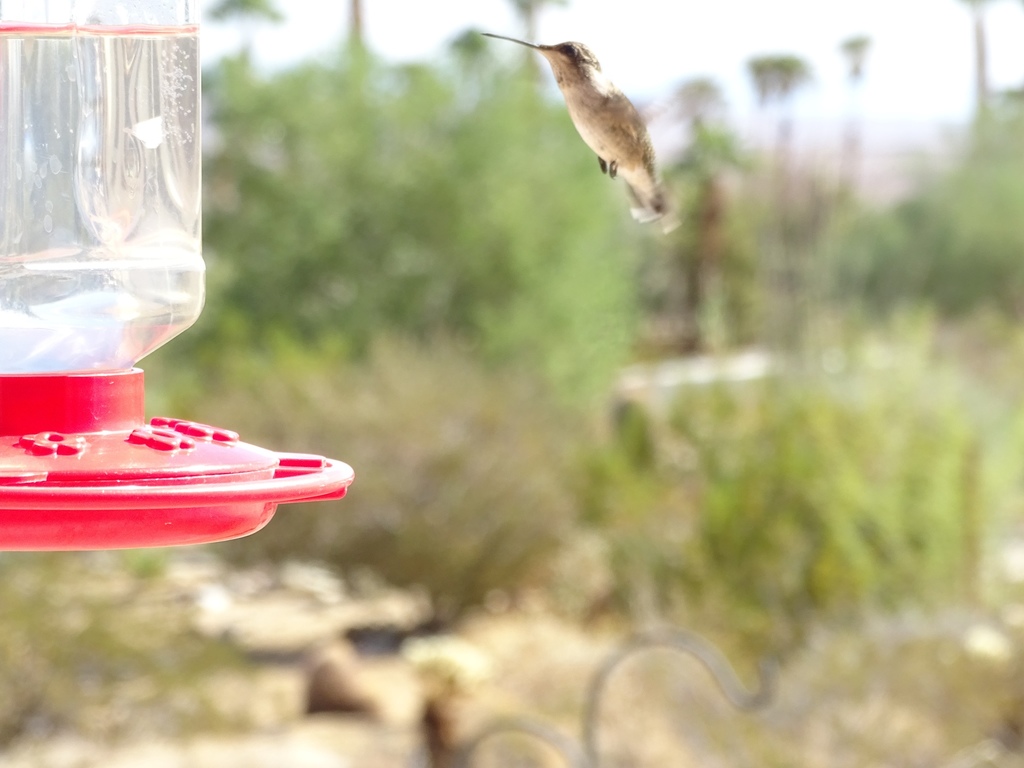
(c) W. Terry Hunefeld, some rights reserved (CC BY) · licence
Family: Trochilidae · Class: Aves · Order: Apodiformes
Archilochus alexandri (Black-chinned Hummingbird) is a California animal in the Trochilidae family.
The Black-chinned Hummingbird (Archilochus alexandri) is a small passerine bird measuring 8.25 to 9 cm (3.25 to 3.5 inches) in length with a wingspan of 11 cm (4.3 inches). Adult males weigh 2.3 to 4.9 grams, while females range from 2.8 to 4.8 grams. Males display iridescent green upperparts and a distinctive black throat bordered by a narrow violet-purple band at the lower edge. The remainder of the underparts are white to pale gray. Females lack the distinctive throat coloration, showing white underparts with green upperparts and white tips on the outer tail feathers. Both sexes possess straight, needle-like bills averaging 15 to 20 mm in length. The species breeds across western North America from southern British Columbia through the western United States to northern Mexico. In California, Black-chinned Hummingbirds occur primarily in mountainous regions of the northern two-thirds of the state, including the Sierra Nevada, Cascade Range, and coastal mountains. The breeding range extends from sea level to elevations of 2,800 meters (9,200 feet), though most populations occur between 300 and 2,100 meters. During winter months, most California populations migrate south to Mexico, though small numbers may overwinter in coastal Southern California. Black-chinned Hummingbirds inhabit diverse habitats including riparian woodlands, oak woodlands, chaparral, pine-oak forests, and desert mountain slopes. The species shows strong association with areas containing flowing water and prefers semi-open habitats with scattered trees and shrubs. Breeding territories typically include perching sites on exposed branches and access to both nectar sources and insect foraging areas. Urban and suburban environments with appropriate flowering plants and water sources also support populations. The species exhibits a varied diet consisting primarily of nectar from flowers and sugar from tree sap, supplemented by small arthropods including gnats, flies, aphids, and spiders. Black-chinned Hummingbirds demonstrate specialized flight capabilities, achieving speeds up to 48 km/h (30 mph) during territorial chases and performing aerial courtship displays. Breeding occurs from April through July, with females constructing cup-shaped nests on horizontal branches 1.2 to 6 meters above ground. The nest, measuring approximately 3 cm across, is built from plant fibers, spider silk, and lichens. Females lay two white eggs measuring 12.9 by 8.5 mm and incubate them for 12 to 16 days. Young fledge after 20 to 23 days. The Black-chinned Hummingbird is not federally listed and maintains stable populations across most of its range. According to the North American Bird Conservation Initiative, the species is considered a species of low conservation concern. Breeding Bird Survey data indicates stable population trends from 1966 to 2019, with an estimated North American population of 8 million individuals. Primary threats include habitat loss from development, climate change effects on flowering plant phenology, and collisions with windows and vehicles. The species benefits from native plant landscaping and the maintenance of riparian corridors.
Classification
Class: Aves · Order: Apodiformes · Family: Trochilidae
Frequently asked questions
How is Archilochus alexandri classified?
Archilochus alexandri belongs to class Aves, order Apodiformes, family Trochilidae.
What family does Archilochus alexandri belong to?
Archilochus alexandri is in the Trochilidae family.
What is Archilochus alexandri?
The Black-chinned Hummingbird (Archilochus alexandri) is a small passerine bird measuring 8.25 to 9 cm (3.25 to 3.5 inches) in length with a wingspan of 11 cm (4.3 inches).
Is Archilochus alexandri found in California?
Yes. Archilochus alexandri is recorded in California in The California Species Project's catalogue.
Related species
Other California species in the same genus, family, or bioregion.
Data from The California Species Project — 14,000+ California species with verified data from CNPS, CDFW, USFWS, and more.