Archoplites interruptus
Sacramento perch
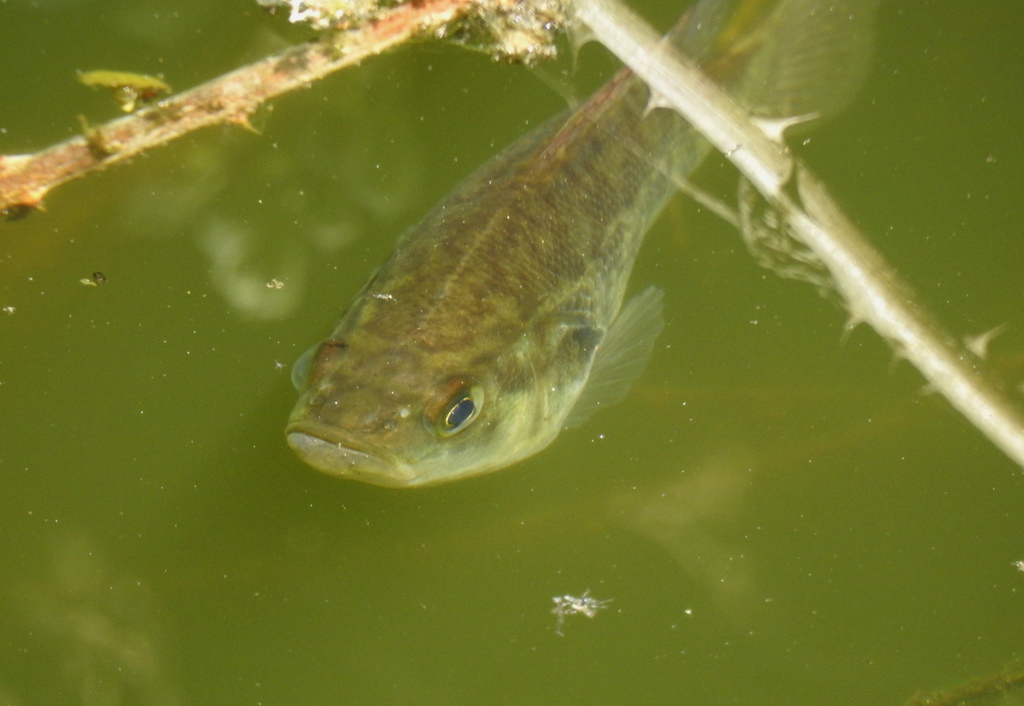
(c) Rudyard, some rights reserved (CC BY) · licence
Family: Centrarchidae · Class: Actinopterygii · Order: Centrarchiformes
Conservation status: G2G3 S1
Archoplites interruptus (Sacramento perch) is a California animal in the Centrarchidae family.
The Sacramento perch is a medium-sized freshwater fish endemic to California's Central Valley. Adults typically measure 150 to 250 mm (6 to 10 inches) in total length, with some individuals reaching up to 350 mm (14 inches). The body is laterally compressed and deep, with a distinctive hump behind the head in mature specimens. Coloration ranges from olive-green to bronze on the dorsal surface, fading to silver or white on the ventral side. Dark vertical bars are present along the sides, though these may be faint or absent in some populations. The species has a continuous dorsal fin with 12 to 13 spines and 10 to 12 soft rays, and an anal fin with 6 to 7 spines. Historically, Sacramento perch occurred throughout the Central Valley's extensive river systems, including the Sacramento and San Joaquin rivers and their tributaries, as well as associated sloughs and seasonal wetlands. The species was abundant in large, slow-moving rivers, backwater areas, and natural lakes from Redding south to the San Joaquin Valley. Currently, native populations persist only in a few isolated locations, primarily in Alameda and Contra Costa counties. The species has been successfully introduced to several reservoirs and private ponds outside its historical range, including Clear Lake in Lake County and several locations in southern California. Sacramento perch inhabit warm, shallow waters with abundant aquatic vegetation and soft substrates. The species prefers areas with temperatures between 18 and 24 degrees Celsius (64 to 75 degrees Fahrenheit) and tolerates a wide range of water quality conditions, including moderate salinity levels. Adults are typically found in depths ranging from 0.5 to 3 meters (1.5 to 10 feet), often near submerged logs, overhanging vegetation, or other cover structures. Sacramento perch are opportunistic predators, feeding on aquatic insects, crustaceans, small fish, and fish eggs. Adults also consume terrestrial insects that fall into the water. Spawning occurs from April through July, with peak activity in May and June when water temperatures reach 16 to 20 degrees Celsius (61 to 68 degrees Fahrenheit). Males construct circular nests in sandy or gravel substrates in shallow water, typically 0.3 to 1 meter deep. Females deposit 3,000 to 84,000 eggs per spawning event, depending on body size. Males guard the nest and fry for several weeks after hatching. The Sacramento perch has experienced severe population decline and range reduction since the late 1800s. The species is classified as imperiled globally (G2G3) and critically imperiled in California (S1). Primary threats include habitat loss through dam construction, water diversions, and wetland drainage. Competition and predation from introduced fish species, particularly centrarchids like largemouth bass and bluegill, have severely impacted native populations. Water quality degradation from agricultural runoff and urban development has further reduced suitable habitat. Conservation efforts include habitat restoration projects and captive breeding programs aimed at reestablishing populations in suitable locations within the species' historical range.
Classification
Class: Actinopterygii · Order: Centrarchiformes · Family: Centrarchidae
Conservation status
G2G3 S1
Frequently asked questions
How is Archoplites interruptus classified?
Archoplites interruptus belongs to class Actinopterygii, order Centrarchiformes, family Centrarchidae.
What family does Archoplites interruptus belong to?
Archoplites interruptus is in the Centrarchidae family.
Is Archoplites interruptus protected or of conservation concern?
Archoplites interruptus carries the following status: G2G3 S1.
What is Archoplites interruptus?
The Sacramento perch is a medium-sized freshwater fish endemic to California's Central Valley.
Is Archoplites interruptus found in California?
Yes. Archoplites interruptus is recorded in California in The California Species Project's catalogue.
Related species
Other California species in the same genus, family, or bioregion.
Data from The California Species Project — 14,000+ California species with verified data from CNPS, CDFW, USFWS, and more.