Archytas apicifer
Hornworm Tachinid Fly
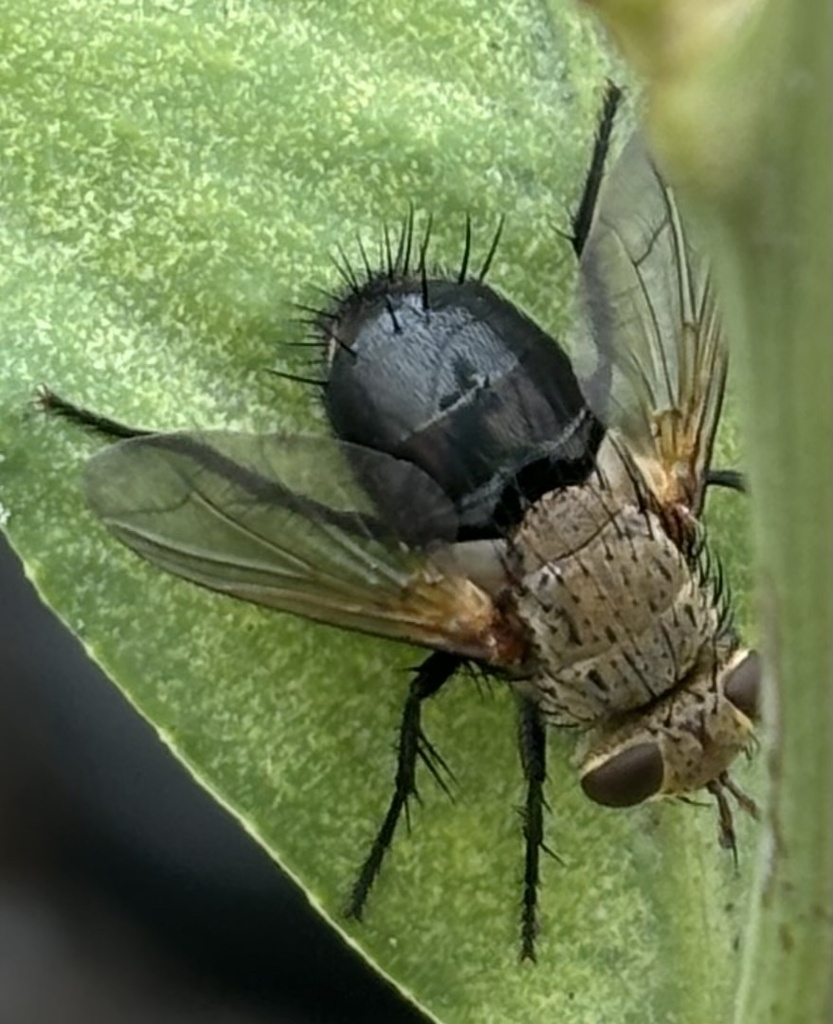
(c) Greghig Jirheg, some rights reserved (CC BY) · licence
Family: Tachinidae · Class: Insecta · Order: Diptera
Archytas apicifer (Hornworm Tachinid Fly) is a California animal in the Tachinidae family.
Archytas apicifer is a medium-sized tachinid fly measuring 10 to 15 mm (0.4 to 0.6 inches) in length (BugGuide 2025). Males can be distinguished from closely related species by the distinctive shape of sternite 5, while both sexes are generally less yellow in coloration compared to the similar species A. californiae, though this character may not be entirely reliable for field identification (BugGuide 2025). Like other tachinid flies, A. apicifer has a robust, bristly appearance typical of the family. This species has an extensive distribution throughout North America extending south to South America (BugGuide 2025). Within this broad range, A. apicifer occurs across diverse climatic zones and habitat types, making it one of the more widely distributed tachinid species. The fly's continental distribution reflects its adaptability to various environmental conditions and host availability. Adults are commonly found on flowers where they feed on nectar, serving as both pollinators and beneficial predators in agricultural and natural ecosystems (BugGuide 2025). The species inhabits areas where its noctuid moth hosts are present, including agricultural fields, gardens, and natural areas supporting populations of armyworms, cutworms, and related pest species. Adults require access to flowering plants for energy and reproductive success. Archytas apicifer exhibits a parasitoid lifestyle during its larval stage, targeting several economically important noctuid moths. Documented hosts include corn earworm (Helicoverpa zea), tomato fruitworm (H. armigera), pearly underwing (Peridroma saucia), and multiple armyworm species including true armyworm (Mythimna unipuncta), fall armyworm (Spodoptera frugiperda), and yellow-striped armyworm (S. ornithogalli) (Ravlin & Stehr 1984, cited in BugGuide 2025). Adult females locate host caterpillars and deposit eggs directly on or near them. The developing tachinid larvae then consume the host from within, ultimately killing it before pupating. This parasitic relationship makes A. apicifer a valuable biological control agent in agricultural systems. Adult flies are active during warmer months when both flowering plants and host caterpillars are available. The species likely completes multiple generations per year in warmer climates, with timing synchronized to host moth activity. Adults require carbohydrate sources from flowers for energy and may also feed on other sugary substances. As a beneficial insect, A. apicifer faces threats from pesticide applications that target both pest and beneficial species indiscriminately. Habitat loss through intensive agriculture and urbanization may impact local populations by reducing flowering plant resources essential for adult survival and reproduction. However, the species' broad host range and extensive distribution suggest overall population stability. Conservation efforts focused on maintaining diverse flowering plant communities and reducing broad-spectrum pesticide use support populations of this valuable biological control agent (Xerces Society 2018). The species currently has no formal conservation status and appears secure throughout most of its range as of December 2025.
Classification
Class: Insecta · Order: Diptera · Family: Tachinidae
Frequently asked questions
How is Archytas apicifer classified?
Archytas apicifer belongs to class Insecta, order Diptera, family Tachinidae.
What family does Archytas apicifer belong to?
Archytas apicifer is in the Tachinidae family.
What is Archytas apicifer?
Archytas apicifer is a medium-sized tachinid fly measuring 10 to 15 mm (0.4 to 0.6 inches) in length (BugGuide 2025).
Is Archytas apicifer found in California?
Yes. Archytas apicifer is recorded in California in The California Species Project's catalogue.
Related species
Other California species in the same genus, family, or bioregion.
Data from The California Species Project — 14,000+ California species with verified data from CNPS, CDFW, USFWS, and more.