Arctocephalus townsendi
Guadalupe fur seal
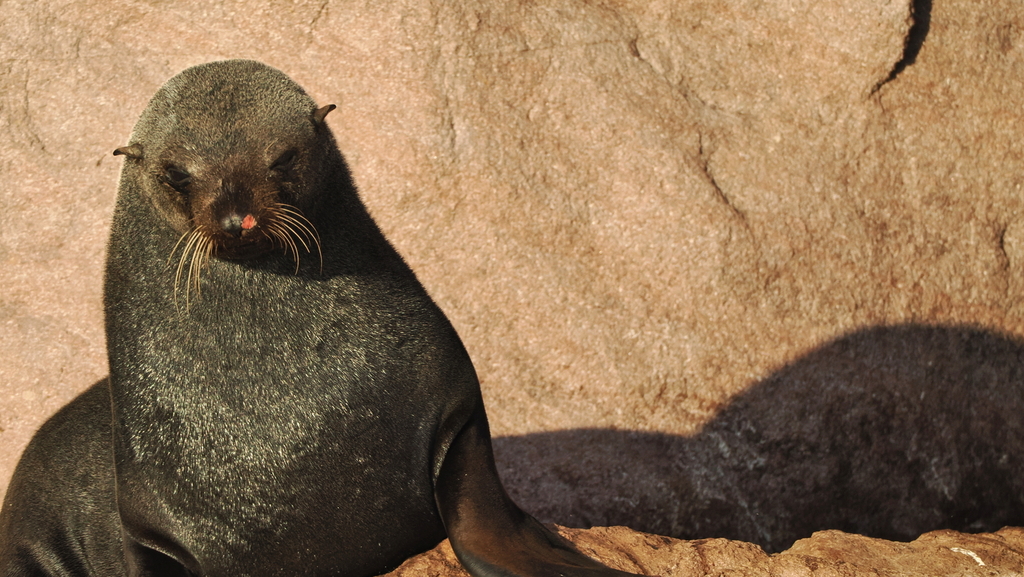
no rights reserved · CC0
Family: Otariidae · Class: Mammalia · Order: Carnivora
Conservation status: FP · Threatened · G1 S1
Arctocephalus townsendi (Guadalupe fur seal) is a California animal in the Otariidae family.
The Guadalupe fur seal is a large pinniped endemic to the waters surrounding Guadalupe Island off the Pacific coast of Baja California, Mexico, with occasional sightings along the California coast. Adult males reach 1.5 to 1.8 meters (4.9 to 5.9 feet) in length and weigh 120 to 180 kilograms (265 to 397 pounds), while females are smaller at 1.2 to 1.4 meters (3.9 to 4.6 feet) and 45 to 55 kilograms (99 to 121 pounds). Males develop a distinctive sagittal crest and thick neck during breeding season. The pelage is dark brown to blackish in males, while females and juveniles display lighter brown coloration. Both sexes have elongated front flippers characteristic of fur seals, with visible ear flaps distinguishing them from true seals. Historically, Guadalupe fur seals ranged from the Channel Islands off southern California to the tip of Baja California. Commercial hunting in the 19th and early 20th centuries reduced the population to near extinction, with the species thought extinct by 1928. The current range is restricted primarily to Guadalupe Island, located approximately 260 kilometers southwest of Ensenada, Mexico. Occasional individuals are sighted along the California coast, particularly around the Channel Islands, representing natural range expansion from the recovering population. The species inhabits rocky coastlines and offshore waters, preferring areas with steep cliffs and boulder beaches for hauling out and breeding. Rookeries are established on rocky platforms and in caves along Guadalupe Island's eastern shore. Guadalupe fur seals forage in deep offshore waters, diving to depths of 60 to 100 meters (197 to 328 feet) to feed on lanternfish, squid, and other mesopelagic prey. Foraging trips can extend 100 to 200 kilometers from shore. Breeding occurs from June through August, with males establishing territories on rocky shores. Females give birth to single pups after an 11-month gestation period that includes a three-month delayed implantation. Pups nurse for 8 to 12 months, remaining dependent on maternal care longer than most pinniped species. Males reach sexual maturity at 4 to 5 years, while females mature at 3 to 4 years. The species demonstrates site fidelity, with individuals returning to the same rookery areas annually. The Guadalupe fur seal was listed as threatened under the Endangered Species Act in 1985. According to NOAA Fisheries, the population has recovered from near extinction to approximately 40,000 to 50,000 individuals as of recent surveys. Primary threats include entanglement in fishing gear, pollution, climate change effects on prey availability, and potential oil spills. El Niño events can cause significant pup mortality through reduced prey availability. The species remains vulnerable due to its limited breeding range concentrated on a single island, making the population susceptible to catastrophic events.
Classification
Class: Mammalia · Order: Carnivora · Family: Otariidae
Conservation status
FP · Threatened · G1 S1
Frequently asked questions
How is Arctocephalus townsendi classified?
Arctocephalus townsendi belongs to class Mammalia, order Carnivora, family Otariidae.
What family does Arctocephalus townsendi belong to?
Arctocephalus townsendi is in the Otariidae family.
Is Arctocephalus townsendi protected or of conservation concern?
Arctocephalus townsendi carries the following status: FP · Threatened · G1 S1.
What is Arctocephalus townsendi?
The Guadalupe fur seal is a large pinniped endemic to the waters surrounding Guadalupe Island off the Pacific coast of Baja California, Mexico, with occasional sightings along the California coast.
Is Arctocephalus townsendi found in California?
Yes. Arctocephalus townsendi is recorded in California in The California Species Project's catalogue.
Related species
Other California species in the same genus, family, or bioregion.
Data from The California Species Project — 14,000+ California species with verified data from CNPS, CDFW, USFWS, and more.