Ardea herodias
Great Blue Heron
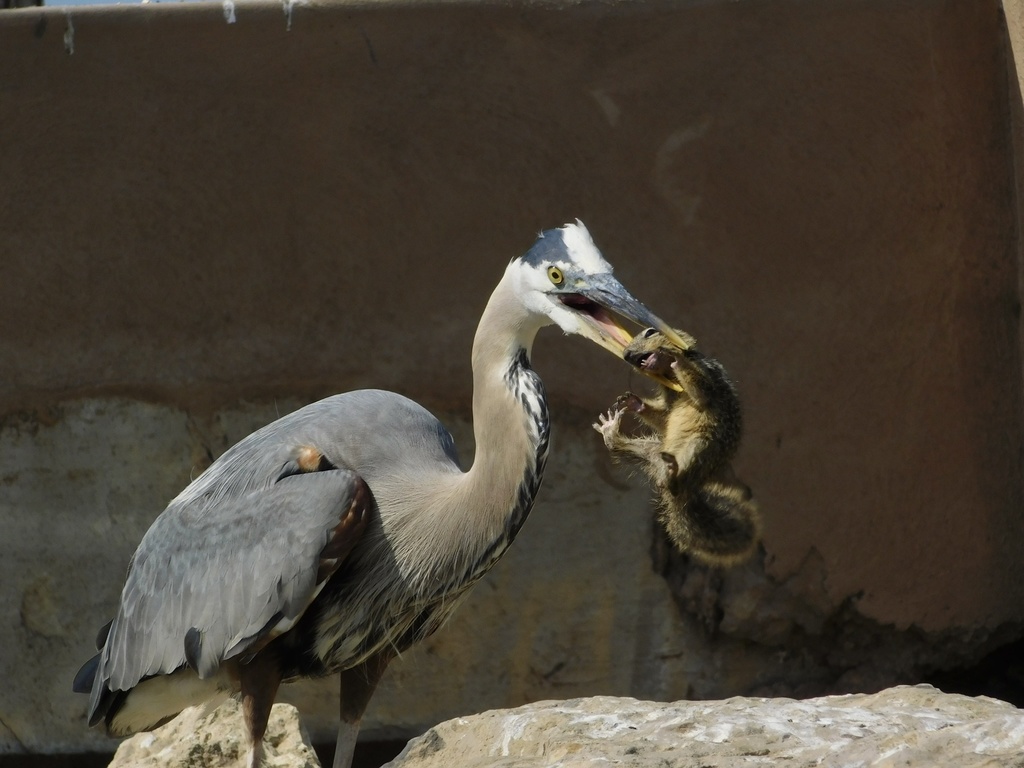
(c) mostbittern, some rights reserved (CC BY) · licence
Family: Ardeidae · Class: Aves · Order: Pelecaniformes
Conservation status: G5 S4
Ardea herodias (Great Blue Heron) is a California animal in the Ardeidae family.
The Great Blue Heron (Ardea herodias) is North America's largest heron, standing 97 to 137 cm (38 to 54 inches) tall with a wingspan reaching 167 to 201 cm (66 to 79 inches). Adults weigh 1.02 to 2.5 kg (2.2 to 5.5 pounds). The species displays blue-gray plumage on the back and wings, with a white head marked by black stripes extending from above the eyes to form a black crest. The neck is pale gray-brown with black streaking down the front. Long, dark flight feathers contrast with the lighter body coloration. The bill is yellow to orange, and legs are dark gray to black. During breeding season, adults develop elongated plumes on the back, neck, and chest. Great Blue Herons occur throughout California from sea level to approximately 1,500 meters elevation. The species breeds in all but the most arid southeastern desert regions, with year-round populations established in coastal areas, the Central Valley, and Sierra Nevada foothills. Northern populations are partially migratory, with birds moving to ice-free areas during winter. According to the North American Breeding Bird Survey, California supports stable breeding populations, particularly in the Sacramento-San Joaquin Delta and coastal estuaries. The species inhabits diverse wetland environments including freshwater marshes, lakes, rivers, coastal estuaries, tidal flats, and agricultural irrigation ditches. Great Blue Herons require shallow water areas for foraging, typically less than 60 cm deep, and adjacent tall trees or structures for nesting. Colonial nesting sites, called rookeries or heronries, are established in mature trees 6 to 30 meters high, often in riparian cottonwoods, sycamores, or eucalyptus groves. Urban populations utilize park ponds and golf course water features. Great Blue Herons are opportunistic predators employing a patient hunting strategy. They wade slowly through shallow water or stand motionless for extended periods before striking prey with rapid bill thrusts. Diet consists primarily of fish measuring 2 to 35 cm in length, but includes frogs, salamanders, small mammals, reptiles, crustaceans, and aquatic insects. Breeding occurs from February through August in California, with peak activity from March to June. Females lay 2 to 7 pale blue eggs in stick nests measuring 51 to 102 cm in diameter. Incubation lasts 27 to 29 days, with young fledging after 49 to 81 days. The Great Blue Heron maintains a global conservation rank of G5 (secure) and California state rank of S4 (apparently secure), indicating stable populations without immediate conservation concerns. The species benefits from wetland protection under state and federal regulations. Primary threats include habitat loss from urban development, water diversions affecting foraging areas, and human disturbance at nesting colonies. Climate change may alter prey availability and shift suitable breeding habitat northward. Population monitoring through Christmas Bird Counts and breeding bird surveys indicates generally stable trends across California, though localized declines occur where wetland habitat has been eliminated.
Classification
Class: Aves · Order: Pelecaniformes · Family: Ardeidae
Conservation status
G5 S4
Frequently asked questions
How is Ardea herodias classified?
Ardea herodias belongs to class Aves, order Pelecaniformes, family Ardeidae.
What family does Ardea herodias belong to?
Ardea herodias is in the Ardeidae family.
Is Ardea herodias protected or of conservation concern?
Ardea herodias carries the following status: G5 S4.
What is Ardea herodias?
The Great Blue Heron (Ardea herodias) is North America's largest heron, standing 97 to 137 cm (38 to 54 inches) tall with a wingspan reaching 167 to 201 cm (66 to 79 inches).
Is Ardea herodias found in California?
Yes. Ardea herodias is recorded in California in The California Species Project's catalogue.
Related species
Other California species in the same genus, family, or bioregion.
Data from The California Species Project — 14,000+ California species with verified data from CNPS, CDFW, USFWS, and more.