Ardenna carneipes
Flesh-footed Shearwater
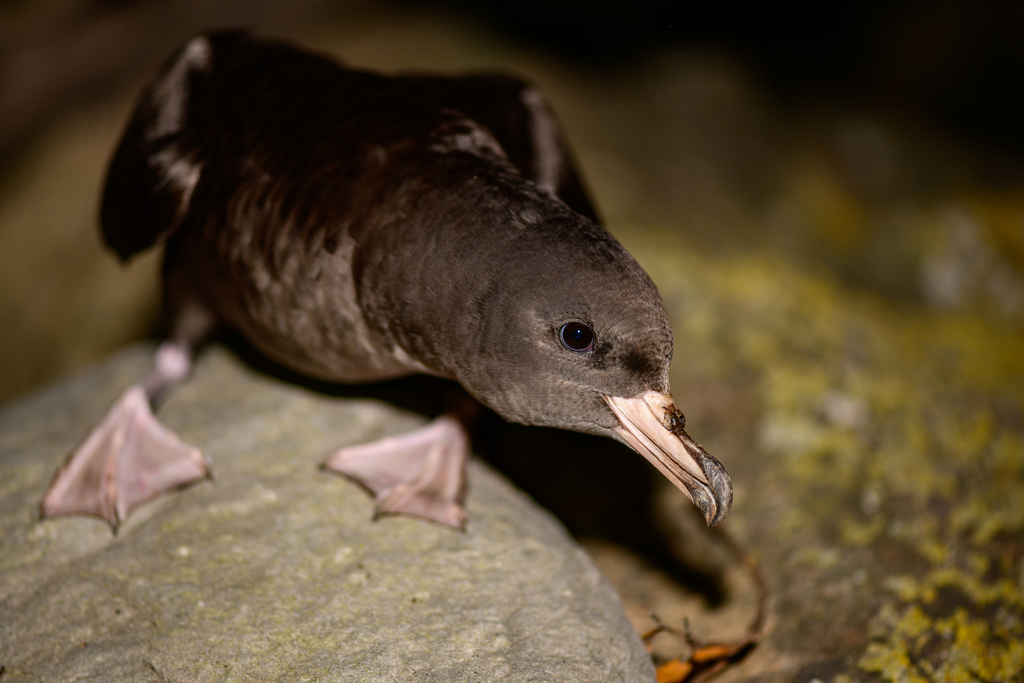
(c) Jake Osborne, some rights reserved (CC BY) · licence
Family: Procellariidae · Class: Aves · Order: Procellariiformes
Ardenna carneipes (Flesh-footed Shearwater) is a California animal in the Procellariidae family.
The Flesh-footed Shearwater is a large seabird in the family Procellariidae, measuring 40 to 45 cm (16 to 18 inches) in length with a wingspan of 99 to 106 cm (39 to 42 inches). Adults weigh between 550 to 750 grams (1.2 to 1.7 pounds). The species is characterized by its uniformly dark brown to blackish plumage, which appears lighter brown in worn condition. The bill is pale pink with a dark tip, and the feet are distinctively flesh-colored, giving the species its common name. The underwing shows a pale patch at the base of the flight feathers. Flesh-footed Shearwaters breed primarily in the Southern Hemisphere on islands off Australia and New Zealand, with the largest colonies on Lord Howe Island and islands in the Tasman Sea. During the non-breeding season, the species undertakes extensive migrations into the North Pacific Ocean. Along the California coast, Flesh-footed Shearwaters are observed as regular migrants and visitors, typically occurring from May through October. They are most commonly recorded in offshore waters along the central and northern California coast, with sightings documented from Monterey Bay to the waters off Humboldt County. In California waters, the species inhabits pelagic marine environments, typically occurring in waters over the continental shelf and slope. Flesh-footed Shearwaters are found in areas with sea surface temperatures ranging from 14 to 20°C (57 to 68°F) and are often associated with upwelling zones where prey concentrations are higher. The species occurs from near-shore waters to areas more than 200 kilometers offshore, with water depths ranging from 50 to over 3,000 meters. Flesh-footed Shearwaters are surface-feeding seabirds that employ various foraging strategies including surface seizing, shallow plunging, and scavenging. Their diet consists primarily of small schooling fish, squid, and crustaceans. Common prey species include anchovies, sardines, juvenile rockfish, and krill. The species often associates with other seabirds and marine mammals during feeding activities. During their time in California waters, individuals are typically solitary or occur in small loose aggregations. The species exhibits dynamic soaring flight patterns, using wind currents to cover large distances with minimal energy expenditure. The global population of Flesh-footed Shearwaters is estimated at 230,000 individuals, with the species classified as Near Threatened by the International Union for Conservation of Nature. Primary threats include plastic pollution, with studies showing high rates of plastic ingestion among individuals, potentially affecting reproductive success and survival. Fisheries interactions, including bycatch in longline and trawl fisheries, pose additional threats throughout the species' range. Climate change impacts on prey availability and distribution may affect foraging success during migration periods. In California waters, the species may be vulnerable to oil spills, marine pollution, and changes in oceanographic conditions that affect prey abundance.
Classification
Class: Aves · Order: Procellariiformes · Family: Procellariidae
Frequently asked questions
How is Ardenna carneipes classified?
Ardenna carneipes belongs to class Aves, order Procellariiformes, family Procellariidae.
What family does Ardenna carneipes belong to?
Ardenna carneipes is in the Procellariidae family.
What is Ardenna carneipes?
The Flesh-footed Shearwater is a large seabird in the family Procellariidae, measuring 40 to 45 cm (16 to 18 inches) in length with a wingspan of 99 to 106 cm (39 to 42 inches).
Is Ardenna carneipes found in California?
Yes. Ardenna carneipes is recorded in California in The California Species Project's catalogue.
Related species
Other California species in the same genus, family, or bioregion.
Data from The California Species Project — 14,000+ California species with verified data from CNPS, CDFW, USFWS, and more.