Ardenna tenuirostris
Short-tailed Shearwater
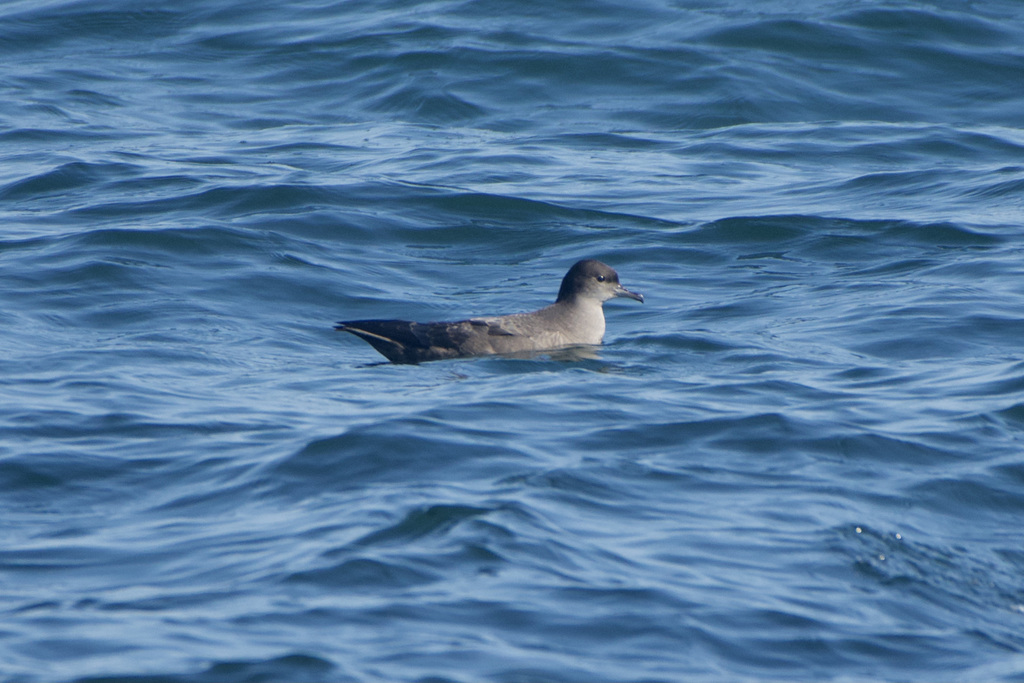
no rights reserved · CC0
Family: Procellariidae · Class: Aves · Order: Procellariiformes
Ardenna tenuirostris (Short-tailed Shearwater) is a California animal in the Procellariidae family.
The Short-tailed Shearwater is a medium-sized seabird in the family Procellariidae, measuring 40-43 cm (15.7-16.9 inches) in length with a wingspan of 95-105 cm (37.4-41.3 inches). Adults weigh between 450-650 grams (1.0-1.4 pounds). The species exhibits uniform dark brown to blackish plumage on the upperparts and head, with slightly paler brown underparts. The bill is dark and slender, measuring 35-40 mm in length, with prominent tube-like nostrils characteristic of the petrel family. The legs and webbed feet are dark gray to black. In flight, the species shows relatively narrow, pointed wings with a distinctive silvery sheen on the underwing coverts. Short-tailed Shearwaters breed exclusively in southeastern Australia, primarily on islands off Tasmania and the southern Australian coast. During the non-breeding season, the species undertakes one of the longest migrations in the animal kingdom, traveling approximately 32,000 km (19,900 miles) annually in a figure-eight pattern across the Pacific Ocean. Along the California coast, Short-tailed Shearwaters occur as regular visitors from May through October, with peak abundance typically observed from August through September. The species is most commonly recorded in offshore waters from Monterey Bay north to Humboldt County, though individuals may appear along the entire California coastline. The species inhabits pelagic marine environments, foraging primarily over continental shelf and slope waters. During migration and winter residence along California, Short-tailed Shearwaters typically occur 5-50 km offshore in waters 50-200 meters deep. The species shows preference for areas of upwelling and high productivity, particularly where cold, nutrient-rich waters support abundant prey populations. Flocks may concentrate around seamounts, upwelling zones, and areas of converging water masses. Short-tailed Shearwaters are highly gregarious, often forming large flocks that may number in the thousands during migration. The species feeds primarily on small schooling fish, krill, squid, and other zooplankton. Foraging occurs both during day and night, with birds employing surface-seizing, shallow diving, and pursuit-diving techniques to depths of 10-15 meters. The species breeds annually in large colonies on offshore islands, excavating burrows 1-2 meters deep in soft soil. Breeding occurs from September through April in the Southern Hemisphere, with females laying a single white egg. The incubation period lasts 53-56 days, with both parents sharing duties. The Short-tailed Shearwater maintains a stable global population estimated at 23 million individuals, earning it a classification of Least Concern by the International Union for Conservation of Nature. However, the species faces several threats including commercial fishing operations, where birds may become entangled in nets or compete for prey resources. Climate change poses potential long-term risks through altered ocean temperatures and prey distribution patterns. Oil spills and plastic pollution in marine environments present additional conservation concerns. Population monitoring through systematic surveys continues along major migration routes and at breeding colonies.
Classification
Class: Aves · Order: Procellariiformes · Family: Procellariidae
Frequently asked questions
How is Ardenna tenuirostris classified?
Ardenna tenuirostris belongs to class Aves, order Procellariiformes, family Procellariidae.
What family does Ardenna tenuirostris belong to?
Ardenna tenuirostris is in the Procellariidae family.
What is Ardenna tenuirostris?
The Short-tailed Shearwater is a medium-sized seabird in the family Procellariidae, measuring 40-43 cm (15.7-16.9 inches) in length with a wingspan of 95-105 cm (37.4-41.3 inches).
Is Ardenna tenuirostris found in California?
Yes. Ardenna tenuirostris is recorded in California in The California Species Project's catalogue.
Related species
Other California species in the same genus, family, or bioregion.
Data from The California Species Project — 14,000+ California species with verified data from CNPS, CDFW, USFWS, and more.