Arenaria interpres
Ruddy Turnstone
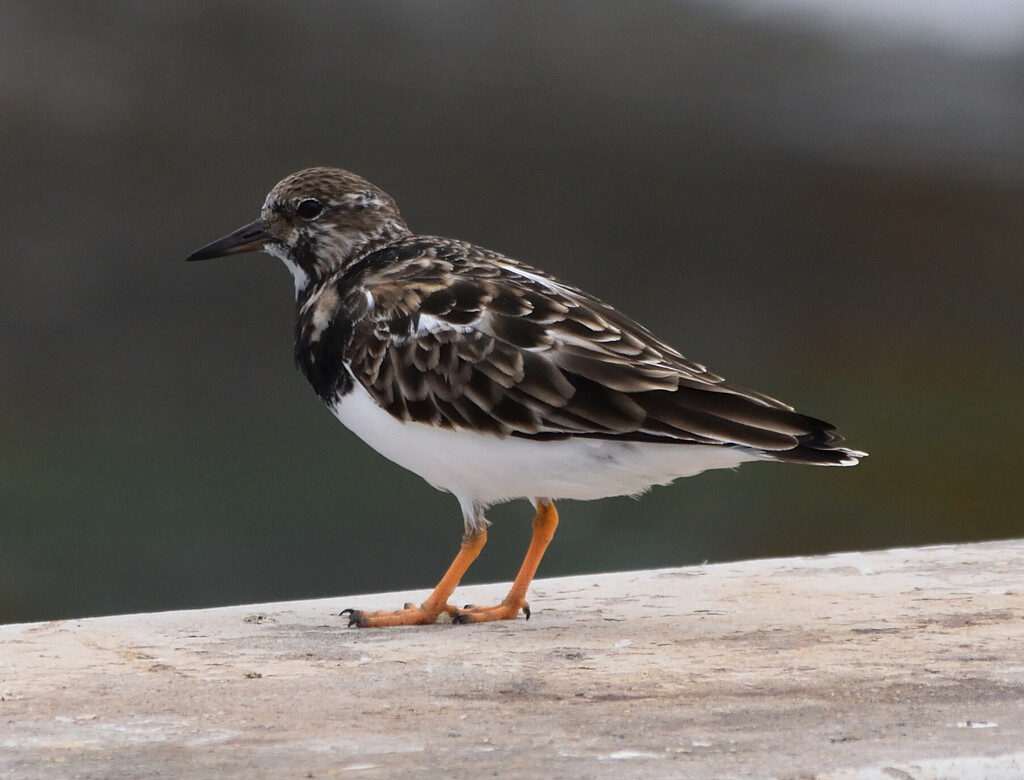
(c) dphone, some rights reserved (CC BY) · licence
Family: Scolopacidae · Class: Aves · Order: Charadriiformes
Arenaria interpres (Ruddy Turnstone) is a California animal in the Scolopacidae family.
The Ruddy Turnstone is a medium-sized shorebird measuring 21-26 cm (8.3-10.2 inches) in length with a wingspan of 43-49 cm (17-19 inches). Adults weigh 85-190 grams (3.0-6.7 ounces). In breeding plumage, males and females display distinctive calico-patterned upperparts with black, white, brown, and rufous markings. The head features bold black and white stripes, while the underparts are predominantly white with black breast patches. The short, slightly upturned bill is black with an orange base, and the legs are bright orange-red. Non-breeding adults appear duller with brownish-gray upperparts and reduced facial patterning. Juveniles resemble non-breeding adults but show buff-edged feathers on the back. Ruddy Turnstones breed in the high Arctic tundra of Alaska, northern Canada, Greenland, and northern Eurasia. During migration and winter, they occur along coastlines of all continents except Antarctica. In California, they are regular migrants and winter visitors along the entire coast from March through May and July through November. Peak migration periods occur in April-May and August-September. The species winters primarily south of California, though small numbers may remain along the coast during winter months. The species inhabits rocky coastlines, sandy beaches, mudflats, jetties, and breakwaters. Ruddy Turnstones prefer areas with abundant marine invertebrates, particularly during low tide when feeding opportunities are optimal. They utilize both natural and artificial substrates, including boulder fields, cobble beaches, and human-made structures such as piers and seawalls. During migration, they may also use inland freshwater habitats including lake shores and reservoir margins. Ruddy Turnstones are highly specialized foragers, using their wedge-shaped bills to flip stones, shells, seaweed, and other debris to expose hidden invertebrates. Their diet consists primarily of crustaceans, mollusks, marine worms, and insects. The species exhibits unique feeding behavior, often working cooperatively to overturn objects too heavy for individual birds. They may also probe sand and mud for prey. Breeding occurs on Arctic tundra from late May through July. Females typically lay 3-4 eggs in a shallow scrape lined with vegetation. The incubation period lasts 22-24 days, and chicks fledge after approximately 19-21 days. Ruddy Turnstones are not federally or state-listed as threatened or endangered. The International Union for Conservation of Nature classifies the species as Least Concern globally. Population estimates suggest approximately 460,000-500,000 individuals worldwide, with the population considered stable. However, the species faces threats from coastal development, sea level rise, and disturbance at roosting and feeding sites. Climate change may impact Arctic breeding grounds and alter coastal habitats used during migration and winter. Pollution, particularly plastic debris and oil spills, poses additional risks to populations using marine environments.
Classification
Class: Aves · Order: Charadriiformes · Family: Scolopacidae
Frequently asked questions
How is Arenaria interpres classified?
Arenaria interpres belongs to class Aves, order Charadriiformes, family Scolopacidae.
What family does Arenaria interpres belong to?
Arenaria interpres is in the Scolopacidae family.
What is Arenaria interpres?
The Ruddy Turnstone is a medium-sized shorebird measuring 21-26 cm (8.3-10.2 inches) in length with a wingspan of 43-49 cm (17-19 inches).
Is Arenaria interpres found in California?
Yes. Arenaria interpres is recorded in California in The California Species Project's catalogue.
Related species
Other California species in the same genus, family, or bioregion.
Data from The California Species Project — 14,000+ California species with verified data from CNPS, CDFW, USFWS, and more.