Arenaria melanocephala
Black Turnstone
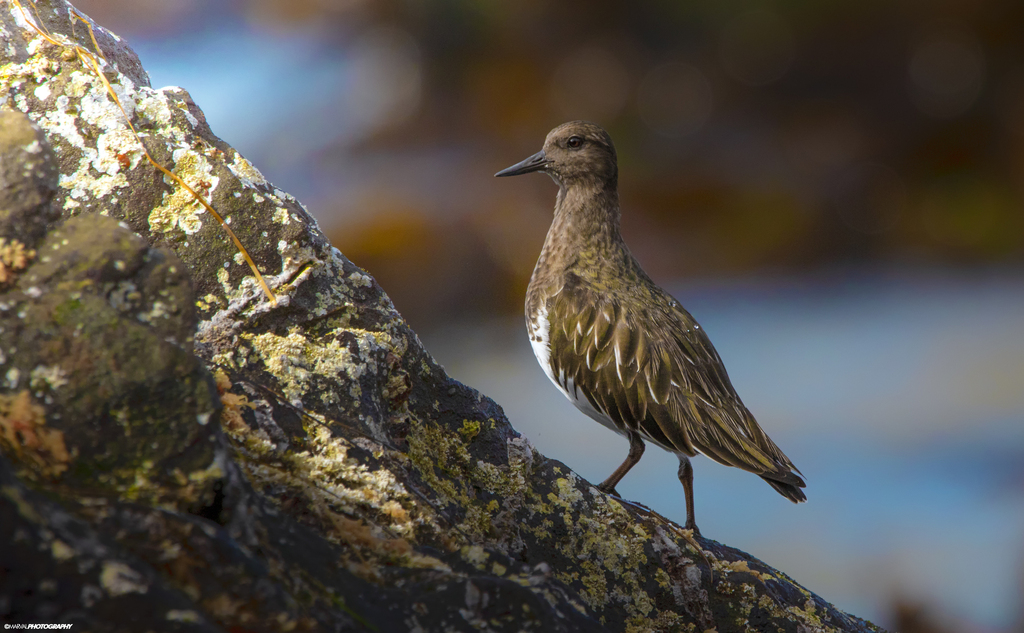
(c) MarvalPhotography19, some rights reserved (CC BY) · licence
Family: Scolopacidae · Class: Aves · Order: Charadriiformes
Arenaria melanocephala (Black Turnstone) is a California animal in the Scolopacidae family.
The Black Turnstone (Arenaria melanocephala) is a stocky, medium-sized shorebird measuring 22-25 cm (8.7-9.8 inches) in length with a wingspan of 50-57 cm (19.7-22.4 inches). Adults weigh between 100-170 grams (3.5-6.0 ounces). During breeding season, the species displays predominantly blackish-brown plumage on the head, neck, and upperparts, with white markings on the face and a distinctive white patch at the base of the tail. The underparts are white with dark barring on the flanks. Non-breeding adults show more muted coloration with grayish-brown tones. The legs are bright orange-red, and the bill is black, short, and slightly upturned, measuring 20-24 mm in length. Black Turnstones breed exclusively along the rocky coastlines of Alaska, from the Aleutian Islands eastward to southeast Alaska. During winter months, the species migrates south along the Pacific Coast, with California supporting the majority of the wintering population. According to NatureServe, approximately 95% of the global population winters along the California coast, from Humboldt County south to Baja California. The species is most abundant along the central and northern California coast, with significant concentrations in Monterey Bay, San Francisco Bay, and Point Reyes. The species occupies rocky intertidal zones, jetties, breakwaters, and boulder-strewn beaches. Black Turnstones show strong fidelity to rocky substrates where they can access their preferred prey items. During breeding, they utilize coastal tundra and rocky shores with sparse vegetation. Wintering habitat includes wave-exposed rocky shores, mussel beds, and areas with abundant barnacle coverage. The species typically forages within 50 meters of the high tide line and roosts on elevated rocky surfaces during high tide periods. Black Turnstones are specialists in foraging among rocks and crevices, using their bills to flip stones and pry invertebrates from surfaces. Their diet consists primarily of barnacles, mussels, limpets, periwinkles, and other marine invertebrates. Small crustaceans, marine worms, and occasionally small fish comprise secondary food sources. The species exhibits territorial behavior during the breeding season, with pairs defending territories of 0.5-2.0 hectares. Nesting occurs from May through July, with females laying 3-4 eggs in a shallow scrape lined with vegetation and pebbles. Incubation lasts 21-24 days, and chicks fledge after 21-28 days. The Black Turnstone is not federally listed under the Endangered Species Act and maintains a stable global population estimated at 65,000-80,000 individuals according to Partners in Flight. However, the species faces localized threats from coastal development, oil spills, and disturbance at roosting sites. Climate change poses potential long-term risks through sea level rise and altered prey availability. The species' narrow habitat requirements and concentrated wintering range in California make it vulnerable to catastrophic events. Audubon's climate models project a 66% range loss by 2080 under moderate warming scenarios, primarily affecting breeding habitat in Alaska.
Classification
Class: Aves · Order: Charadriiformes · Family: Scolopacidae
Frequently asked questions
How is Arenaria melanocephala classified?
Arenaria melanocephala belongs to class Aves, order Charadriiformes, family Scolopacidae.
What family does Arenaria melanocephala belong to?
Arenaria melanocephala is in the Scolopacidae family.
What is Arenaria melanocephala?
The Black Turnstone (Arenaria melanocephala) is a stocky, medium-sized shorebird measuring 22-25 cm (8.7-9.8 inches) in length with a wingspan of 50-57 cm (19.7-22.4 inches).
Is Arenaria melanocephala found in California?
Yes. Arenaria melanocephala is recorded in California in The California Species Project's catalogue.
Related species
Other California species in the same genus, family, or bioregion.
Data from The California Species Project — 14,000+ California species with verified data from CNPS, CDFW, USFWS, and more.