Areniscythris brachypteris
Oso Flaco Flightless Moth
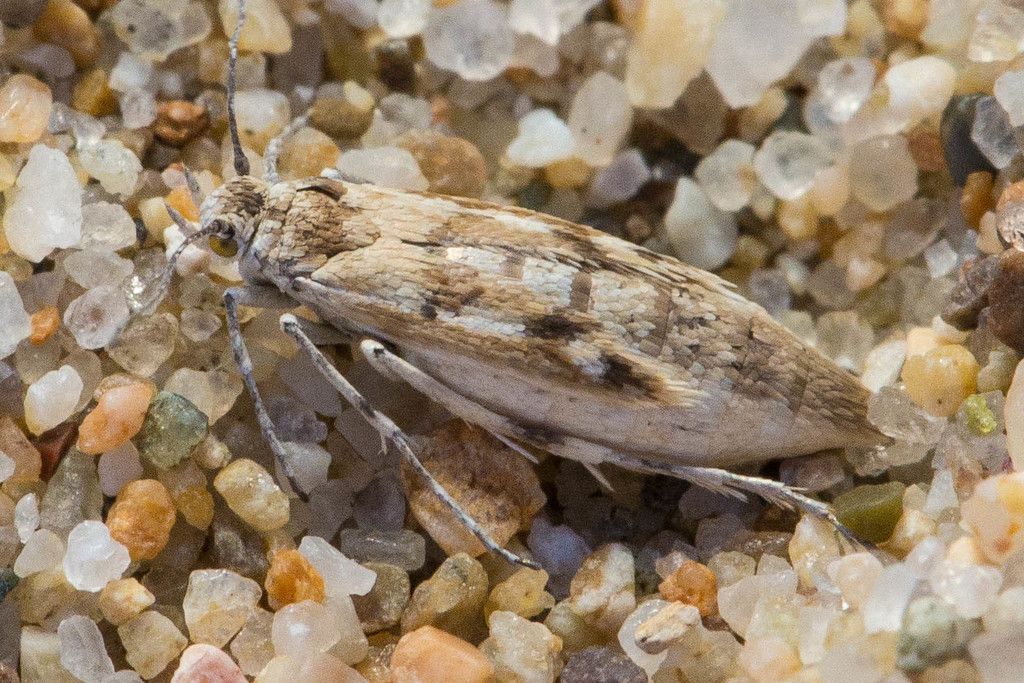
(c) Ken-ichi Ueda, some rights reserved (CC BY) · licence
Family: Scythrididae · Class: Insecta · Order: Lepidoptera
Conservation status: G2 S2
Areniscythris brachypteris (Oso Flaco Flightless Moth) is a California animal in the Scythrididae family.
The Oso Flaco flightless moth (Areniscythris brachypteris) is a small, specialized moth endemic to coastal California. Adults are characterized by reduced forewings and lack functional flight capability, an adaptation that distinguishes this species from most other Lepidoptera. The moth displays typical scythridid characteristics with narrow wings and a slender body form, though detailed morphological descriptions remain limited in published literature. This species has an extremely restricted range, occurring only in the Oso Flaco area of coastal San Luis Obispo County, California. The type locality and primary known habitat is situated within the Oceano Dunes State Vehicular Recreation Area and adjacent coastal areas near Oso Flaco Lake. This represents one of the most geographically limited distributions of any California moth species, with the entire known range encompassing less than a few square miles of coastal habitat. The Oso Flaco flightless moth inhabits coastal dune and scrub communities dominated by native vegetation. The species is associated with stabilized and semi-stabilized sand dunes that support a mixture of coastal sage scrub and dune plant communities. These habitats experience Mediterranean climate conditions with cool, moist winters and warm, dry summers. Fog intrusion from the Pacific Ocean provides additional moisture during summer months, creating microclimatic conditions essential for the moth's survival. The substrate consists primarily of sandy soils derived from coastal dune systems. As a member of the family Scythrididae, this species likely exhibits feeding behavior typical of the group, with larvae potentially feeding on organic matter in the soil or on specific host plants within the dune ecosystem. The flightless condition suggests highly localized dispersal patterns and potential dependence on specific microhabitat conditions. Adult activity patterns, reproductive behavior, and seasonal phenology remain poorly documented due to the species' recent description and limited research attention. The loss of flight capability may represent an evolutionary adaptation to the harsh, windy coastal environment where flight could prove disadvantageous. The Global and State ranks of G2 S2 indicate that the Oso Flaco flightless moth is imperiled both globally and within California, with populations vulnerable to extirpation. The species faces significant conservation challenges due to its extremely limited distribution and specialized habitat requirements. Primary threats include habitat degradation from recreational vehicle use in the Oceano Dunes area, invasive plant species that alter native plant communities, and potential impacts from climate change affecting coastal fog patterns. Urban development pressure and altered hydrology from surrounding land uses may also threaten the delicate dune ecosystem. The species' flightless condition makes natural recolonization of disturbed areas impossible, emphasizing the critical importance of protecting existing habitat. Currently, no specific federal or state listing status has been designated, though the restricted range and specialized habitat needs suggest potential vulnerability to local extinction without targeted conservation measures.
Classification
Class: Insecta · Order: Lepidoptera · Family: Scythrididae
Conservation status
G2 S2
Frequently asked questions
How is Areniscythris brachypteris classified?
Areniscythris brachypteris belongs to class Insecta, order Lepidoptera, family Scythrididae.
What family does Areniscythris brachypteris belong to?
Areniscythris brachypteris is in the Scythrididae family.
Is Areniscythris brachypteris protected or of conservation concern?
Areniscythris brachypteris carries the following status: G2 S2.
What is Areniscythris brachypteris?
The Oso Flaco flightless moth (Areniscythris brachypteris) is a small, specialized moth endemic to coastal California.
Is Areniscythris brachypteris found in California?
Yes. Areniscythris brachypteris is recorded in California in The California Species Project's catalogue.
Related species
Other California species in the same genus, family, or bioregion.
Data from The California Species Project — 14,000+ California species with verified data from CNPS, CDFW, USFWS, and more.