Argentostiria koebelei
Koebele’s Argentostiria Moth
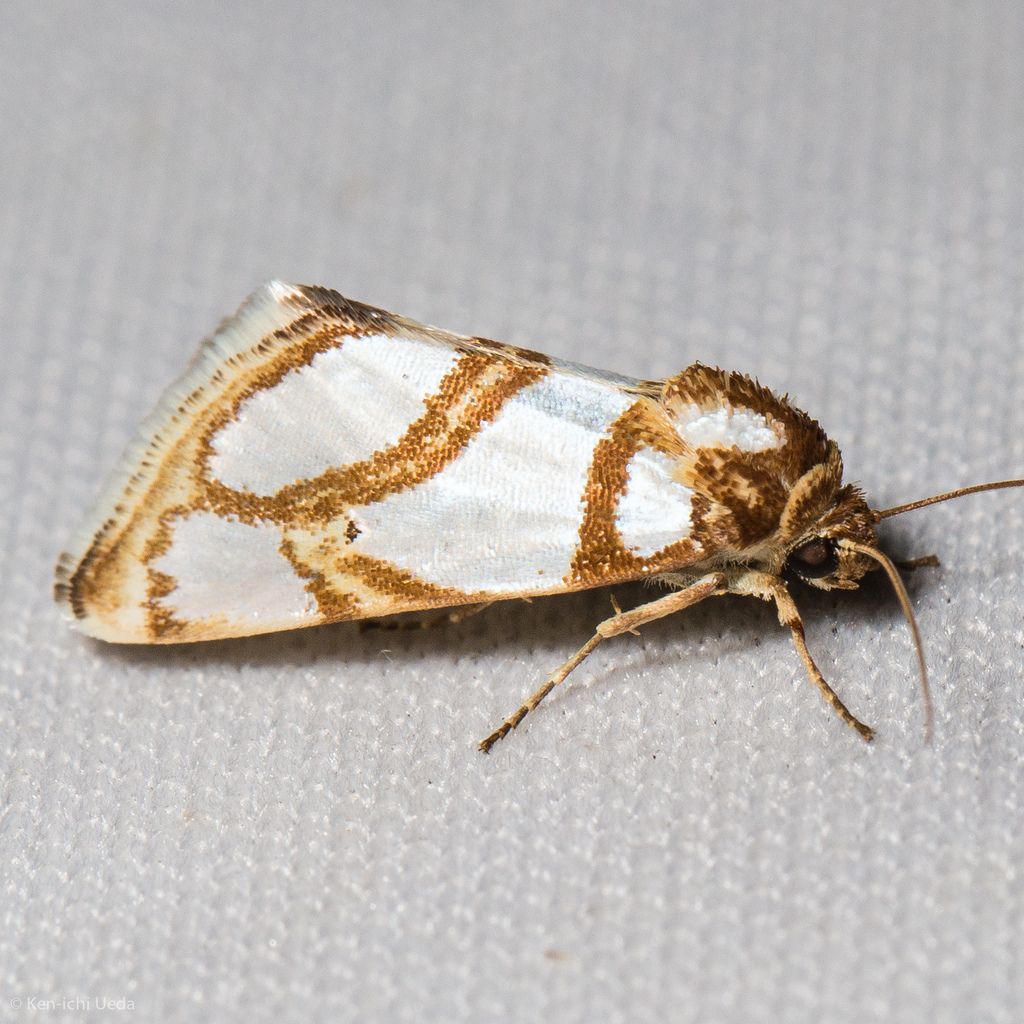
(c) Ken-ichi Ueda, some rights reserved (CC BY) · licence
Family: Noctuidae · Class: Insecta · Order: Lepidoptera
Argentostiria koebelei (Koebele’s Argentostiria Moth) is a California animal in the Noctuidae family.
Argentostiria koebelei is a small noctuid moth belonging to the family Noctuidae, subfamily Stiriinae. This species was originally described by Riley in 1893 as Antaplaga koebelei and has undergone several taxonomic revisions, having been placed in the genus Chalcopasta before its current classification (Moth Photographers Group). The species is assigned Hodges number 9779 in the standard North American moth catalog. The moth exhibits the typical characteristics of the Stiriinae subfamily, though detailed morphological descriptions are limited in the literature. Adult specimens have been documented from various elevations, including records from approximately 4,150 feet in the Eastern Sierra of Inyo County, California (BugGuide). Argentostiria koebelei occurs across southern California, Nevada, southern Utah, and western Arizona. Within California, the species has been documented from multiple counties including Inyo County in the Eastern Sierra region and Santa Barbara County in the Cuyama Valley area. A specimen was recorded from the Cuyama Valley "Check Dam" location in Santa Barbara County in May 2008, demonstrating the species' presence in interior southern California valleys. The habitat preferences of A. koebelei have not been extensively documented in the scientific literature. Based on collection records, the species appears to inhabit diverse environments across its range, from desert regions to montane areas. The elevation range extends from lower desert valleys to at least 4,150 feet in mountainous terrain, suggesting adaptability to various climatic conditions within its southwestern distribution. Specific details regarding the life history, host plants, and ecological requirements of A. koebelei remain poorly documented. Like other members of the Stiriinae, the species likely has specific larval host plant associations, but these relationships have not been well studied or reported in available literature. Adult flight periods appear to include spring months, with collection records from March through May, though the full seasonal activity pattern requires further documentation. The conservation status of Argentostiria koebelei has not been formally assessed by state or federal agencies. The species does not appear on California's Special Animals List or other conservation databases as of December 2025. Limited collection records and sparse ecological data make it difficult to assess population trends or conservation needs. The species' broad geographic range across multiple southwestern states suggests it may be more widespread than collection records indicate, though many Stiriinae moths remain understudied. Further research is needed to document the complete life history, host plant relationships, and ecological requirements of this species. The limited available information highlights the need for additional field studies and taxonomic research on North American Stiriinae moths. Citizen science contributions and systematic surveys across the species' range could help fill knowledge gaps regarding distribution patterns and habitat associations.
Classification
Class: Insecta · Order: Lepidoptera · Family: Noctuidae
Frequently asked questions
How is Argentostiria koebelei classified?
Argentostiria koebelei belongs to class Insecta, order Lepidoptera, family Noctuidae.
What family does Argentostiria koebelei belong to?
Argentostiria koebelei is in the Noctuidae family.
What is Argentostiria koebelei?
Argentostiria koebelei is a small noctuid moth belonging to the family Noctuidae, subfamily Stiriinae.
Is Argentostiria koebelei found in California?
Yes. Argentostiria koebelei is recorded in California in The California Species Project's catalogue.
Related species
Other California species in the same genus, family, or bioregion.
Data from The California Species Project — 14,000+ California species with verified data from CNPS, CDFW, USFWS, and more.