Argia emma
Emma's Dancer
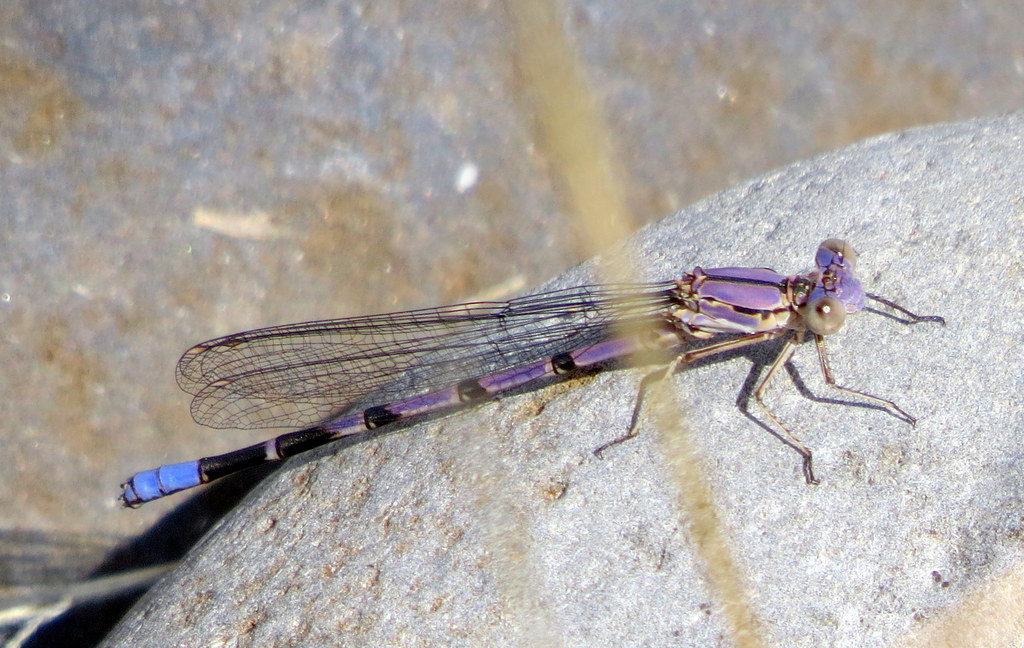
no rights reserved · CC0
Family: Coenagrionidae · Class: Insecta · Order: Odonata
Argia emma (Emma's Dancer) is a California animal in the Coenagrionidae family.
Emma's Dancer is a small damselfly belonging to the family Coenagrionidae, commonly known as narrow-winged damselflies. This species is part of the genus Argia, which includes numerous dancer damselfly species found throughout North America. Like other members of the Coenagrionidae family, Emma's Dancer exhibits the characteristic slender body and delicate wings typical of damselflies, with wings that fold along the body when at rest, distinguishing them from dragonflies. Emma's Dancer occurs across a broad range in North America, with documented populations extending from the Great Plains through various western states. While the species has been reported from California in some databases, specific distribution information within the state is not well documented in current literature. According to NatureServe, the species has a global conservation status of G5, indicating it is secure globally with no immediate conservation concerns (NatureServe 2025). The species appears to have stable populations across its range, though specific population estimates are not well documented in the scientific literature. This damselfly species typically inhabits small streams and aquatic environments with flowing water. According to multi-state inventory programs, Emma's Dancer shows a preference for small stream habitats, distinguishing it from some related species that favor pools or marshes (Kinkead et al. 2006). The species requires clean, well-oxygenated water for successful reproduction and larval development. Adults are commonly found near the water's edge and in riparian vegetation adjacent to suitable breeding habitats. Like other Argia species, Emma's Dancer follows a typical damselfly life cycle with aquatic nymphal stages and terrestrial adult phases (Paulson 2009). The nymphs, known as naiads, are predatory and live in the stream substrate, feeding on small aquatic invertebrates. Adult emergence typically occurs during warmer months, with timing varying by latitude and local climate conditions. Adults are also predatory, capturing small flying insects including mosquitoes, midges, and other small arthropods. Mating involves the characteristic damselfly tandem position, with males grasping females behind the head using specialized claspers. Reproduction involves the female depositing eggs in aquatic vegetation or directly into the water. The eggs develop into aquatic nymphs that undergo several molts before emerging as flying adults. Development time from egg to adult varies with water temperature and environmental conditions, typically requiring one full season. Emma's Dancer does not currently face significant conservation threats, as reflected in its secure global status ranking. However, like many aquatic insects, the species could be vulnerable to habitat degradation including water pollution, stream channelization, and alterations to natural flow patterns. Climate change impacts on stream hydrology and temperature regimes may also affect suitable habitat availability. The species benefits from watershed protection efforts and maintenance of riparian corridor integrity that preserve natural stream ecosystems.
Classification
Class: Insecta · Order: Odonata · Family: Coenagrionidae
Frequently asked questions
How is Argia emma classified?
Argia emma belongs to class Insecta, order Odonata, family Coenagrionidae.
What family does Argia emma belong to?
Argia emma is in the Coenagrionidae family.
What is Argia emma?
Emma's Dancer is a small damselfly belonging to the family Coenagrionidae, commonly known as narrow-winged damselflies.
Is Argia emma found in California?
Yes. Argia emma is recorded in California in The California Species Project's catalogue.
Related species
Other California species in the same genus, family, or bioregion.
Data from The California Species Project — 14,000+ California species with verified data from CNPS, CDFW, USFWS, and more.