Argia vivida
Vivid Dancer
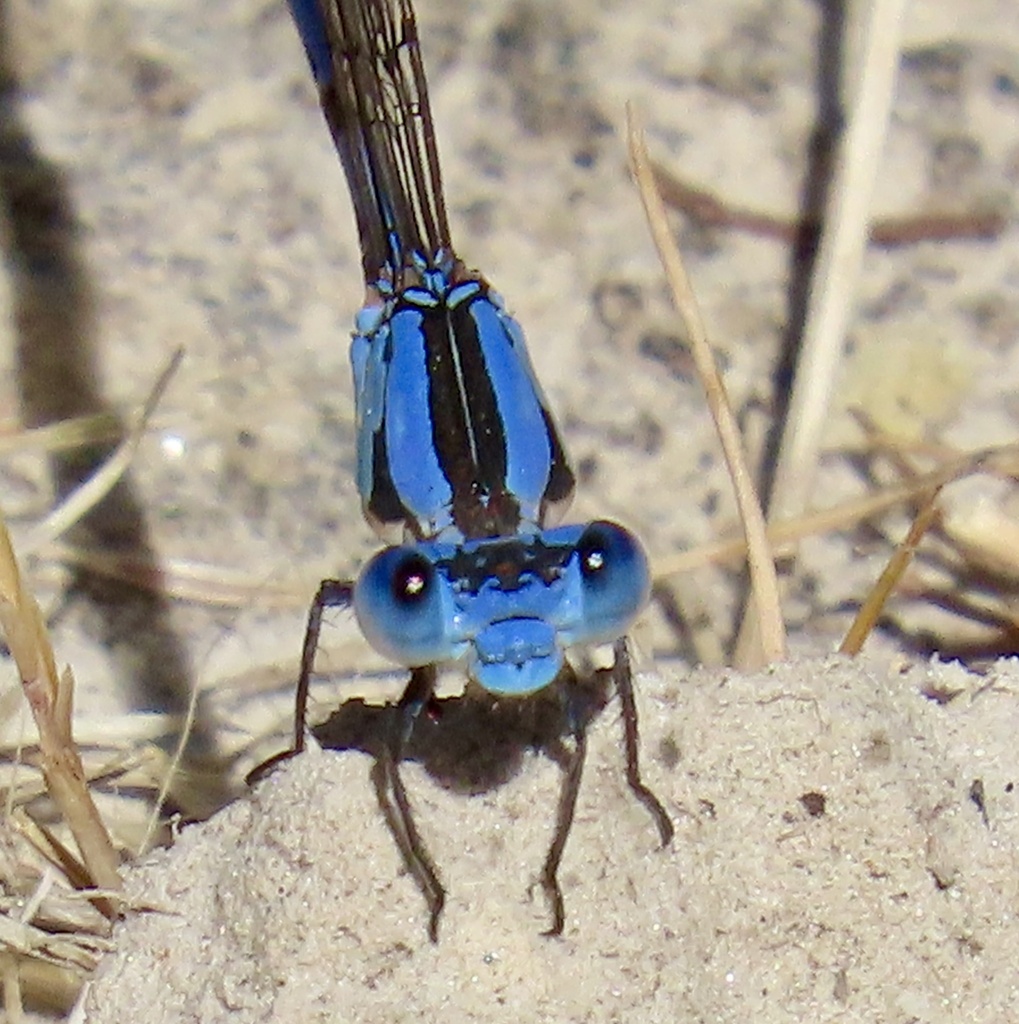
no rights reserved · CC0
Family: Coenagrionidae · Class: Insecta · Order: Odonata
Argia vivida (Vivid Dancer) is a California animal in the Coenagrionidae family.
The Vivid Dancer is a medium-sized damselfly in the family Coenagrionidae, belonging to the genus Argia. Adults typically measure approximately 76 mm (3 inches) in total length. Males display bright blue coloration on the thorax and abdomen with black markings, while females are generally more subdued with brownish or grayish tones. The species exhibits the characteristic narrow wings of damselflies, which are held together above the body when at rest, distinguishing them from dragonflies. The Vivid Dancer has a broad distribution across western North America. According to BugGuide records, the species occurs from Alberta, Canada, south through multiple western U.S. states including California, Colorado, Idaho, Montana, Nevada, and others. In California, the species is found throughout much of the state, with documented observations across multiple counties. The species also extends into the intermountain west and portions of the Great Plains. Vivid Dancers inhabit a variety of aquatic environments, typically favoring streams, springs, and slow-moving waterways. According to NatureServe, the species is associated with both thermal springs and cooler spring systems. They require clean, well-oxygenated water for larval development and are often found near riparian vegetation that provides perching sites and hunting grounds for adults. The species occurs across a range of elevations, from low-elevation valleys to montane areas. Adults are active predators, capturing small flying insects such as mosquitoes, gnats, and midges. Based on BugGuide observation data, adults are most active from March through October, with peak activity occurring during late spring and summer months (May through August). Like other damselflies, Vivid Dancers undergo incomplete metamorphosis, with aquatic nymphs developing in streams and springs before emerging as flying adults. Mating involves the distinctive wheel formation typical of odonates, where the male grasps the female behind the head while she curves her abdomen to receive sperm. The species currently has no federal or state listing status and appears to maintain stable populations across much of its range. However, NatureServe notes that some populations face localized threats including intensive recreational use of thermal springs, livestock trampling at cool springs, and the introduction of non-native fish species that may impact larval stages. Climate change and water diversions could potentially affect spring-dependent populations. Habitat preservation around clean water sources and management of recreational impacts at sensitive sites remain important for maintaining healthy populations of this species throughout its range.
Classification
Class: Insecta · Order: Odonata · Family: Coenagrionidae
Frequently asked questions
How is Argia vivida classified?
Argia vivida belongs to class Insecta, order Odonata, family Coenagrionidae.
What family does Argia vivida belong to?
Argia vivida is in the Coenagrionidae family.
What is Argia vivida?
The Vivid Dancer is a medium-sized damselfly in the family Coenagrionidae, belonging to the genus Argia.
Is Argia vivida found in California?
Yes. Argia vivida is recorded in California in The California Species Project's catalogue.
Related species
Other California species in the same genus, family, or bioregion.
Data from The California Species Project — 14,000+ California species with verified data from CNPS, CDFW, USFWS, and more.