Argiope trifasciata
Banded Garden Spider
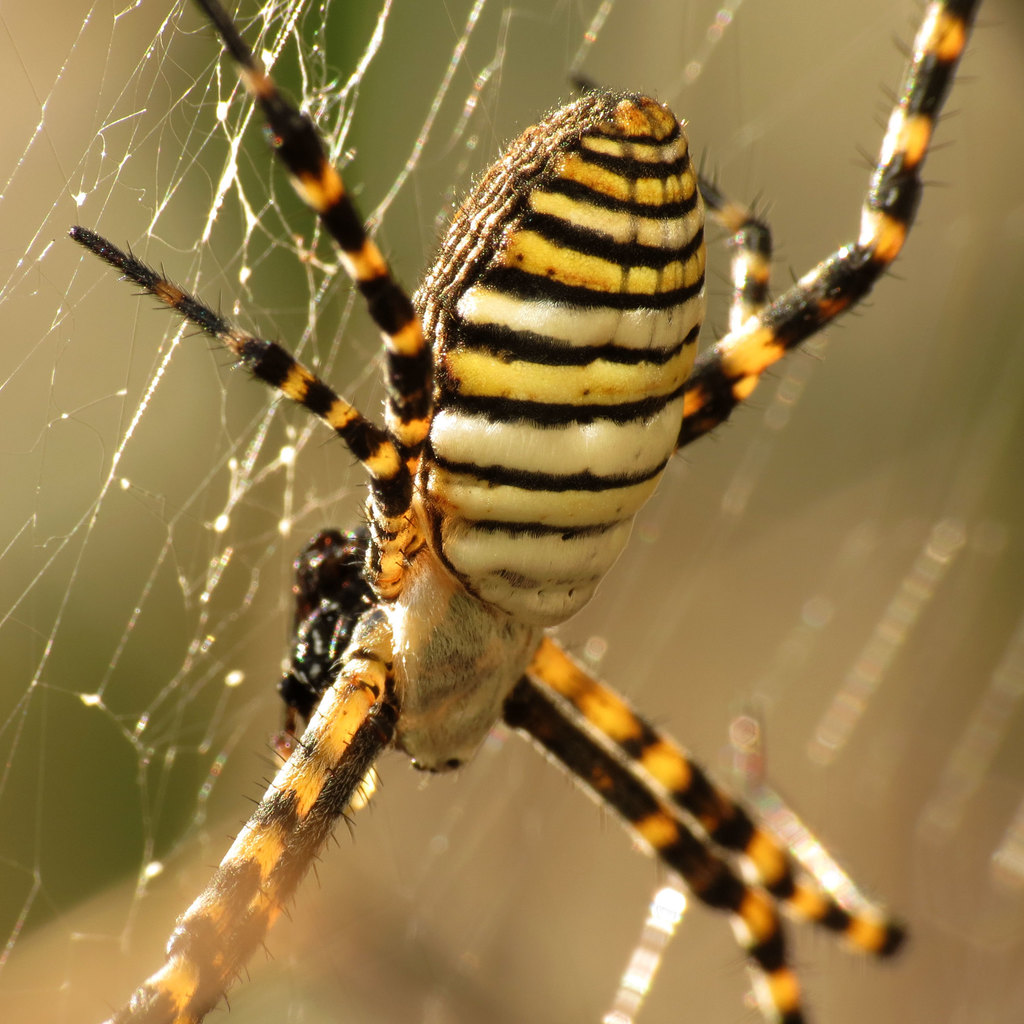
(c) Katja Schulz, some rights reserved (CC BY) · licence
Family: Araneidae · Class: Arachnida · Order: Araneae
Argiope trifasciata (Banded Garden Spider) is a California animal in the Araneidae family.
The Banded Garden Spider (Argiope trifasciata) is a medium to large orb weaver spider in the family Araneidae. Females typically measure 12-19 mm (0.5-0.75 inches) in body length, excluding legs, while males are considerably smaller at 4-5 mm (0.15-0.2 inches). The species displays pronounced sexual dimorphism in both size and coloration. Females exhibit distinctive banding patterns with alternating light and dark stripes across the dorsal abdomen, typically showing silver, white, or yellow bands separated by darker brown or black bands. The legs are banded with alternating light and dark segments. Males are much smaller with less prominent markings and more subdued coloration. Argiope trifasciata has a cosmopolitan distribution, found across North America from southern Canada to Central America, and occurs on multiple continents worldwide (BugGuide). In California, the species is distributed throughout much of the state, from coastal areas to inland valleys and desert regions. The species shows considerable tolerance for different climatic conditions, contributing to its broad geographic range. This spider inhabits a variety of open habitats including gardens, fields, prairies, scrublands, and forest edges. It typically constructs webs in areas with abundant vegetation that can support the large orb web structure. The species shows preference for locations with good sun exposure and moderate wind protection. In California, it can be found from near sea level to moderate elevations in foothill regions. Banded Garden Spiders are classic orb weavers, constructing large, circular webs that can exceed 60 cm (24 inches) in diameter. The web features a distinctive zigzag pattern called a stabilimentum in the center, though this structure may be absent in mature females. Webs are typically positioned 0.5-2 meters above ground in vegetation. The species is primarily active during daylight hours, sitting head-down in the web center waiting for prey. Diet consists mainly of flying insects including flies, beetles, grasshoppers, and flying ants that become entangled in the web. Reproduction occurs in late summer and fall. Males must approach females carefully during mating to avoid being consumed. After successful mating, females produce one to several egg sacs, each containing 300-1,400 eggs. The spherical egg sacs are typically brown or tan and attached to vegetation near the web. Females die with the onset of cold weather, while spiderlings overwinter in the egg sacs and emerge the following spring. The species completes one generation per year in most regions. Argiope trifasciata has no special conservation status and is considered secure globally with a ranking of G5 (Idaho Department of Fish and Game). The species appears to benefit from human-modified landscapes including agricultural areas and suburban gardens, where it often constructs webs in ornamental plants and crop edges. Its broad habitat tolerance and cosmopolitan distribution suggest the species faces no significant conservation threats. The spider may actually serve a beneficial role in agricultural settings by consuming pest insects.
Classification
Class: Arachnida · Order: Araneae · Family: Araneidae
Frequently asked questions
How is Argiope trifasciata classified?
Argiope trifasciata belongs to class Arachnida, order Araneae, family Araneidae.
What family does Argiope trifasciata belong to?
Argiope trifasciata is in the Araneidae family.
What is Argiope trifasciata?
The Banded Garden Spider (Argiope trifasciata) is a medium to large orb weaver spider in the family Araneidae.
Is Argiope trifasciata found in California?
Yes. Argiope trifasciata is recorded in California in The California Species Project's catalogue.
Related species
Other California species in the same genus, family, or bioregion.
Data from The California Species Project — 14,000+ California species with verified data from CNPS, CDFW, USFWS, and more.