Argochrysis lassenae
Lassen Cuckoo Wasp
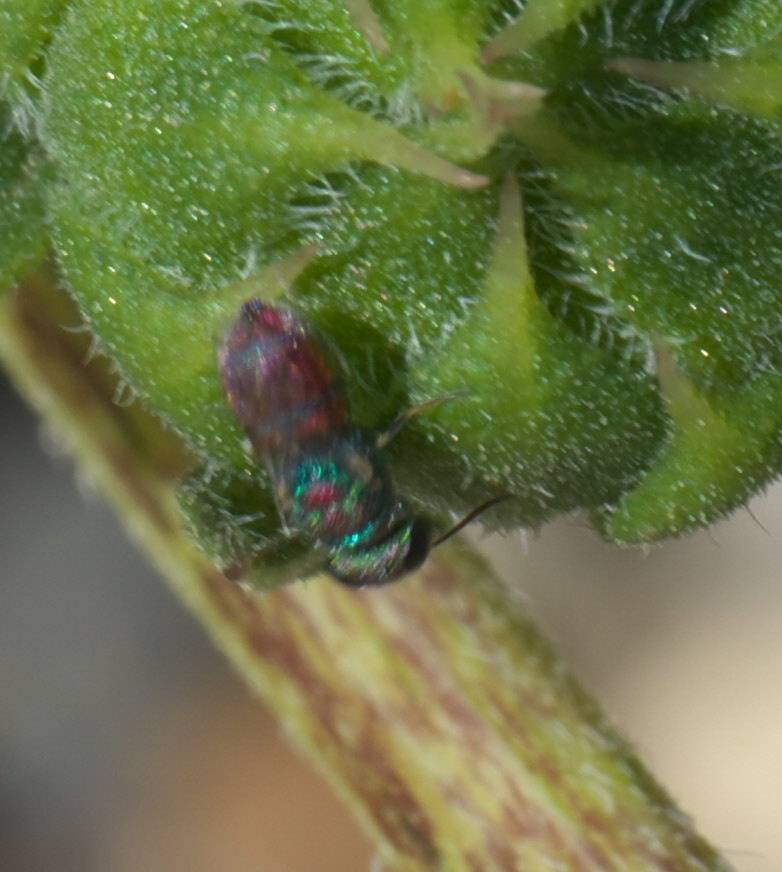
(c) Robert Webster, some rights reserved (CC BY-SA) · licence
Family: Chrysididae · Class: Insecta · Order: Hymenoptera
Conservation status: G2 S2
Argochrysis lassenae (Lassen Cuckoo Wasp) is a California animal in the Chrysididae family.
Argochrysis lassenae, commonly known as the Lassen cuckoo wasp, is a chrysidid wasp endemic to California's mountainous regions. This small metallic wasp belongs to the family Chrysididae, commonly called cuckoo wasps or jewel wasps due to their brilliant metallic coloration. Like other cuckoo wasps, A. lassenae likely displays the characteristic blue-green or golden metallic sheen on its exoskeleton, though detailed morphological descriptions for this specific species remain limited in the scientific literature. The species has a highly restricted distribution within California, occurring primarily in the Lassen region of northeastern California. According to NatureServe, the species was last assessed in October 2022, with its range apparently centered around the Mount Lassen area and potentially extending into adjacent mountainous terrain. The specific counties and elevation ranges occupied by this species have not been comprehensively documented, reflecting the limited field survey data available for many parasitoid wasp species. Habitat requirements for A. lassenae remain poorly understood, as is typical for many specialized cuckoo wasps. Most chrysidid wasps inhabit areas where their host species are present, often in sandy or well-drained soils that support ground-nesting bee and wasp communities. Given its association with the Lassen region, this species likely occurs in montane habitats including mixed conifer forests, volcanic soils, and associated openings that support diverse hymenopteran communities. The ecological relationships of A. lassenae follow the typical cuckoo wasp lifestyle as brood parasites or cleptoparasites. Female cuckoo wasps locate the nests of solitary bees or wasps, enter the host nest, and lay eggs near the host's provisions or larvae. The developing cuckoo wasp larvae then consume either the host's food stores or the host larvae themselves. The specific host species utilized by A. lassenae has not been documented, though related Argochrysis species typically parasitize ground-nesting bees in the families Halictidae or Andrenidae. Adults likely emerge during late spring or summer months to coincide with peak activity periods of their host species. Argochrysis lassenae carries a conservation ranking of G2 S2, indicating it is imperiled both globally and within California due to rarity and restricted range. This ranking reflects concerns about the species' limited distribution and potential vulnerability to habitat loss or degradation. Primary threats likely include habitat modification from development, altered fire regimes that affect the plant communities supporting host bee populations, and climate change impacts on montane ecosystems. The specialized nature of cuckoo wasp ecology, requiring both suitable habitat and viable host populations, makes these species particularly vulnerable to environmental changes that disrupt their complex ecological relationships. Scientific documentation for this species remains extremely limited. The information presented here synthesizes available data from NatureServe and taxonomic databases. Additional field research is needed to better understand this species' distribution, host relationships, and conservation needs within California's diverse hymenopteran fauna.
Classification
Class: Insecta · Order: Hymenoptera · Family: Chrysididae
Conservation status
G2 S2
Frequently asked questions
How is Argochrysis lassenae classified?
Argochrysis lassenae belongs to class Insecta, order Hymenoptera, family Chrysididae.
What family does Argochrysis lassenae belong to?
Argochrysis lassenae is in the Chrysididae family.
Is Argochrysis lassenae protected or of conservation concern?
Argochrysis lassenae carries the following status: G2 S2.
What is Argochrysis lassenae?
Argochrysis lassenae, commonly known as the Lassen cuckoo wasp, is a chrysidid wasp endemic to California's mountainous regions.
Is Argochrysis lassenae found in California?
Yes. Argochrysis lassenae is recorded in California in The California Species Project's catalogue.
Related species
Other California species in the same genus, family, or bioregion.
Data from The California Species Project — 14,000+ California species with verified data from CNPS, CDFW, USFWS, and more.