Argyresthia alternatella
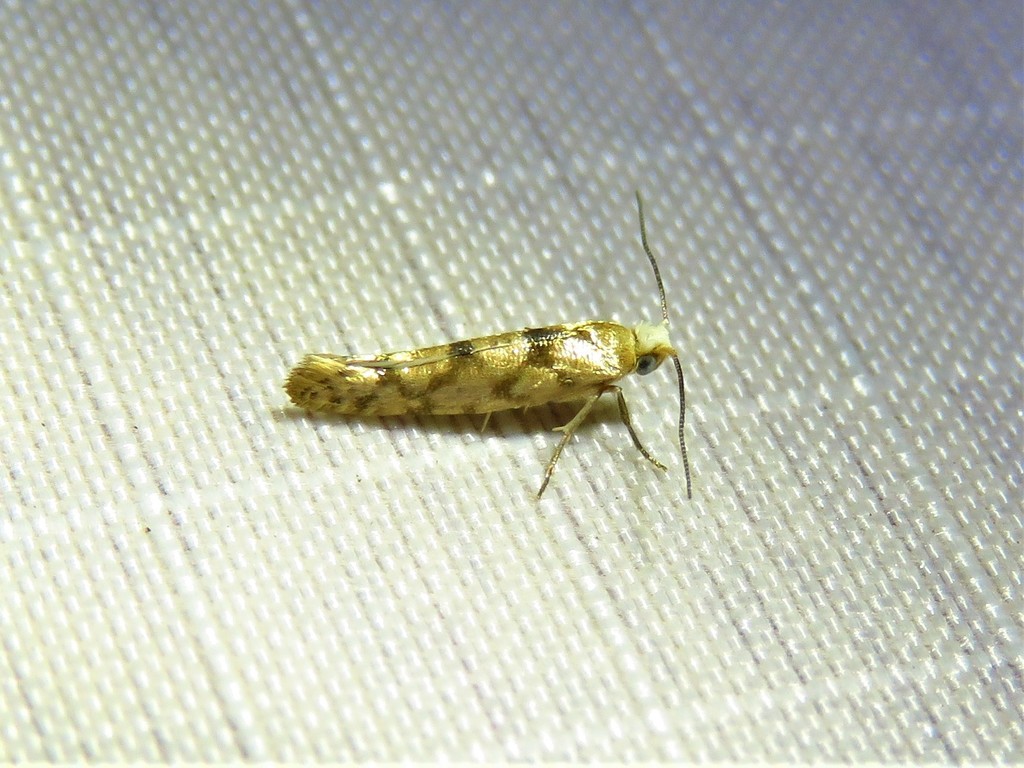
(c) Annika Lindqvist, some rights reserved (CC BY) · licence
Family: Argyresthiidae · Class: Insecta · Order: Lepidoptera
Argyresthia alternatella is a California animal in the Argyresthiidae family.
Argyresthia alternatella is a small moth in the family Argyresthiidae, commonly known as the ermine moths or small ermine moths. This species belongs to a genus of microlepidoptera that includes numerous species found across North America. Adult moths typically measure 8 to 12 millimeters in wingspan, with narrow forewings that are characteristic of the family. The forewings are generally pale gray to whitish with distinctive dark markings, though specific coloration patterns can vary among individuals and populations. The species occurs in western North America, with documented populations in California and other Pacific states. Within California, Argyresthia alternatella has been recorded from various counties, though comprehensive distribution data remains limited due to the small size and cryptic nature of these moths. The species appears to have a relatively broad elevational range, occurring from sea level to montane environments. Argyresthia alternatella inhabits areas where its host plants are present, typically in mixed coniferous and deciduous forests, woodland edges, and riparian zones. The species shows a preference for areas with adequate moisture and shelter, as the larvae require specific conditions for development within their host plants. Adults are often found in proximity to their larval host plants, remaining close to breeding sites. Larvae of Argyresthia alternatella are leaf miners, feeding internally within the leaves of their host plants. This feeding strategy provides protection from predators and environmental conditions while the larvae develop. The life cycle includes four stages: egg, larva, pupa, and adult. Eggs are typically laid on or near the host plant leaves, and larvae mine through the leaf tissue, creating characteristic feeding tunnels or blotches. Pupation may occur within the mined leaves or in nearby protected locations. Adults are active during specific seasons, with flight periods varying based on local climate conditions and elevation. The species exhibits typical moth behavior, with adults being primarily nocturnal or crepuscular. Males and females locate each other through chemical communication using pheromones. Mating occurs during the adult flight period, and females subsequently seek appropriate host plants for oviposition. Currently, Argyresthia alternatella does not appear on federal or state endangered species lists, and comprehensive population data is not readily available. Like many microlepidoptera, this species may face threats from habitat loss, pesticide use, and climate change, though specific conservation concerns have not been formally documented. The species' dependence on specific host plants makes it potentially vulnerable to changes in plant community composition or availability. Further research is needed to better understand the species' distribution, host plant relationships, population trends, and specific habitat requirements. As with many small moths, identification can be challenging and may require examination of genitalia or other microscopic features by specialists. The taxonomic status and relationships within the genus Argyresthia continue to be refined through ongoing research.
Classification
Class: Insecta · Order: Lepidoptera · Family: Argyresthiidae
Frequently asked questions
How is Argyresthia alternatella classified?
Argyresthia alternatella belongs to class Insecta, order Lepidoptera, family Argyresthiidae.
What family does Argyresthia alternatella belong to?
Argyresthia alternatella is in the Argyresthiidae family.
What is Argyresthia alternatella?
Argyresthia alternatella is a small moth in the family Argyresthiidae, commonly known as the ermine moths or small ermine moths.
Is Argyresthia alternatella found in California?
Yes. Argyresthia alternatella is recorded in California in The California Species Project's catalogue.
More California species
This species has no close relatives in our California data — here are other species to explore.
Data from The California Species Project — 14,000+ California species with verified data from CNPS, CDFW, USFWS, and more.